AI videos fuel rhetoric as Viktor Orbán bids for four more years in Hungary
AI videos fuel rhetoric as Viktor Orbán bids for four more years in Hungary
Warning: This piece refers to scenes of violence from the start
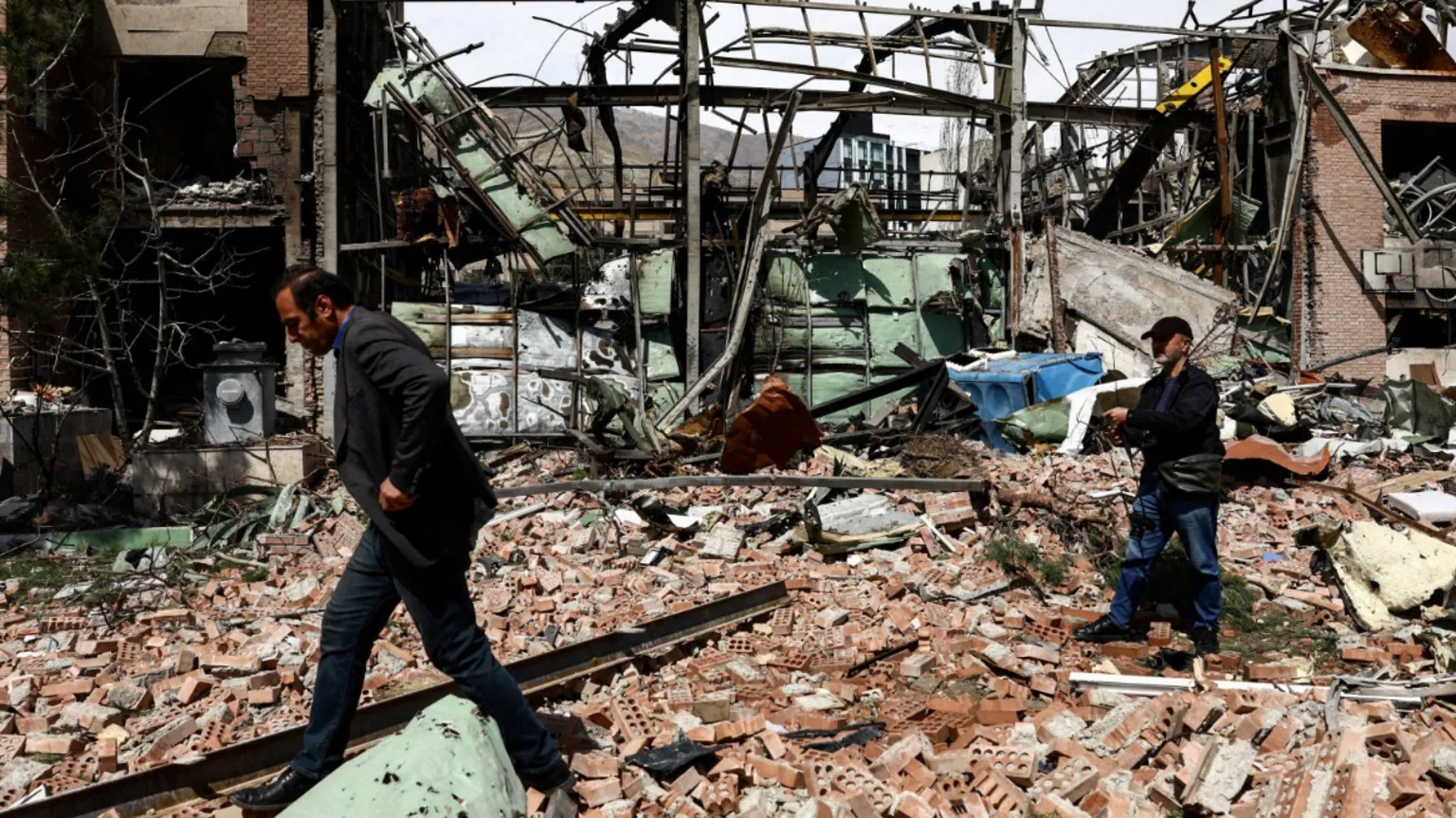
When a video claiming to show the execution of a Hungarian soldier spread across social platforms, the disturbing imagery shocked every viewer who encountered it.
The clip, which was later identified as an AI‑generated fabrication, first appeared on the official social‑media channels of the ruling Fidesz party in February, weeks before the pivotal national elections scheduled for Sunday 12 April.
The artificial narrative opens with a young girl looking out of a window, yearning for the safe return of her father from the front lines. The scene abruptly shifts to a blindfolded, hand‑bound soldier being shot by unseen captors, an image designed to evoke extreme emotional response.
The target of this disinformation effort is the opposition candidate Péter Magyar, a political figure who could potentially end Viktor Orbán’s 16‑year tenure as prime minister.
Throughout the campaign, the Fidesz party has propagated unverified claims about the war in Ukraine and the alleged intentions of Péter Magyar, at times relying on AI‑generated videos that they themselves acknowledge as fabricated.
One on‑screen caption of the video declares: “The video is an AI video, but the war is really horrible. Péter Magyar doesn’t want you to see this video. Péter Magyar doesn’t want you to see what an irreversible tragedy it is to join a war.”
Fidesz alleges that Péter Magyar, who leads the centre‑right Tisza party, would bring the conflict between Russia and Ukraine onto Hungarian soil if elected, accusing Péter Magyar of planning to allocate pension funds to support Ukraine and to re‑introduce compulsory conscription.
Both Péter Magyar and the Tisza party have repeatedly rejected these allegations. In the Tisza manifesto, the party explicitly states that it will not send Hungarian troops to Ukraine and that it has no intention of reviving mandatory military service.
Attempts to obtain clarification from the ruling Fidesz party about the origin of the AI execution video and the rationale for posting it on its official channels have so far been unanswered.
In a Facebook interview, Támas Menczer, who serves as communications director for the Fidesz‑KDNP alliance, was asked about the video. Menczer answered that the “greatest possible danger is that Hungarian people could die if Tisza wins, because Tisza supports the war, Tisza supports sending money,” yet he did not directly address the use of artificial intelligence in producing the clip.
Péter Magyar condemned the video, accusing Fidesz of “crossing all limits” and labeling the material as “heartless manipulation.”
Zsófia Fülöp, a journalist affiliated with Hungary’s sole independent fact‑checking platform Lakmusz, observes that while the party’s campaign rhetoric is not novel, the scale of generative‑AI usage marks a new development. “It is omnipresent in this campaign, especially in the communication of the ruling party and its media and proxies. They have used it before but now it is massive,” she explained.
Despite the aggressive messaging, opinion polls continue to show Péter Magyar in the lead, suggesting that the AI‑driven disinformation may have limited impact on voter preferences.
Supporters of Fidesz have echoed the anti‑Ukrainian narrative across multiple social‑media accounts. In the previous month, the National Resistance Movement (NEM), a pro‑Fidesz activist group, posted an AI‑generated video that simulated a telephone conversation between European Commission President Ursula von der Leyen and Péter Magyar concerning financial aid for Ukraine.
The fabricated clip amassed more than 3.7 million views. Accompanying text read, “When the phone rings and a request comes, then he won’t be able to say no.” NEM did not disclose that the video had been produced with artificial intelligence.
Péter Magyar publicly identified the footage as fake, yet the clip was widely circulated by pro‑government media outlets and by members of the Fidesz party, including Viktor Orbán. In Viktor Orbán’s own post, the video was acknowledged as AI‑generated, but a warning was issued that a similar scenario could become reality.
Requests for comment from the National Resistance Movement regarding the production and posting of the AI video have so far received no response.
Éva Bognár, a researcher at the Central European University’s Democracy Institute, described the atmosphere as “a state of hallucination.” She added, “In a way the whole campaign is a disinformation campaign because it’s all based on a complete false narrative that we’re on the brink of war.”
In a separate incident that received extensive media coverage, Hungary’s anti‑terrorism police arrested seven Ukrainian bank employees who were transporting approximately $80 million (about £60 million) and 9 kg of gold in cash‑transport vehicles destined for Ukraine.
Ukrainian Foreign Minister Andriy Sybiha accused the Hungarian authorities of hostage‑taking and theft. Oschadbank, Ukraine’s state savings bank, insisted that the transport was a routine journey between Austria and Ukraine and that the company held a valid licence for the operation.
The Hungarian government, however, claimed the operation was linked to money‑laundering activities intended to “finance pro‑Ukraine forces.” All seven Ukrainian workers were released without charges, but the cash and gold have not yet been returned.
Pro‑government outlets on Facebook employed AI‑generated images to portray the arrests, posting hyper‑realistic pictures that were presented as authentic documentation. When these images were compared with photographs and video posted on the official Hungarian government Facebook page, clear discrepancies emerged, including mismatched police uniforms and incorrect clothing on the Ukrainian individuals.
Facebook’s third‑party fact‑checking service labeled the post as “partly false.”
Historically, Hungary maintained relatively cooperative relations with Ukraine and even supported Ukraine’s bid to join the European Union until late 2023. Relations deteriorated as Viktor Orbán continued to nurture close ties with Russian President Vladimir Putin.
A survey conducted by the research institute Policy Solutions indicates that anti‑Ukrainian sentiment in Hungary is only slightly lower than anti‑Russian sentiment, with 64 % of respondents holding an unfavorable view of Ukrainian President Volodymyr Zelensky and 67 % expressing dislike for Russian President Vladimir Putin.
Éva Bognár explains, “One side holds all the cards. Fidesz has infinite resources at its disposal: from public funds, state agencies and offices to a media conglomerate that operates as a propaganda machine, including the public service media.”
Péter Magyar has attempted to navigate the heavily polarized media environment by leveraging his own social‑media presence. According to 20k, an election‑integrity watchdog that monitors political activity online, Péter Magyar’s posts on Facebook, TikTok, and Instagram achieve roughly twice the engagement rates of Viktor Orbán’s posts.
Péter Magyar’s online content mixes professionally produced policy briefings with a series of informal images that portray him as a youthful, approachable figure. The visual material includes photographs of Péter Magyar at social gatherings, playing volleyball, flipping burgers at a local restaurant, and participating in water‑sports activities.
Despite the generally upbeat tone, Péter Magyar has also employed milder forms of misleading rhetoric. For example, he has disseminated inaccurate statistics about the number of Hungarian infants born abroad, a claim intended to stir a sense of diminished national pride.
In a strategic counter‑attack, Péter Magyar has turned the ruling party’s own messaging against it, alleging that it is Fidesz—not Tisza—that seeks to re‑introduce compulsory military service. Although the claim was briefly echoed by two Fidesz politicians in 2016, there is no substantive evidence that the party currently intends to revive conscription.
Péter Krekó, head of the independent political research institute Political Capital, notes that Péter Magyar has successfully “exploited strong public resentment” toward the incumbent government. This resentment appears to be strongest among voters aged 18 to 40.
A poll conducted by the Median agency shows that support for Tisza is highest among citizens under the age of 40, while nearly half of respondents over the age of 65 continue to back Fidesz.
Even as Fidesz persists with its anti‑Ukrainian messaging across both traditional and digital media, campaign posters depicting President Volodymyr Zelensky and Péter Magyar together under the warning “They are dangerous!” have been widely disseminated.
Political analyst Péter Krekó warns that a victory for Fidesz would likely extend the current disinformation tactics beyond the election period. Conversely, a loss for Fidesz could lead to a “more tumultuous relationship between the media and politicians,” potentially reshaping the national discourse.




.jpg?type=mq)