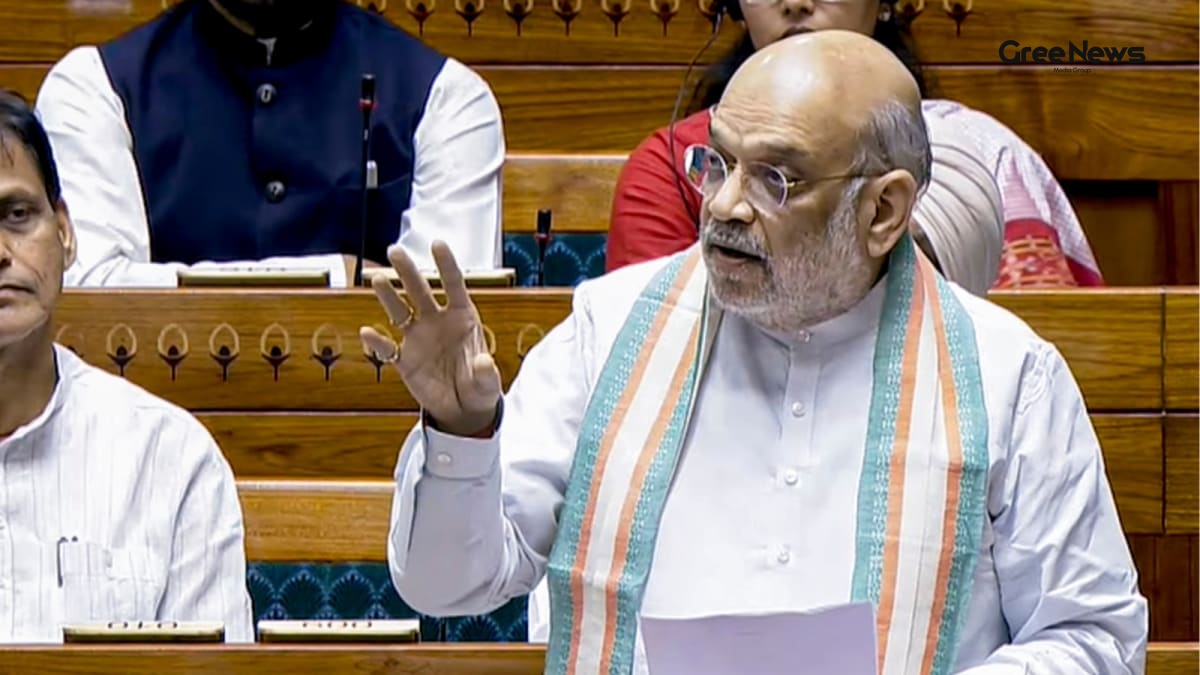
The response came after Yadav said his party would not support the proposal unless representation for OBC, backward class women and Muslim women was ensured.
Honestly, when I first tuned into the live telecast of the Lok Sabha, I thought it would be another routine discussion on budgets or infrastructure. But then Dharmendra Yadav, the Samajwadi Party MP, raised a point that instantly turned the session into breaking news India style he demanded a specific reservation quota for Muslim women, linking it with the broader OBC and backward class women representation.
Union Home Minister Amit Shah, who was present on the dais, didn’t waste a second. He jumped in and said, quite plainly, that the Constitution does not allow any reservation based on religion. This statement wasn’t just a legal note; it felt like a blunt snap, the kind that makes you sit up straight, wondering what the next line would be.
Amit Shah’s Counters: Constitution Over Religion
So, here’s what actually went down. Amit Shah called Dharmendra Yadav’s remarks “unconstitutional”. He said, "Our Constitution does not allow reservations based on religion. Granting reservation to Muslims on religious grounds is unconstitutional, and the question of it does not arise." You could almost hear the tension in the hall it was that intense. In most cases, such debates linger on technicalities, but this one hit a nerve because it combined two hot topics: gender reservation and religious identity.
What happened next is interesting Shah didn’t just stop at the constitutional argument. He reminded everyone that a caste census is already underway, meaning the government is trying to get accurate data on the social composition of the country. By doing that, he hinted that any reservation policy would be based on caste, not faith, keeping the discussion grounded in the constitutional framework.
Kiren Rijiju Joins the Conversation
Another voice that chimed in was Union Minister Kiren Rijiju. He basically echoed Shah’s sentiment, saying that demands for reservation should not be raised on religious grounds. Instead, the debate should focus on women across the country, irrespective of which community they belong to. It felt like a coordinated effort to steer the conversation away from identity politics and towards a more inclusive, gender‑centric approach.
Honestly, this part reminded me of the everyday chatter at my local chai shop people often argue about whether a policy should be caste‑based or religion‑based, and the minister’s stance was a clear message that the former is the only acceptable route, at least for now.
The Census Angle Why It Matters
During the same session, Amit Shah also brought up the census process, saying that the government has decided to conduct a caste census alongside the regular population enumeration. This move is big news for anyone tracking India updates because it could reshape how reservations are allocated in the future. By having solid data on the caste composition, the government can justify reservation policies without dipping into religious classifications, which, as Shah emphasized, are barred by the Constitution.
It’s a bit like when you’re planning a family trip and you need a clear list of who’s who the census will be that list for the nation, and it could potentially settle many debates about who deserves what share of opportunities.
Opposition’s Reaction KC Venugopal’s Objections
While the reservation for Muslim women was the flashpoint, the session also saw other bills being questioned. Congress MP K.C. Venugopal raised strong objections against three pieces of legislation: the Constitution (One Hundred and Thirty‑First Amendment) Bill, the Union Territories Laws (Amendment) Bill, and the Delimitation Bill. He called the amendment a “fundamental attack on the Indian federal structure”.
What’s noteworthy is that Venugopal’s criticism seemed to be part of a larger pattern of the opposition pushing back against any perceived central overreach. This, in turn, added another layer to the already heated atmosphere, making the whole episode a piece of viral news that kept trending across social media platforms.
Shah’s Rebuttal to the Opposition
When faced with Venugopal’s objections, Amit Shah brushed them off as “technical” at this early stage. He said the merits of the bills could not be debated right then and promised a strong reply later in the discussion. This response was typical of parliamentary banter a mix of deflection and confidence but it also signalled that the government wasn’t planning to back down on its agenda.
In my view, this is quite reminiscent of how political debates often play out during election season: the opposition raises procedural concerns, while the ruling side focuses on the bigger picture and promises to address details later.
Why This Matters for the Average Indian
For most of us, the reservation debate is not just a political squabble; it directly affects job prospects, educational seats, and even social mobility. The idea of adding a separate quota for Muslim women sparked a lot of curiosity because it raises the question of whether religion can ever be a basis for affirmative action in India. The Constitution is clear on the matter, but the political pressure remains.
Imagine you’re a student from a minority community; you hear about a new quota that could help you, only to find out it’s constitutionally barred. That tug‑of‑war between hope and legal reality is exactly what made this exchange hit the headlines and become trending news India today.
Public Reaction and Social Media Buzz
What’s interesting is that the discussion quickly turned into a broader conversation about the nature of affirmative action in India. You could see memes, short videos, and even street‑side debates popping up, turning the political exchange into a piece of viral news that kept people scrolling for hours.
Looking Ahead What Could Change?
If the government proceeds with the caste census and later releases those numbers, we may see a more data‑driven approach to reservations. That could mean a shift away from any religious considerations and a stronger focus on caste‑based categories. It might also open the door for new policies that address gender disparities without triggering constitutional challenges.
On the other hand, political parties catering to minority communities will likely continue to press for separate quotas, arguing that they address specific vulnerabilities. Whether these demands will ever be accommodated without constitutional amendment remains to be seen. For now, the matter sits firmly in the realm of latest news India, with analysts and commentators watching every development closely.
Conclusion A Snapshot of Democracy in Action
All in all, the exchange between Amit Shah and Dharmendra Yadav was a vivid illustration of how India’s democracy wrestles with complex issues like reservation, gender equity, and religious identity. The fact that the debate sparked such a huge reactionfrom Parliament to the streetsshows just how intertwined these topics are with everyday lives.
As we keep an eye on the upcoming caste census and the subsequent policy decisions, one thing is clear: the conversation is far from over, and it will continue to shape India’s social fabric for years to come. Stay tuned for more updates, because this is definitely not the last word on the subject it’s just the beginning of an ongoing story that’s becoming part of the country’s trending news India landscape.