US Endorsement of Pakistan’s Ceasefire Declaration Sparks Debate
Prime Minister Shehbaz Sharif of Pakistan posted a statement on social media announcing an "immediate ceasefire" between the United States and Iran, extending the truce to all allied nations and explicitly mentioning Lebanon. The New York Times reported that the White House examined the draft of Prime Minister Shehbaz Sharif’s post and signed off on the wording before the message went public. This revelation suggests that the United States had direct involvement in shaping the language of the announcement, challenging the perception of a wholly independent Pakistani diplomatic effort.
The ceasefire proclamation used phrasing reminiscent of former President Donald Trump’s communication style, with Prime Minister Shehbaz Sharif declaring the aGreement to be effective "immediately" and "everywhere," including the territory of Lebanon. The wording mirrored a broader narrative that the United States and Iran, alongside their regional allies, were prepared to halt hostilities across the entire theater of conflict.
Behind the public declaration, a series of high‑level conversations took place involving former President Donald Trump, Prime Minister Shehbaz Sharif, and army chief Asim Munir of Pakistan. Iran’s leadership also acknowledged Pakistan’s role as an intermediary, indicating that Iranian officials had been in contact with representatives from Pakistan throughout the negotiation process.
Pakistan’s engagement in ceasefire talks built upon months of outreach to the Trump administration, as well as years of diplomatic contacts with Tehran. By positioning itself as a reliable conduit between Washington and Tehran, Pakistan sought to enhance its regional influence and portray itself as a pivotal peace‑building actor.
Vice President JD Vance’s Counterstatement on Lebanon
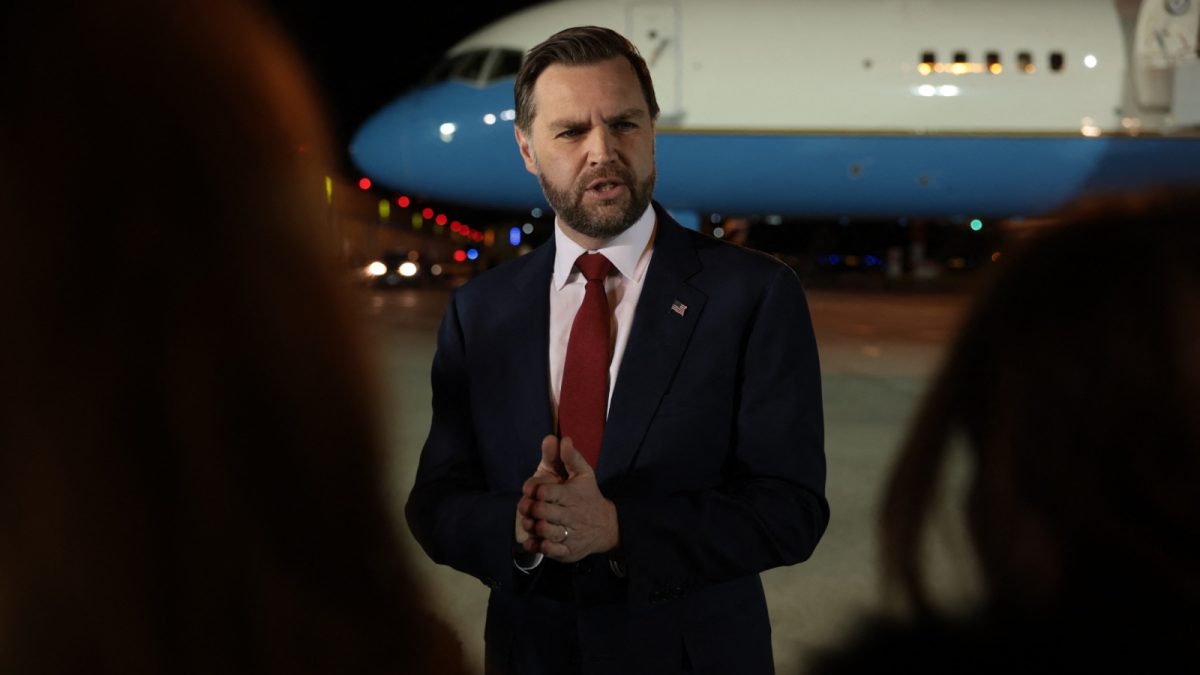
In a press briefing held in Budapest, Vice President JD Vance addressed reporters and asserted that the ceasefire did not extend to Lebanon. Vice President JD Vance explained that Iranian negotiators may have misinterpreted the limits of the aGreement, suggesting that the United States’ intention was to include Iran and United States allies such as Israel and Gulf states, but to exclude Lebanon from the immediate cessation of hostilities.
Vice President JD Vance further noted that Israel had indicated a willingness to exercise a deGree of restraint in Lebanon, though no specific operational details were disclosed. This clarification stood in direct contrast to Prime Minister Shehbaz Sharif’s earlier statement, which had explicitly included Lebanon within the ceasefire’s scope.
The divergence between Prime Minister Shehbaz Sharif’s public message and Vice President JD Vance’s clarification has generated confusion among observers and stakeholders. While the United States appears to have provided prior approval for the wording of Prime Minister Shehbaz Sharif’s announcement, Vice President JD Vance’s subsequent remarks suggest a different interpretation of the ceasefire’s geographic reach.
The Emerging Confusion Over the Ceasefire’s Boundaries
The contradictory statements from Prime Minister Shehbaz Sharif and Vice President JD Vance have placed Pakistan at the epicenter of a diplomatic dispute over the true extent of the ceasefire. Iran’s officials have indicated belief that the ceasefire encompasses Lebanon, operating under the assumption that the United States and its allies would honor a blanket halt to hostilities across the region.
Conversely, the United States and Israel have maintained that Lebanon was not intended to be part of the ceasefire framework. Shortly after Prime Minister Shehbaz Sharif’s announcement, Israel publicly welcomed the ceasefire but emphasized that Lebanon remained outside the aGreement’s coverage. Within hours, Israeli forces conducted new strikes on Lebanese territory, underscoring the disconnect between the declared ceasefire and actual military actions.
This series of events highlights a lack of clarity in the communication of the ceasefire’s terms. The United States’ pre‑approval of Prime Minister Shehbaz Sharif’s social media post, coupled with Vice President JD Vance’s later clarification, suggests that the messaging process may have involved multiple layers of interpretation and possible misalignment.
Implications for Pakistan’s Mediation Role
The controversy surrounding the ceasefire’s scope raises questions about Pakistan’s capacity to serve as a credible intermediary in future negotiations. By securing a public endorsement from the White House for Prime Minister Shehbaz Sharif’s declaration, Pakistan demonstrated its ability to influence high‑level discourse. However, the subsequent reversal articulated by Vice President JD Vance may undermine Pakistan’s standing as an impartial broker.
Pakistan’s diplomatic outreach to the United States and Iran has been a long‑term strategy aimed at fostering a reputation as a neutral facilitator. The current episode illustrates the challenges inherent in navigating the complex web of expectations, strategic interests, and communication protocols that characterize Middle East conflict resolution.
For Pakistan, the need to align its messaging with the precise intentions of the United States becomes paramount. Any perceived discrepancy can erode trust among regional actors and diminish Pakistan’s leverage in future diplomatic initiatives.
Potential Consequences for Regional Stability
The unclear definition of the ceasefire’s territorial coverage threatens to exacerbate tensions across the region. If Iran operates under the belief that Lebanon is included, Iranian forces may curtail operations near the Lebanese border, while Israeli forces continue offensive actions in Lebanon based on the United States’ position. This asymmetry could lead to inadvertent escalations and miscalculations on the ground.
Moreover, the mixed signals transmitted by United States officials may affect the willingness of other regional stakeholders to commit to future ceasefires. Confidence in the United States’ ability to deliver consistent and transparent diplomatic outcomes is essential for the success of any multilateral peace effort.
The situation also underscores the importance of clear, coordinated communication among all parties involved in a ceasefire. When statements from high‑ranking officials diverge, the risk of misunderstandings increases, potentially undermining the very purpose of the ceasefire.
Conclusion: The Need for Unified Messaging
In summary, the United States’ prior approval of Prime Minister Shehbaz Sharif’s ceasefire announcement demonstrates an active role in shaping the public narrative of the aGreement. Vice President JD Vance’s later clarification that Lebanon was excluded from the ceasefire, however, introduces a stark contradiction that places Pakistan at the center of a debate over the aGreement’s true scope.
For the ceasefire to achieve its intended purpose of halting hostilities, all involved actors—including the United States, Pakistan, Iran, Israel, and Lebanon—must converge on a single, unequivocal definition of the ceasefire’s geographic parameters. Without such alignment, the risk of renewed fighting, especially in Lebanon, remains high, and the broader goal of regional stability continues to be jeopardized.
The episode serves as a reminder that diplomatic successes depend not only on the existence of aGreements but also on the precision and consistency of the language used to describe them. Future negotiations will need to prioritize unified messaging to avoid the pitfalls witnessed in the current ceasefire controversy.