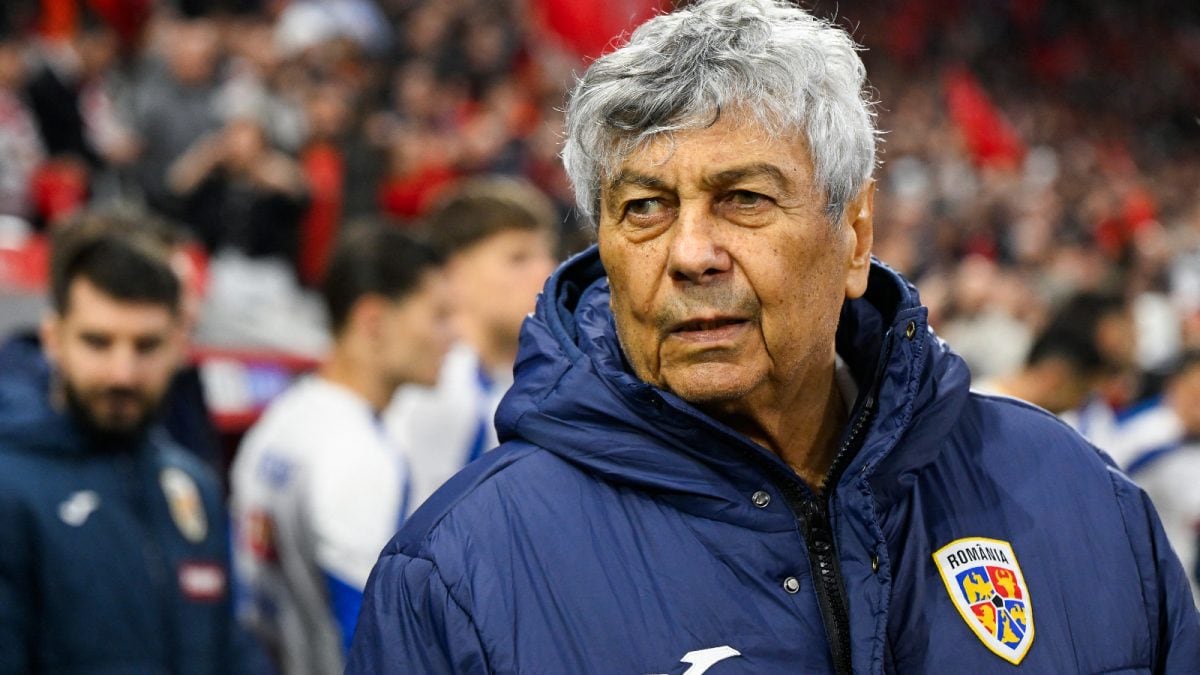
The Romanian football legend, who won a whopping 33 trophies over his stpried 40-year career, died at 80 after a heart attack.
Romanian football has lost one of its greatest icons.
Mircea Lucescu, the legendary coach and former national team boss, has passed away at the age of 80 following a heart attack, according to a statement released by a Bucharest hospital on Tuesday.
A Sudden Turn After Signs of Recovery
A Sudden Turn After Signs of RecoveryLucescu had reportedly fallen ill around 10 days earlier while preparing for a friendly against Slovakia.
Initially, there was cautious optimism — he had been hospitalised and was expected to be discharged after treatment helped stabilise his heart rate.
However, tragedy struck on the very day he was set to leave the hospital, when he suffered a fatal heart attack.
A Pioneer for Romanian Football
A Pioneer for Romanian FootballBorn in Bucharest in 1945, Lucescu’s legacy spans decades, both on the pitch and on the sidelines.
As a player, he captained Romania at the 1970 FIFA World Cup and earned 65 international caps, scoring 10 goals. But it was as a coach that he truly etched his name into history.
During his first stint as national team manager, he guided Romania to their first-ever European Championship appearance in 1984.
He later returned for a second spell in 2024 on a two-year deal, managing his final game on March 26 this year. Romania’s hopes of reaching their first World Cup since 1998 ended in that match, a 1-0 playoff defeat to Turkey.
A Global Coaching Legacy
A Global Coaching LegacyAcross a storied club career in Italy, Turkey, and Ukraine, he won more than 30 trophies, establishing himself as one of Europe’s most respected managerial figures.
Turkish giants Galatasaray were among those to pay tribute, remembering him as a title‑winning coach who delivered both domestic success and a UEFA Super Cup.
(with AFP inputs)
(with AFP inputs)Early Days and the Making of a Football Soul
When I was a kid growing up in Chennai, the only thing I could imagine beyond the cricket matches on Doordarshan was this old black‑and‑white footage of a Romanian team playing in a dusty stadium. Little did I know that the captain of that side, Mircea Lucescu, would later become a name I’d hear on every sports channel, even here in India.
Born in Bucharest, the capital of Romania, Mircea was the kind of kid who spent most of his afternoons chasing a ball in the narrow alleys of his neighbourhood. Just like us Indians who chase cricket balls in the lanes after school, his love for the game was obvious from the start. He joined the youth ranks of a local club, and his talent quickly shone through.
By the time he was in his early twenties, he had already broken into the senior team and was making a name for himself as a hard‑working midfielder. The pinnacle came when he lifted the Romanian jersey at the 1970 World Cup in Mexico – a tournament that, for many of us back home, still feels like a story told by grandparents.
Those 65 caps and 10 goals were not just numbers; they represented a player who never shied away from responsibility – a trait that later defined his coaching style. You know, the kind of resilience you see when a street vendor keeps his stall open despite the monsoon rain – that’s how Lucescu approached football.
Transition to the Touchline – From Player to Coach
After hanging up his boots, Mircea didn’t just sit back and enjoy his retirement like many of us do after a long work week. Instead, he dived straight into coaching, starting with small clubs that barely made the headlines. It reminded me of those small gyms in Delhi where coaches work with a handful of kids, hoping one day they’ll make it big.
His first big break came when he was appointed the head coach of the Romanian national team in the early 1980s. It was a period when Romanian football was still searching for its identity, much like Indian football has been trying to find its footing in recent years. Lucescu’s tactical acumen, however, turned the tide.
He led the national side to its historic first appearance at the European Championship in 1984. Imagine the excitement, similar to when the Indian cricket team finally won a World Cup – the whole nation erupted in joy. For Romanians, that 1984 Euro qualification felt like a festival, and Mircea was the chief organiser.
His approach was simple: blend disciplined defence with creative attacking football. He taught his players to be as adaptable as a Mumbai autorickshaw navigating traffic – quick, unpredictable, yet always moving forward.
Club Adventures Across Europe – The Trophy Cabinet Grows
After his national team stints, Lucescu took his expertise overseas. He coached clubs in Italy, Turkey and Ukraine – an eclectic mix, like an Indian traveler who loves both the beaches of Goa and the snow‑capped Himalayas. Each country gave him a different flavor of football.
In Italy, he learned the art of tactical discipline, akin to watching a well‑orchestrated Bollywood dance where every move is precisely timed. In Turkey, he discovered the passion of the fans – the roar of Galatasaray’s supporters reminded me of the deafening cheers in Indian stadiums during an IPL final.
His most celebrated achievements came during his time in Ukraine, where he guided Shakhtar Donetsk to multiple league titles and even a UEFA Super Cup. Winning more than 30 trophies across these leagues is no small feat; it’s like scoring a double century in cricket – rare, memorable and talked about for years.
Galatasaray, one of Turkey’s biggest clubs, paid a heartfelt tribute after his death, recalling how he helped them win both domestic titles and that prestigious UEFA Super Cup. Their words echoed the same reverence you hear when Indian legends like Kapil Dev are remembered.
The Final Chapter – Return to the Romanian Colours
In 2024, after decades abroad, Lucescu came back home to take charge of the Romanian national team once again. The contract was for two years, and many thought he could give the young generation a final push, just like a veteran teacher returning to his alma mater.
His last match was on 26 March, a tense playoff against Turkey. Romania needed a win to break a 28‑year World Cup drought, but the game ended in a 1‑0 loss. It was heartbreaking, similar to watching a final over‑turn in a cricket match when you are just a few runs away from victory.
Even though the result was not in his favour, the respect he commanded remained unchanged. The players spoke of his calm demeanor, his ability to read the game like an experienced commentator, and how he always encouraged them to give their best, irrespective of the scoreboard.
The Sudden Illness and the Nation’s Grief
Just about ten days before his untimely death, Mircea fell ill while preparing for a friendly against Slovakia. At first, doctors were hopeful – they said his heart rate had stabilised and he might be discharged soon. I remember hearing that on the radio while making chai; the news felt like a small ray of hope.
But fate had other plans. On the very day he was supposed to leave the hospital, he suffered a fatal heart attack. The news hit the football community like a sudden downpour during a summer cricket match – unexpected and deeply unsettling.
Across Romania, fans gathered outside the hospital, lighting candles and chanting his name. In India, Romanian diaspora groups in Delhi and Mumbai shared tributes on social media, recalling how his teams used to play with a spirit that reminded them of the Indian Premier League’s energy.
Legacy – What Mircea Lucescu Leaves Behind
When we talk about a legacy, we often think of trophies. Mircea collected 33 of them in a career that stretched over four decades. That number alone could fill a whole wall of photographs, each reminding us of a triumph.
But beyond the silverware, his real gift was the way he shaped people. Many of his former players have become coaches themselves, passing on his philosophy just like Indian families pass recipes from generation to generation.
He was also known for his calmness under pressure. In the bustling streets of Kolkata during the Durga Puja festival, there is a sense of organised chaos – that’s how Lucescu managed his teams: composed, yet ready to adapt to any situation.
His influence on Romanian football is comparable to how the legendary Dhyan Chand influences Indian hockey – a benchmark, a source of inspiration, and a name that will be spoken of for generations.
Reactions from the Football World
Shortly after the news broke, clubs, former players, and football federations from across the globe expressed their condolences. The Turkish Football Federation posted a touching message, saying that Lucescu had left an “indelible mark” on Turkish football.
In Italy, a former assistant coach wrote on Twitter that working with Mircea was like learning to play a classical sitar – intricate, demanding, yet incredibly rewarding.
Back home, the Romanian President released a statement, calling him a “national treasure” and highlighting his role in putting Romania on the European football map.
Even in India, a few football bloggers mentioned how his tactical innovations influenced some of the strategies we see in the Indian Super League today.
Personal Reflections – Why His Story Resonates With Me
Honestly, reading about Mircea’s journey reminded me of my own struggles when I first started coaching a local school team. I faced scepticism, limited resources, and the occasional rainy day that washed away our training ground. Yet, like him, I kept learning, adapting, and hoping for that big break.
His story shows that success isn’t a straight road – it’s full of twists, like navigating Delhi traffic during peak hours. He faced setbacks, yet his passion never faded. That’s a lesson any of us can take, whether we’re playing football, studying for exams, or simply trying to get through a busy workweek.
So, while the world mourns his loss, I think it’s also a time to celebrate the spirit he embodied – dedication, humility, and an unending love for the beautiful game.