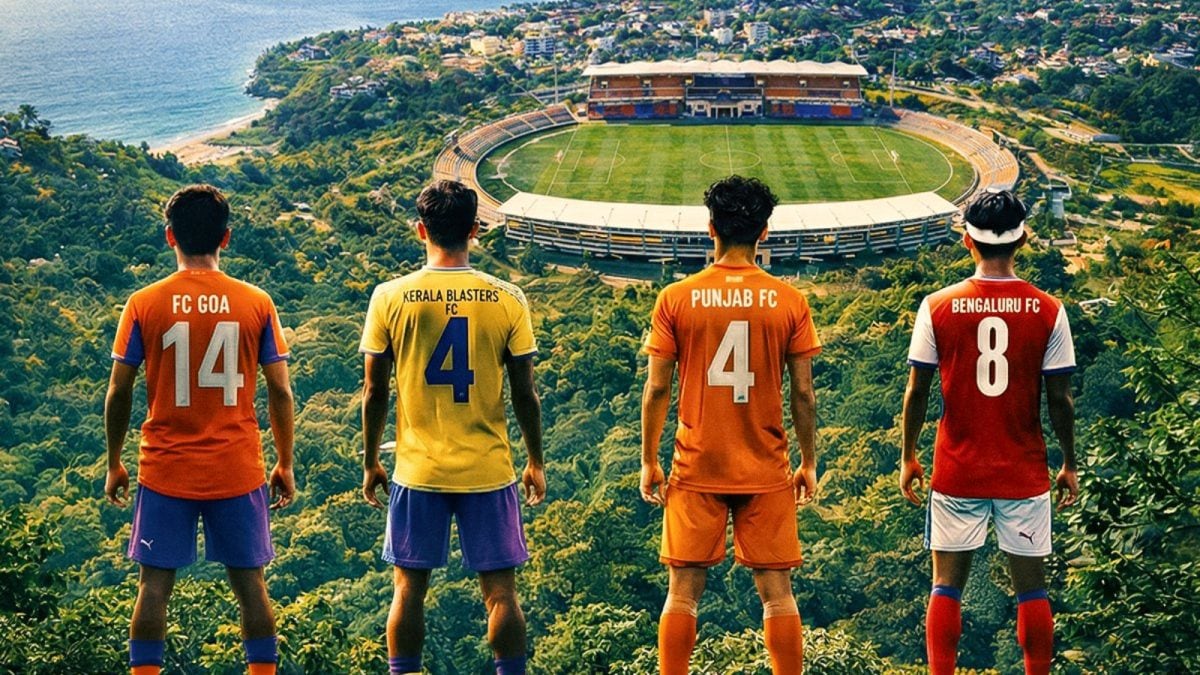
RFDL’s road to the National Championship in Goa
When I first heard about the Reliance Foundation Development League (RFDL) for the 2025‑26 season, I thought it was just another youth tournament. But after following the league for months, it feels more like a national festival of football. From the very start, we had 54 clubs representing 19 different states and union territories, playing a whopping 255 games across three distinct phases. That’s a massive number of matches, especially for an under‑21 league, and it shows how seriously the game is being taken across the country.
Honestly, the journey felt a bit like a long train ride. You start in a small town, pass through hills and plains, meet new faces, and finally, the train pulls into a big station where the real excitement begins. In RFDL’s case, that final station is Goa, home to sandy beaches, Portuguese‑influenced architecture, and now, the battleground for the four best U‑21 sides in India.
Who are the final four?
After all the twists, upsets and nail‑biting finishes, the league has finally whittled down to four clubs that have shown consistency, flair and a genuine hunger for the title. Let’s take a quick look at each of them – maybe you’ll recognize a few players you’ve seen in the Indian Super League or even in local neighborhood matches.
- Bengaluru FC – The two‑time champions of RFDL, and currently sitting at the top of the National Group Stage that was hosted in Shillong. They have been the talk of the town for their disciplined defense and quick counter‑attacks.
- FC Goa – The Goan side, of course, have a home advantage coming into their own state. They finished just behind Bengaluru in the group stages, and you could feel the excitement building in local cafés when the squad announced their semi‑final lineup.
- Punjab FC – The winners of the 2023‑24 edition, Punjab FC have a reputation for nurturing raw talent and turning them into match‑winners. They edged out Kerala Blasters on goal difference to top the Mumbai group, showing that even a single goal can change the whole picture.
- Kerala Blasters FC – Known for their passionate fan base back in Kerala, the Blasters’ U‑21 side has been punching above their weight. Their journey to the final four has been filled with dramatic comebacks and a few last‑minute goals that left us all gasping.
What’s interesting is how each team brings its own flavour to the tournament. Bengaluru relies on structured play, FC Goa on creative freedom, Punjab on youthful gumption, and Kerala on sheer determination. It’s like watching four different cuisines on one plate – you know each bite will be distinct.
The venue: Bambolim Athletic Stadium
All the semi‑finals and the final will be held at the Bambolim Athletic Stadium starting from the 12th of the month. I visited the stadium a few weeks back when the practice sessions were in full swing. The venue, with its lush Green pitch and modest stands, carries the vibe of a community ground rather than a massive commercial arena. Yet, the moment the floodlights come on, you can feel the electric atmosphere that the locals call “football fever”.
For many of us who grew up playing cricket in the streets of Delhi, Mumbai or Kochi, seeing a stadium in Goa filled with young footballers, their families, and enthusiastic fans, is a refreshing sight. The aroma of local Goan cuisine – fresh fish, coconut rice and the occasional “vindaloo” – drifts through the air, mixing with the chants of supporters. It feels like the perfect setting for a finale that could decide the next big stars of Indian football.
Why RFDL matters: building India’s football pipeline
Beyond the trophy chase, the biggest story the RFDL is telling is its role as a talent factory. As Naushad Moosa, Technical Director and Reserves Head Coach at NorthEast United FC, put it, “RFDL has become the bridge between youth football and the professional level.” He added that for many players, these matches are their first real taste of a competitive environment that mirrors senior expectations – travel, pressure, consistency, and accountability.
Listening to Moosa speak, I remembered a time when my younger cousin was playing in a local U‑16 tournament in Punjab. The excitement was there, but the structure, the logistics, the professionalism – it was all missing. RFDL fills that gap. It gives these youngsters a taste of travelling from their hometowns to places like Shillong, Mumbai or now Goa, staying in decent accommodations, following a strict schedule, and playing under the watchful eyes of scouts and senior coaches.
And the numbers back this up. A striking 21 out of the 23 players selected for India’s U‑23 squad for the AFC U‑23 Asian Cup Qualifiers in September 2025 had RFDL experience. That’s a clear indicator that the league is feeding the national team pipeline directly. In simple terms, the more kids play RFDL, the better the Indian side becomes – and that’s something every football fan in the country can cheer for.
Geographical expansion: football reaching every corner
The 2025‑26 edition also marked a significant push towards making the league truly national. While earlier editions were centred around a few states, this season saw the debut of teams from Jammu & Kashmir. I once watched a match from that side on a streaming platform – the players’ determination shone through despite the challenging weather and limited facilities back home.
Similarly, Manipur made a comeback to competitive football through the league. The state has always been a hotbed of talent, producing players like Jeje Lalpekhlua and the late Indian legend Bhaichung Bhutia’s right‑hand man. Their return adds another layer of depth to the tournament.
Assam and Arunachal Pradesh also sent representatives, highlighting the league’s ambition to explore talent in the North‑East, a region that has historically contributed many of India’s best footballers. Seeing these clubs on the schedule made me think of the diverse cultures across India – from the snow‑capped hills of Kashmir to the tea‑laden valleys of Assam – all converging on a single footballing stage.
What does this mean for a regular fan like me? It means more stories, more local heroes to follow, and a richer tapestry of Indian football that we can all be proud of.
Personal reflections: why I’m excited for the final four
Honestly, I never thought I’d be that eager to watch a U‑21 league’s semi‑finals. But as the tournament progressed, I found myself marking the dates on my calendar, setting reminders, and even chatting with friends about which team had the edge. The reason is simple – these matches feel like a preview of the future of Indian football. Every player on the field could become the next big name in the Indian Super League or even earn a move abroad.
Just a few weeks back, I was at a local tea stall in Bangalore, and a group of youngsters were debating whether Bengaluru FC’s captain, a lanky midfielder from Karnataka, would make it to the senior side. Their arguments were full of stats, recent performances, and a sprinkling of local pride. That conversation reminded me that these league matches are not just games; they’re talking points in cafés, living rooms, and across social media.
And let’s not forget the simple joys – the sound of a well‑timed header, the roar of a crowd after a goal, the nervous fidget of a goalkeeper lining up a penalty. These moments remind me of the days when I used to play football with my cousins in the courtyard during summer holidays. The only difference now is that the stakes are higher, the audience larger, and the potential for life‑changing opportunities is real.
Looking ahead: what the final will mean for Indian football
If the final four delivers the drama we’ve been hoping for, the impact could be multi‑fold. First, the winner will claim the RFDL trophy, adding another feather in their club’s cap. More importantly, the players who perform well will likely receive call‑ups to senior squads, both at the club level and the national level. It’s a bit like a casting call – the brighter the performance, the more offers you get.
Second, the success of the league could encourage more sponsors to invest in grassroots football, meaning better facilities, more qualified coaches, and perhaps even more televised matches. I can already imagine kids in a remote village in Arunachal Pradesh watching the final on a small TV set and dreaming of playing on that very pitch someday.
Finally, the tournament’s continued growth signals a positive shift in the mindset of Indian football authorities. They seem to understand that nurturing talent early, providing regular competitive exposure, and ensuring a broad geographic reach are essential ingredients for a stronger national team. This aligns with the ambitions of the All India Football Federation and the AIFF’s long‑term development plans.
Conclusion: the excitement is palpable
All in all, the RFDL’s final four in Goa feels like the culmination of a massive effort that began months ago across 54 clubs and 19 states. The tournament has given us thrilling matches, showcased upcoming stars, and highlighted the importance of a structured pathway from youth football to the professional arena. As I get ready to watch the semi‑finals at Bambolim, I can’t help but feel a mix of pride and anticipation – pride for the strides Indian football has made, and anticipation for the stories that will emerge from this finale.
Whether you’re a die‑hard football fan, a casual observer, or someone who simply enjoys a good sporting story, the upcoming matches promise drama, skill, and a glimpse into the future of the beautiful game in India. So, grab your tea, settle into a comfortable spot, and enjoy the showdown – because these are the moments that could shape Indian football for years to come.