Honestly, when I first heard about the latest news India on university rankings, I thought it was just another headline that would fade away. But then I started looking deeper, and what I found was pretty impressive especially for someone like me who grew up watching my older cousin struggle to get into a good engineering college. The Times Higher Education (THE) World University Rankings 2026 have finally given Indian academia a bit of the spotlight it deserves.
Let me tell you, sharing this breaking news with my friends over chai was a real eye‑opener. We all started debating whether these rankings really matter, but the numbers are hard to ignore. The Indian Institute of Science (IISc) Bangalore has climbed into the 201‑250 rank band, which means it is officially the top Indian university in the global list. That’s a huge leap from where it used to be, and it definitely qualifies as trending news India for anyone keeping tabs on education.
What caught people's attention next was the fact that India now holds the second‑highest count of globally ranked universities, just behind the United States. The statistic alone feels like a badge of honour for us. It’s not just about one institution; it’s about a collective push that reflects in the rankings of a whole host of Indian colleges.
How Indian Universities Are Shaping Up
Okay, let’s break it down a bit. Starting with the heavy‑hitters, the Indian Institute of Science (IISc) Bangalore is the only Indian university that made it into the top 250. That’s a big deal because it shows how research output and international outlook are finally being recognised. For anyone who has walked through its sprawling campus, you can feel the buzz of cutting‑edge labs and a diverse student body it’s no wonder it’s getting the nod.
Moving a little down the ladder, Saveetha Institute of Medical and Technical Sciences, based in Chennai, nudged up to the 351‑400 band. Last year it was sitting in the 401‑500 range, so this improvement is a classic example of steady progress. I actually have a cousin studying medicine there, and he told me how the university’s new collaborations with overseas hospitals have boosted its reputation.
Then there’s Jamia Millia Islamia (Delhi) and Shoolini University of Biotechnology and Management Sciences (Bajhol, Himachal Pradesh). Both have landed in the 401‑500 category. These names might sound familiar, especially if you follow any of the popular engineering or biotech streams. Their placement suggests that even newer or region‑specific institutions are beginning to get noticed on the global stage.
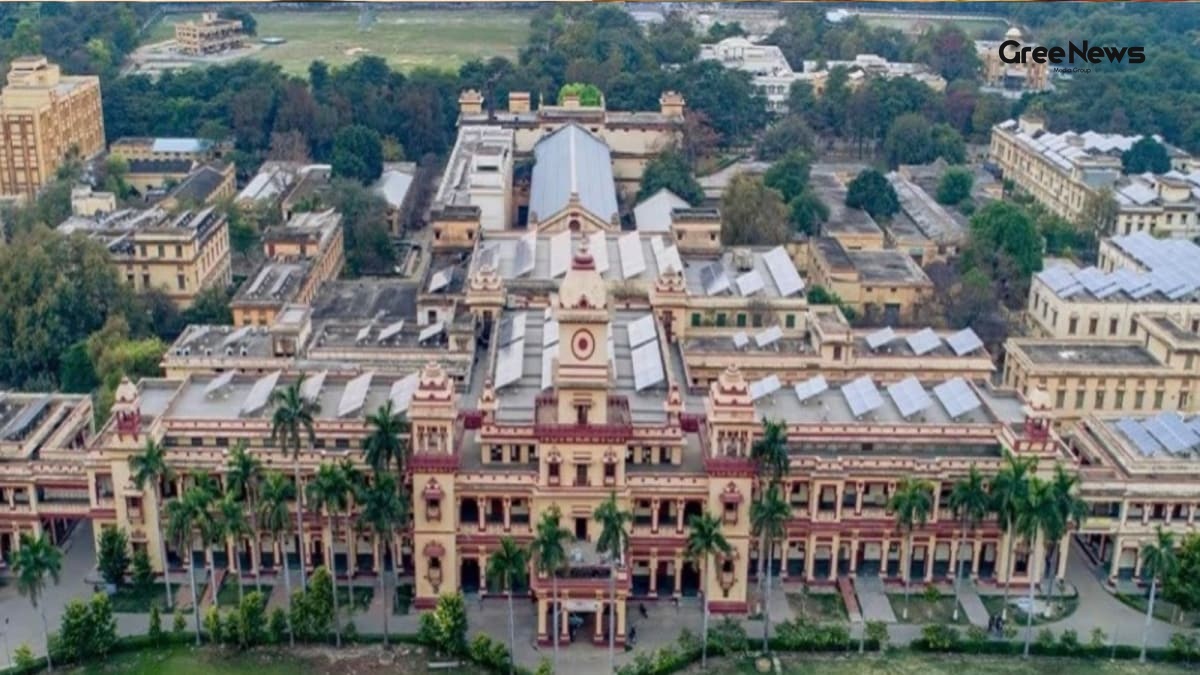
After that, a longer list of institutions find themselves in the 501‑600 bracket: Banaras Hindu University, Indian Institute of Technology Indore, KIIT University (Bhubaneswar), Lovely Professional University (Phagwara, Punjab), Mahatma Gandhi University (Kottayam, Kerala) and UPES (Dehradun). If you grew up watching the entrance exam fever, you’ll recognize many of these names. Their presence in the list shows that a spread of disciplines from engineering to management are contributing to the scholarly output that THE values.
India’s Growing Presence in the 601‑800 Zone
Now, here’s where the numbers get really interesting. Over fifteen Indian institutes have made it into the 601‑800 segment. Names like Aligarh Muslim University, Amity University (Noida), Bharathiar University (Coimbatore), Central University of Punjab (Bhatinda), Chitkara University (Chandigarh) and Graphic Era University (Dehradun) are all part of this group. Honestly, some of these universities are what I’d call "home‑grown heroes" they might not be on the global radar for everyone, but they’re quietly building solid research profiles.
And that’s not all. We also see IIT Patna, IIIT Hyderabad, Malaviya National Institute of Technology (Jaipur), Manipal Academy of Higher Education, NIT Rourkela, Panjab University (Chandigarh), Sharda University (Greater Noida), Symbiosis International University (Pune), Thapar Institute of Engineering Technology (Patiala), University of Delhi, and VIT University (Vellore) listed in the same band. The sheer variety of locations from the plains of Delhi to the hills of Himachal reflects how the push for quality education is spreading across the nation.
What’s striking is that many of these institutions have recently opened up new research centres, partnered with industry, and attracted foreign faculty. I talk to my engineering friends and they often mention how these collaborations have helped them land internships that used to be reserved only for the top‑tier IITs.
All this adds up to the fact that Indian higher education is not just a single‑track story. It’s a multi‑layered narrative where each university adds its own colour to the tapestry. That’s the kind of nuance that makes this viral news and India updates so interesting to discuss on social media.
Who’s Still On Top Globally?
Switching the lens to the global scene, the University of Oxford has once again clinched the top spot a record tenth consecutive year. If you follow the academic world, you’ll know that Oxford’s dominance is a blend of historic prestige and modern research output.
Hot on its heels is the Massachusetts Institute of Technology (MIT) taking second place, followed by Princeton University at third, the University of Cambridge at fourth, and Harvard University at fifth. These institutions have been the gold standard for a long time, and their presence at the summit is a clear indicator of how competitive the global arena remains.
Among Asian universities, Tsinghua University holds its twelfth place for the third year, while Peking University moved up a notch to thirteenth. The National University of Singapore keeps its seventeenth‑place position. The consistency of Chinese universities 13 of them in the top 200 for three straight years shows that the competition isn’t just a Western affair.
All these details were part of the breaking news that made the rounds in many Indian online forums. For someone like me who reads a lot of educational blogs, seeing these names again felt familiar, yet the shift of some Asian institutions sparked conversations about whether Indian universities can someday break into that top‑ten zone.
Why These Rankings Matter To Us
Honestly, I used to think rankings were just for bragging rights. But after scrolling through the trending news India on Twitter and hearing my aunt discuss how her son could get better scholarships if he studies at a higher‑ranked university, I realized there’s a practical side too.
First, rankings influence student mobility. A higher rank often translates to more exchange programmes, which means a student from VIT University could end up doing a semester in Europe more easily now than a few years back.
Second, they affect funding. Both government and private bodies look at these lists when deciding where to channel research grants. That’s why you see more labs popping up in places like IISc Bangalore and IIT Patna the funding follows the reputation.
Third, they shape public perception. When a university appears in a list like this, it becomes part of the “viral news” conversation. Parents start checking the rankings before picking a college, and students begin tailoring their applications accordingly.
Finally, there’s the morale boost. Imagine being a student at Aligarh Muslim University and seeing your college name among the 601‑800 band. It gives a sense of belonging to something bigger, a feeling that the country’s education system is on an upward trajectory.
Personal Takeaways and What Could Be Next
From my side, reading through the full list felt like a roller‑coaster of pride and curiosity. I’m proud that an Indian institute has cracked the top‑250, but I’m also wondering what the next decade will bring. Will more Indian universities make it into the top‑500? Will we see a home‑grown university finally displacing MIT or Harvard?
One thing is clear the momentum is real. The Indian government’s push for ‘Research and Innovation’ programmes, coupled with private sector investments, is turning many of these institutions into research hubs. I recently visited a friend at the Indian Institute of Technology Indore, and the campus now boasts a state‑of‑the‑art nanotechnology lab that was unimaginable a few years ago.
If this trend continues, the next “breaking news” story might be about an Indian university leading a global breakthrough in clean energy or AI something that would make headlines not just in the education section but across all of trending news India.
For now, though, the excitement lies in watching these rankings evolve each year and seeing how they shape the choices of students, faculty, and even policymakers.
Conclusion: A New Chapter for Indian Higher Education
To sum it up, the Times Higher Education World University Rankings 2026 have given us an encouraging snapshot of where Indian higher education stands today. From IISc Bangalore’s top‑250 slot to the dozens of institutions spread across the 600‑800 range, the story is one of gradual but steady progress.
And as we discuss these numbers over a cup of chai, we’re also part of a larger conversation a conversation that blends the latest news India, breaking news, and even a bit of viral news that spreads across our social feeds. It’s a reminder that education is not just a personal journey but a collective one, influencing everything from job prospects to national pride.
So, keep an eye on the next ranking release, share the updates with your friends, and who knows maybe next time we’ll be talking about an Indian university at the very top of the list.