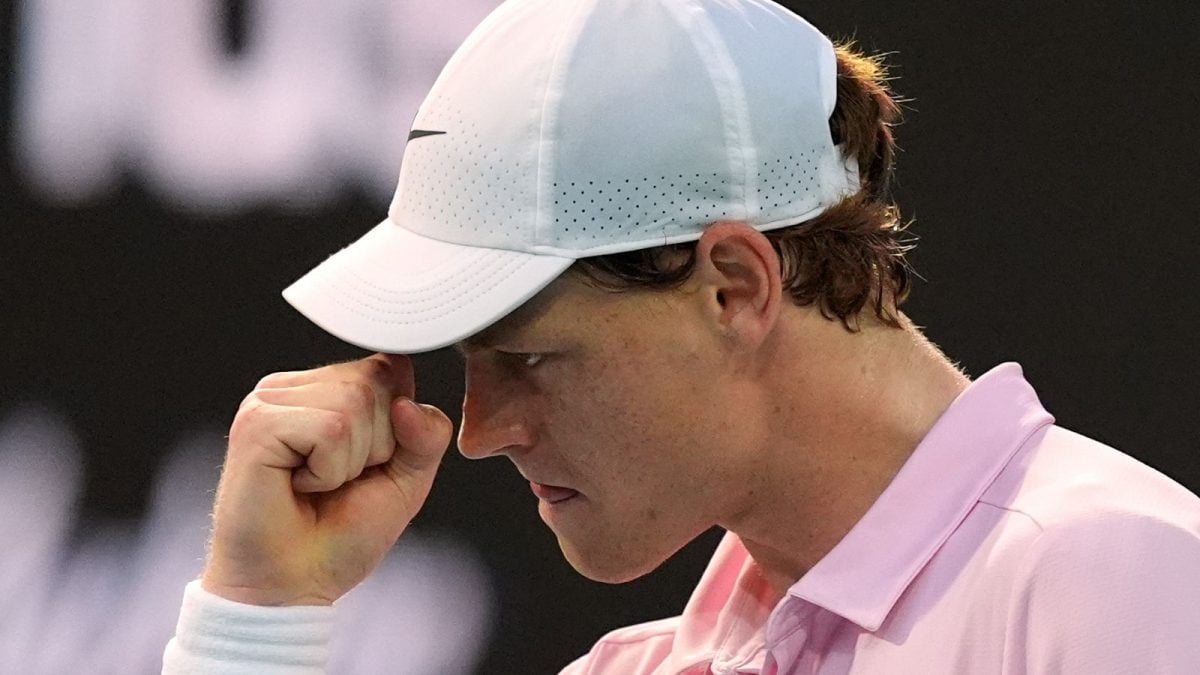
Jannik Sinner makes history with a flawless Sunshine Double, defeating Jiri Lehecka in the Miami Open final and closing in on Carlos Alcaraz for world number one.
Four‑time Grand Slam champion Jannik Sinner on Sunday created a piece of history by becoming the first player, male or female, to pull off a Sunshine Double without dropping a single set. In the final of the Miami Open Jannik Sinner thrashed Jiri Lehecka in straight sets, leaving the crowd in awe.
It wasn’t just a smooth win; there were rain interruptions both before and during the match. Even with those delays Jannik Sinner completed the Sunshine Double, becoming the first man since Roger Federer in 2017 to sweep the California and Florida hard‑court events, and the first ever to do it without losing a set.
If you ask any Indian tennis fan who follows the sport on Sony or SonyLiv, you will hear them say that Jannik Sinner’s run feels like watching a Bollywood hero nail every stunt in a single take. The consistency, the power, the calm – it reminds us of a cricket bowler who bowls a perfect over in the IPL without a single wide.
Jannik Sinner’s path to this achievement is also interesting. He had won Miami in 2024 but missed the following edition because of a three‑month doping ban. Bouncing back, Jannik Sinner has now stitched together three successive Masters 1000 titles, a sequence that started with his win in Paris last year.
Another cool fact is that since 1990 Jannik Sinner is only the third player to claim his first seven ATP Masters 1000 titles on a single surface. The other two are Michael Chang and Andy Murray, both of whom achieved the feat on hard courts. It shows just how comfortable Jannik Sinner is on this surface – the same surface we use for many national level tournaments across India.
“It is a very, very special moment. Coming here, performing again in a very good way after Indian Wells, means a lot to me. It is something I never would have thought (I’d win) because it is difficult to achieve,” Jannik Sinner said after the match.
Jannik Sinner’s win, together with Aryna Sabalenka’s victory over Coco Gauff, marks the first time since Novak Djokovic and Victoria Azarenka in 2016 that both the men’s and women’s Sunshine Double have been completed in the same year. For a country like India, where tennis still fights for airtime against cricket, such milestones give a huge boost to the sport’s visibility.
The win also narrowed the gap between Jannik Sinner and Spain’s Carlos Alcaraz in the race for world number one. Carlos Alcaraz was upset in the third round, giving Jannik Sinner a little breathing space as the clay‑court season looms.
Early showers delayed the match by over an hour and just after Jannik Sinner took the first set, rain struck again, forcing a further 90‑minute stoppage. Watching from my living room in Delhi, I could feel the tension rise every time the clouds gathered. The TV commentary kept reminding us how players have to stay mentally sharp despite the weather drama.
Despite the interruptions, Jannik Sinner was unfazed. He fired 10 aces and won 33 of 36 points when his first serve was in play. That kind of serving dominance is rare, especially after a long rain break when the court becomes a bit slippery.
Jannik Sinner’s return game was also spot on. He handed Jiri Lehecka his first service break of the tournament for a 2‑1 lead in the opening frame. That early break set the tone for the rest of the match.
When we look at Jannik Sinner’s journey, it’s worth recalling his early days playing on the red clay courts of the Italian Alps. He grew up in a small town near Rome, swinging a racket that was often borrowed from older kids. Fast‑forward a few years and Jannik Sinner is now smashing aces on the hard courts of Miami, a story that resonates with many Indian youngsters who practice on makeshift courts in crowded parks.
Another interesting angle is how Jannik Sinner’s success is influencing the ATP rankings. After the Miami Open, Jannik Sinner’s points tally rose dramatically, putting him within striking distance of Carlos Alcaraz. The ranking battle is now more exciting than ever, and Indian fans are keeping a close eye, especially since both players often appear in the same draws during the Asian swing.
From a technical perspective, Jannik Sinner’s game is built on a solid two‑handed backhand, a powerful forehand, and a serve that has become more consistent over the past year. If you compare it with the style of Indian tennis star Leander Paes in his doubles days, Jannik Sinner’s baseline aggression feels like a modern twist on classic fundamentals.
In most cases, players who achieve a Sunshine Double tend to dominate the summer hard‑court season. That was the case for Roger Federer in 2017 and now it is Jannik Sinner’s turn. What’s fascinating is that Jannik Sinner managed to stay unbeaten throughout the tournament, a rarity in modern tennis where upsets are common.
Seeing Jannik Sinner lift the trophy made me think about the importance of mental resilience. The rain delays could have broken the momentum for any other player, but Jannik Sinner kept his focus. He has spoken before about meditation and visualisation, practices that many Indian athletes are now embracing.
Beyond the court, Jannik Sinner’s win is sparking conversations about the future of the sport in India. The Lawn Tennis Association of India (LTAI) is planning more grassroots programmes, hoping that stories like Jannik Sinner’s will inspire the next generation of Indian players to aim for the top echelons of the ATP.
It’s also worth noting the role of technology and data analytics in Jannik Sinner’s preparation. Coaches now use video analysis, wearable tech and even AI‑driven insights to fine‑tune a player’s game. In my own experience, watching a match on television and being able to freeze‑frame a rally gives a deeper appreciation of the small margins that separate a win from a loss.
When Jannik Sinner’s name is mentioned alongside legends like Roger Federer, Michael Chang and Andy Murray, it highlights how quickly he has risen through the ranks. The fact that he achieved his first seven Masters 1000 titles on hard courts within a relatively short span is a testament to his adaptability.
Fans in India who watched the match from home or in local sports bars were treated to a masterclass in baseline play. The crowd’s reaction after each point – a mixture of applause, cheers and occasional gasps – added to the atmosphere, even though the stadium was partially empty due to the weather.
Talking about the match’s key moments, the first set was decisive. Jannik Sinner broke Jiri Lehecka early and never looked back. The second set saw Jiri Lehecka trying to fight back, but Jannik Sinner’s serve remained unbreakable and his groundstrokes kept finding the corners.
What also stands out is the sportsmanship displayed by both sides. After the final point, Jannik Sinner walked over to Jiri Lehecka, exchanged a handshake and shared a few words in the locker room. That humility is something many Indian fans admire, as it reflects the values taught in our own sports culture.
Looking ahead, the next big challenge for Jannik Sinner will be the clay‑court season in Europe. The transition from hard courts to the slower clay surfaces requires adjustments in footwork and tactics. If Jannik Sinner can replicate his hard‑court dominance on clay, the tennis world may have a new dominant force.
For now, the Sunshine Double achievement gives Jannik Sinner a massive confidence boost. The audience in Miami, which included a few Indian expatriates, gave a standing ovation that lasted a good minute. It reminded me of the crowds at the Chennai Open when a local player made a deep run.
Finally, let’s not forget the impact on the ATP ranking race. With Jannik Sinner closing the gap on Carlos Alcaraz, the next few tournaments will be fiercely contested. The excitement is palpable, and for Indian tennis enthusiasts, it adds another layer of drama to follow.