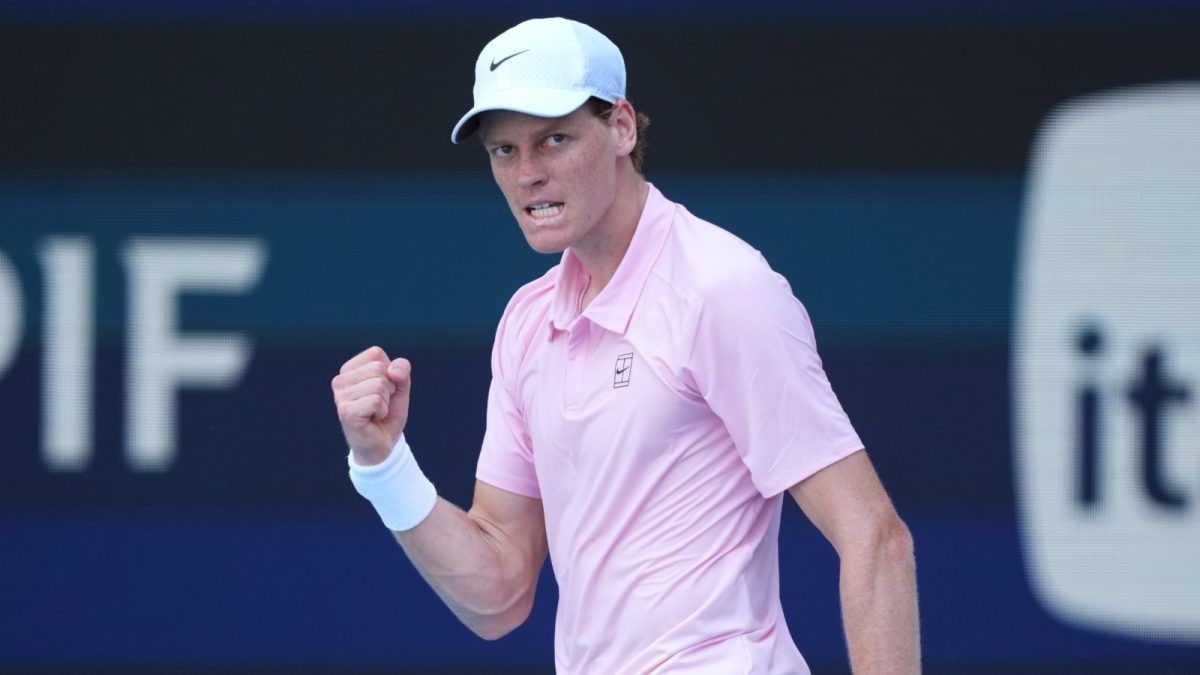
Sinner becomes the first player ever to win three consecutive ATP Masters titles without dropping a set -- eclipsing even Federer and Djokovic with his historic run.
Okay, so you’ve probably heard the line "It’s Jannik Sinner’s world, and we’re merely living in it," tossed around on tennis panels and social media feeds. It does sound a bit cliché, doesn’t it? But then again, clichés stick around for a reason – they capture a truth that’s hard to ignore. And the truth here is that the Italian prodigy is doing things no one else has managed, at least not in the modern era of ATP Masters 1000 events.
When I first heard that Jannik Sinner had sealed three Masters crowns in a row without losing a single set, I could barely believe it. I mean, think of the legends – Roger Federer, Novak Djokovic – the very same guys who have dominated courts for over a decade. To suddenly see a 24‑year‑old from Italy rewrite the record books felt a bit like watching a new Bollywood star suddenly outshine the veteran actors in a big‑budget film.
What the Numbers Actually Mean
Let’s break it down in plain terms, because sometimes the jargon can sound a little intimidating. An ATP Masters 1000 tournament is just one tier below the Grand Slams, but the competition is fierce – most of the top‑ranked players show up, and the points on offer are massive. Winning one Masters event is a big deal; winning two back‑to‑back is rarer still. But winning three in a row, and doing it without dropping a set, is something we’ve never seen since the current Masters format started back in 1990.
Jannik Sinner’s streak started with a maiden Masters win at the Indian Wells Open – his first big‑lights victory at that level. He then guarded that momentum into the Paris Masters last season, cruising through the draw without losing a single set. Finally, he capped the trilogy at the Miami Open, beating Jiri Lehecka 6‑4, 6‑4 in a final that saw a brief rain interruption (the kind that makes us all think about pulling out a quick chai break). That final win not only gave him the third consecutive title but also completed what’s known in tennis circles as the “Sunshine Double”.
Now, the Sunshine Double isn’t just a fancy phrase. It refers to winning both Indian Wells and Miami in the same calendar year – two big tournaments that both sit under the bright, often scorching, American sun. Before Sinner, the last player to pull this off was Roger Federer in 2017. In total, only eight men have ever done it, with Djokovic and Federer having done it multiple times. So Sinner joining that exclusive list is a clear signal that he is entering the very top echelons of the sport.
And get this – across those three tournaments, Sinner has put together a streak of 34 consecutive sets won at Masters level. That’s a streak longer than most players manage across an entire season. It’s like scoring a hundred runs in cricket without a single dismissal – except here it’s a tennis racket, not a bat.
A Look Back at the Miami Final
The Miami Open final was a perfect illustration of why we’re all talking about Jannik Sinner. The match started under a clear sky, but a sudden drizzle forced a short break – the kind of weather you hear about in Mumbai during the monsoon. When play resumed, Sinner seemed even more focused. He served with a calm that reminded me of my uncle’s steady hand when he’s fixing a bike – precise, unhurried, and effective.
Jiri Lehecka, the Czech opponent, put up a fight and managed to break Sinner’s serve a couple of times, but Sinner responded with a series of blistering forehands that left the crowd gasping. By the end of the second set, the scoreboard read 6‑4, 6‑4 – a straight‑sets win that capped his unbeaten set run at the Masters level.
What struck me most was Jannik’s composure after the rain pause. He didn’t rush back onto the court; instead, he went over to the baseline, stretched a bit, and nodded at the umpire as if saying, “let’s get this over with, no drama”. That calmness is something you rarely see in someone so young, especially when the pressure is as high as securing a historic treble.
How Sinner Sets Himself Apart – The Inside Story
Winning two Masters events without dropping a set is already a rarity. To do it across three successive tournaments is, quite literally, unprecedented. Since the Masters 1000 format began, we’ve seen greats chase after long winning streaks, but none have managed this particular combination of consistency and dominance.
When I chatted with a couple of coaches at my local tennis academy in Bengaluru, they all pointed to three core aspects of Sinner’s game: his physical preparation, his mental resilience, and his strategic adaptability. The first part – fitness – is something you can see on the court. He covers the court with effortless speed, his footwork resembles the fluidity of a well‑trained dancer. The second part – mental toughness – shows up when he’s at tie‑breaks, handling pressure like a seasoned pro who’s already won a few big titles. Finally, his tactical sense – switching from a heavy topspin baseline game to coming to the net when needed – is something even seasoned players sometimes forget.
One practical observation I made while watching his matches on TV with my family is how often he changes the spin on his forehand. In one rally, he’d hit a high‑bouncing topspin ball, and the next, a low, heavy slice that forced his opponent to scramble. It’s like watching a chef switch from a spicy curry to a mild dal in the same meal – keeping the palate (or the opponent) guessing.
And let’s not forget the role of his support team. Sinner himself said, “It has been an incredible swing for me, and I’m extremely happy with the work we did to be in this position.” He also noted the quality of practice days before Indian Wells. Honestly, that sounds a lot like the diligent preparation we all do before a big family function – rehearsing the dishes, picking the right outfits, and making sure every little detail is sorted.
From a Quarter‑Final Exit to a 19‑2 Record – The Turnaround
Earlier this year, Sinner experienced a disappointing quarter‑final exit at the Qatar Open. It was a reminder that even great players have off‑days. But rather than letting it dent his confidence, he used that loss as a catalyst. Over the rest of the season, he amassed a 19‑2 record – a win‑loss ratio that would make any seasoned player nod in approval.
Talking about his mental switch, I remember a conversation I overheard on a local cricket ground, where youngsters were arguing about the importance of patience in a game. One of them said, “If you rush, you miss the perfect ball.” That philosophy seems to apply to Sinner as well. He doesn’t rush his points; he builds them patiently, waiting for the right moment to strike – much like a waiter timing his service to ensure the food reaches the table hot and fresh.
His resurgence also highlights a broader shift in men’s tennis. While fresh faces like Carlos Alcaraz are making waves, Sinner’s consistency shows that the next generation isn’t just about flash; it’s also about durability, work ethic, and the ability to string together performances across different surfaces and conditions.
What the Sunshine Double Means for Indian Fans
India has a huge tennis following – from the days of Leander Paes and Mahesh Bhupathi to the emerging stars like Sumit Nagal. Watching Sinner bring home the Sunshine Double feels a bit like seeing a familiar face at a local wedding – you know you’re going to enjoy the spectacle.
In many Indian households, tennis matches are watched on a big TV in the living room, with families gathering around, munching on pakoras, and cheering loudly during crucial points. When Sinner’s name flashed on the screen and the commentator mentioned his perfect set streak, the whole room burst into applause. The excitement was palpable, much like the fervor we feel when India wins a crucial cricket match.
For younger fans, his story becomes a source of inspiration. The idea that a 24‑year‑old from Italy can dominate the sport without dropping a set teaches a lesson about discipline and perseverance – values that resonate deeply with Indian culture.
How This Shapes the ATP Rankings
Even after all this brilliance, Jannik Sinner is still trailing his arch‑rival Carlos Alcaraz in the ATP rankings by 1,190 points. While the gap may look big on paper, remember that each Masters win adds a massive 1,000 points to a player’s tally. With Sinner now a seven‑time Masters 1000 champion, the leaderboard could see a shake‑up soon if he keeps this momentum.
Historically, when players like Federer or Djokovic began a streak of consecutive Masters victories, the rankings followed quickly. The same is likely for Sinner. If he adds another big title – perhaps at the Monte Carlo Masters or the Rome clay event – we could see him closing the gap faster than a Mumbai local train arriving on time (which, let’s be honest, is a rare sight!).
Moreover, the ranking points highlight how dominant the Masters circuit is. Winning a Grand Slam gives you 2,000 points, but three Masters titles net you 3,000 – a higher total than a single major. For a player like Sinner, who is consistently performing at a high level, focusing on Masters events could be a strategic move to climb the rankings rapidly.
What Might Be Next for Jannik Sinner?
Looking ahead, the big question on everyone’s mind is: what’s next for the Italian sensation? Will he set his sights on a Grand Slam title soon, or will he continue to dominate the Masters circuit? Personally, I think he’ll try to balance both.
Given his recent form, I can see him walking into the Australian Open with a lot of confidence, perhaps even aiming for a deep run. The Australian heat is something he’s already gotten used to after the Miami and Indian Wells challenges, so that might work in his favor.
Beyond the courts, the media buzz around him is growing. In India, every time a new Indian tennis talent emerges, we see an influx of articles, interviews, and talks on TV. I can imagine broadcasters soon inviting Sinner for interviews because his story is compelling – a blend of youthful energy, disciplined training, and a dash of European flair that wins hearts worldwide.
Whatever path he chooses, one thing’s clear: his run has already inspired a new generation of players back in Italy and across the globe, especially in places where tennis isn’t the primary sport. And that’s something we should all celebrate.
Final Thoughts – A New Era Beckons
To sum it up, Jannik Sinner’s three‑title streak, completed without dropping a single set, is a milestone that will be talked about for years. It’s a testament to what dedication, hard work, and belief can achieve – things we all understand well, whether we’re preparing for a board exam, running a family business, or simply trying to beat the traffic during rush hour.
For tennis fans in India, it’s a reminder that the sport is evolving, and fresh talent is constantly reshaping the narrative. Watching Sinner’s rise feels like seeing a new Bollywood star making it big – you can’t help but feel a bit proud and excited for what’s to come.
So, the next time you’re sipping chai on a rainy evening and the TV shows a Masters match, keep an eye out for Jannik Sinner’s name. You might just witness another piece of history being written, one set at a time.
And who knows? Maybe one day we’ll see an Indian player matching his achievements, bringing that Sunshine Double home to the subcontinent. Until then, let’s enjoy the ride and keep cheering for the beautiful game.