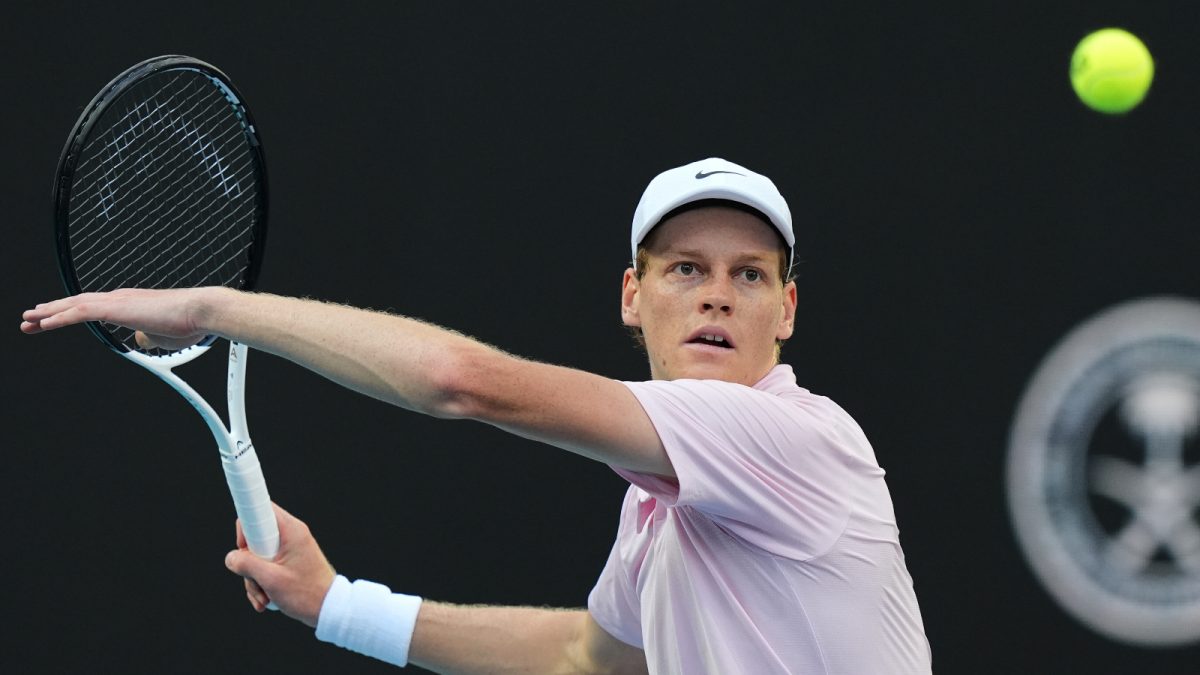
Jannik Sinner topples Federer after breaking Djokovic’s record, climbing to No. 3 all‑time in Masters 1000 win percentage while extending his insane 28‑set winning streak.
Honestly, watching Jannik Sinner play these days feels like watching a high‑speed train that just refuses to stop. He’s been bulldozing through the big names and the big records with a kind of calm aggression that makes you wonder if he’s even trying to be gentle at all.
It was less than a day after he smashed Novak Djokovic’s benchmark for most consecutive sets won at ATP Masters 1000 events that he turned his attention to another titan – the great Roger Federer. You could say the vibe in the arena shifted after the first serve; you could almost hear the murmurs of the crowd wondering if another legend was about to be added to the list of those humbled by the Italian youngster.
And then, with a gritty 7‑5, 7‑6(4) victory over Alex Michelsen in the fourth round of the Miami Open, Sinner not only booked himself a spot in the quarter‑finals but also made a bold statement in the records books. He edged his way past the 77.91% win‑percentage mark that Federer held for years, nudging his own career Masters 1000 winning percentage to a staggering 78.03% (103 wins to 29 defeats). That tiny fraction of a percent might sound almost negligible, but in a sport where every point is fought for, it feels massive.
What makes this even more astonishing is that Sinner began the tournament sitting at a modest fifth place on the Masters 1000 win‑percentage list. Fast forward a few matches, and he’s squeezed in between Rafael Nadal and Novak Djokovic, with only those two legends standing above him. It’s a moment that feels like a dream for any tennis fan who has followed his rise from the junior circuits of Italy.
- Nadal – 82.00% (410–90)
- Djokovic – 81.40% (420–96)
- Sinner – 78.03% (103–29)
- Federer – 77.91% (381–108)
- Alcaraz – 77.39% (89–26)
Seeing those numbers side by side feels a bit like looking at a scoreboard in a school class – you know, the one where everyone’s hoping to sit at the top. But for Sinner, this isn’t just a number; it’s a testament to the consistency he’s managed to build, especially in the big‑stage events that matter the most.
Besides the win‑percentage, there’s another streak that’s been quietly gathering steam – a 28‑set winning run across Masters 1000 tournaments. With today’s victory, he extended that streak, showing that his dominance isn’t limited to just one event. It’s as if he’s saying, “I’m not just here for a flash in the pan; I’m here to stay.”
Sunshine Double vibes – joining the exclusive club
Now, this win also nudged Sinner into a very exclusive club. He’s become just the fourth player ever to rack up fifteen or more consecutive match wins across the two premier American swing events – Indian Wells and Miami. The other members? None other than Federer, Djokovic and the younger sensation Carlos Alcaraz. If you ask any local fan in Chennai or Delhi, they’ll tell you that pulling off a “Sunshine Double” is like scoring a hat‑trick in cricket – rare, celebrated, and talked about for weeks.
Still, despite the accolades and the numbers stacking up, Sinner seemed a bit grounded after the match. He admitted, “I didn’t feel my best tennis today, so I tried to find a way through. I know myself a little bit better now, so I know that every day can be a little bit different.” It’s that humility that makes his story relatable. He knows his game is still evolving, and the next step, according to him, is sharpening his back‑court play – something that could make him even more lethal on the big stages.
He also praised his serve, especially during the crucial tie‑break moments. “I felt like the serve helped me quite a lot today, especially in important moments, tie‑break also, so I’m happy about that.” In the Indian tennis circles, we often joke that a good serve is like a good cup of chai – it can turn a dull morning into something lively.
Personal reflections – why this matters to fans like me
Honestly, I was glued to the TV with a bowl of popcorn (yes, I do that during tennis matches) when Sinner’s final point clipped the line. Growing up, my cousins and I used to watch Federer’s graceful footwork and Djokovic’s unflinching returns, but seeing someone younger than both, with a calm that’s almost meditative, felt refreshing. It reminded me of how rapidly the sport is evolving, and how legends can be challenged faster than before.
In India, the tennis fandom is still very much tied to the big names – the Federer grace, the Djokovic tenacity, and the Nadal passion. But now we have a new hero that many of us are starting to cheer for. Sinner’s rise is particularly inspiring for youngsters who play on the cramped courts of Mumbai’s parks or the dusty grounds of villages in Karnataka. It tells them that hard work, discipline, and a love for the game can take you from local courts to the glitz of Miami, breaking records along the way.
Another thing that struck me was the way Sinner handled pressure. When faced with a tie‑break, he didn’t panic. He said his serve helped him, and you could tell from his body language that he was trying to stay relaxed, whispering to himself “just one point at a time”. This reminds me of the way my uncle, who is a school teacher, handles his exam‑marking – methodical, calm, and never letting the sheer volume of papers overwhelm him.
What’s next for Sinner? The quarter‑final showdown
Looking ahead, Sinner is now set for his 20th Masters 1000 quarter‑final appearance – a milestone that many seasoned players don’t even reach in their whole careers. His next opponent will be decided between Frances Tiafoe and Terence Atmane, both of whom bring their own flavor of game. Tiafoe, with his powerful forehand, could test Sinner’s back‑court tactics, while Atmane’s agility and slick slice could force Sinner to adapt quickly.
If you ask anyone who has followed the tournament from start to finish, they’ll say the quarter‑finals are where the real battle begins. The pressure mounts, the crowds become louder, and the margin for error shrinks dramatically. Sinner himself admitted that to go deeper he needs to “improve from the back of the court”. That’s a clear sign he’s aware of the gaps and is ready to work on them.
For us fans, it’s a moment of anticipation. Will Sinner’s serve continue to be his weapon? Will his new back‑court focus pay off? And can he keep that amazing 28‑set streak alive? All we can do is keep cheering, perhaps with a cup of chai in hand, and hope the Italian prodigy adds another chapter to his already remarkable story.
Broader implications – a new era in men’s tennis?
When you look at the bigger picture, Sinner’s ascent signals a subtle shift in the hierarchy of men’s tennis. For decades, the conversation revolved around the “Big Three” – Federer, Nadal and Djokovic. Their dominance was almost taken for granted. But the emergence of players like Sinner, Alcaraz, and the ever‑consistent Medvedev indicates that the era of unquestioned supremacy might be winding down.
From an Indian perspective, this change is welcome. The sport’s popularity here has always been a bit niche, limited to a devoted fan base. However, when a young player from outside the traditional powerhouses starts breaking records, it sparks fresh interest. The local media begin to run stories, coaches start to tell their students about the “new style” that Sinner brings – a mix of aggressive baseline play and calm tactical thinking.
Moreover, the fact that Sinner achieved this while still being in his early twenties adds a layer of excitement. It suggests that the competition will be fierce for many more years, giving youngsters in India a realistic role model to look up to. It might even influence the next generation of Indian players to adopt a more aggressive, yet mentally resilient style of play.
Final thoughts – why I’m rooting for Sinner
To be completely honest, I’m not just impressed by the statistics, although they are mind‑blowing. What truly draws me to Sinner is his attitude. He’s proud of his achievements but never complacent. He admits his imperfections, works on his back‑court, and respects his opponents – qualities that resonate with many of us who juggle work, family, and personal ambitions.
Every time he steps onto the court, there’s a sense that something extraordinary could happen. That unpredictable energy, combined with his disciplined work ethic, makes him a player you can watch again and again without losing the thrill.
So, as the Miami Open continues, I’ll be keeping an eye on the quarter‑finals, cheering loudly for Sinner, and hoping that his run inspires not just tennis fans in Europe or America, but also the countless kids who play on cracked concrete courts in Hyderabad, Pune, and Kolkata. If an Italian teenager can do it, maybe one day we’ll see an Indian name etched into the same record books.
Until then, let’s enjoy the show, keep the conversation alive, and maybe, just maybe, raise a toast (with a chai or a cold drink) to the next chapter of this fascinating journey.