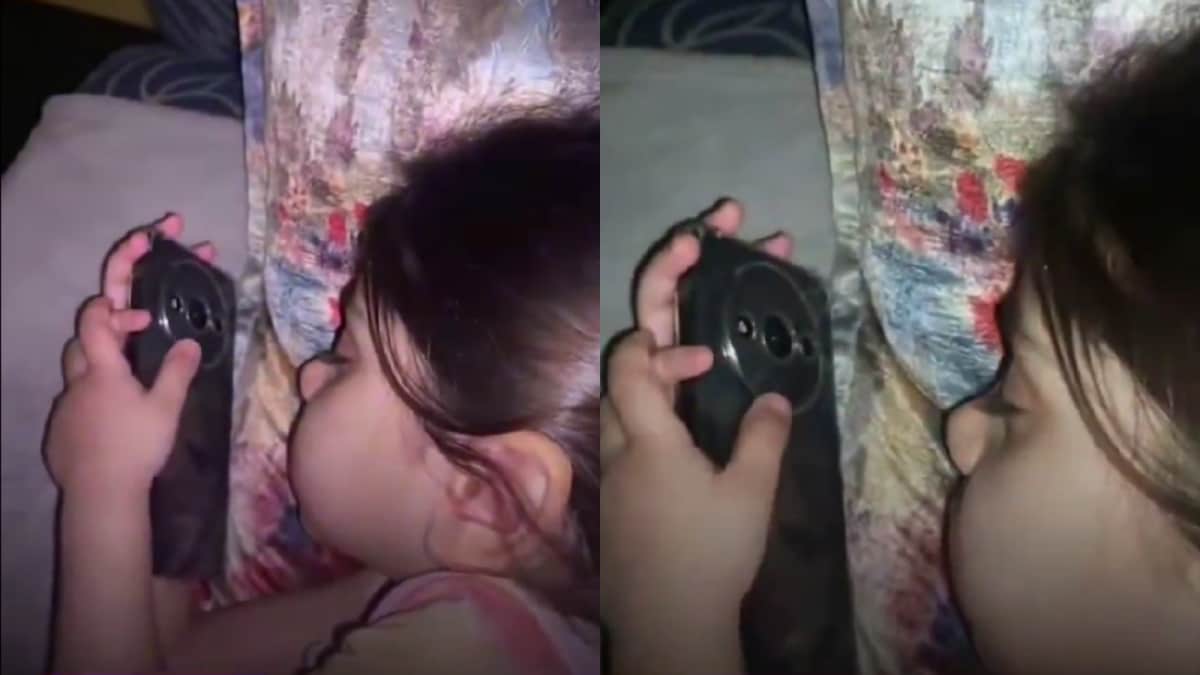
What the video actually shows
So, the clip starts with a tiny child lying on a mattress, clearly in deep sleep – eyes shut, breathing slow, the whole picture of a typical bedtime. In the child's hand, a mobile phone is pressed against the face, the glow of the screen just barely lighting the night‑stand. Even though the brain seems to be off the clock, the little girl’s finger keeps drifting across the screen. It’s not a frantic swipe, more like a sleepy glide, as if she’s still trying to find the next reel she might have been watching before dozing off. The camera moves a bit closer, and you can see the relaxed expression on the little girl’s face – no sign of waking up, no startled reaction. Yet the little girl’s hand repeats the same motion, as if the habit has taken over the muscle memory.
Watching this, I could not help but think of the many evenings in my own house when my niece would clutch a tablet so tightly that even the sound of a cricket chirp couldn’t distract her. It’s the same feeling – a child so used to the flickering screen that the reflex just keeps going, even when they’re supposed to be dreaming.
How people reacted online
The moment the video hit the feeds, comments started pouring in from all over India. Some were shocked, some were angry, many were simply worried. A common thread was the blame placed squarely on parents. One user wrote something along the lines of, “Bhai, it’s always the parents’ fault and this isn’t even a fault because when they have to do their own stuff they just hand the kids the phone and boom, eyes doomed.” Another comment went, “Every parent should watch this video and keep their phones away from their children as much as possible.”
Another netizen summed it up straight, "It is our mistake, parents are the convicts here." The tone was almost pleading – as if the whole nation needed a reminder that these tiny hands are learning habits that could stick for life. A particularly striking comment said, “It feels so sad to see even. Imagine the kind of effect this has on the mind. Do we need more proof?”
Even people who generally defend the usefulness of smartphones admitted that the addiction is real. One said, “Phone addiction is so real, the little girl’s scrolling in her sleep while we adults can’t even put it down when awake.” The sentiment felt like a collective sigh, a recognition that we’re all fighting the same battle, just at different stages.
Why this matters for Indian families
In most Indian households, a mobile phone has become a kind of Swiss Army knife – it’s a camera, a messenger, a news source, an entertainment hub, and a babysitter rolled into one. When parents are juggling work from home, cooking, and trying to keep a toddler from turning the house into a mini‑disaster zone, the phone offers an instant, quiet solution. But the video shows what happens when that solution becomes a crutch that the child starts to rely on even when they’re supposed to be asleep.
There are also cultural nuances. In many joint families, grandparents often give grandchildren a phone to keep them occupied while the adults discuss everything from wedding plans to the latest cricket scores. It’s a generational thing: the older generation sees the phone as a harmless distraction, while the younger generation, growing up with social media, might already be forming a deeper attachment.
From my own experience, I recall a rainy monsoon evening when my cousin’s baby was fussy, and the only thing that seemed to calm him down was a short video of a dancing cat on the phone. Within minutes the baby was giggling, the parents were relieved, and the phone was set aside for the rest of the night. That moment felt victorious until we later realized the baby started reaching for the phone first thing the next morning. It’s a tiny example, but it mirrors the larger pattern we see in the viral clip.
What science says about screen time and sleep
Research from child psychologists and paediatricians in India and abroad consistently warns that excessive screen exposure, especially before bedtime, can disrupt the production of melatonin – the hormone that tells our bodies when it’s time to sleep. The blue light from a phone’s screen can trick the brain into thinking it’s still daylight, making it harder for kids to drift off naturally.
In the case of the little girl in the video, we see a scenario where the habit has been reinforced to the point that the motor action continues even after the brain’s sleep‑centre has taken over. This isn’t just a cute trick; it could indicate that the child’s neural pathways are being wired to associate the screen with relaxation, rather than a tool that needs to be put away at night.
Furthermore, short‑form video platforms like reels, TikTok, and Shorts are designed to be addictive – they feed you content just fast enough to keep your attention without letting you pause for a breath. For a developing brain, this rapid stimulus can become a powerful reinforcement loop.
Personal anecdotes from parents across the country
One mother from Chennai wrote, “I used to let my son watch cartoons on the phone while I cooked. He loved it, but after a few months he started demanding the phone the moment I entered the kitchen. The whole house sounded like a tiny marching band of “more, more, more!”
Another father from Pune shared, “During the lockdown I bought a cheap tablet for my daughter to keep her occupied while I worked from home. It helped, but after we returned to school, she screamed whenever the tablet was out of reach. Even now, at night, she tries to pull it from my side of the bed.”
These stories echo the sentiment in the comment section of the video – that the convenience of a phone can quickly turn into a dependency that’s hard to break. Many parents said they are trying “screen‑free” evenings, turning off Wi‑Fi after 8 pm, and replacing phone time with board games or storytelling. The results are mixed – some families swear by the change, while others find it impossible to keep the phone away for more than a few minutes.
Practical tips for cutting down screen‑time
While the problem feels huge, a few small steps can make a visible difference. Here are some ideas that many Indian parents have tried:
- Set a “phone basket” at bedtime: Keep all devices in a designated spot across the room once it’s time to sleep. The little girl’s phone in the video was right next to her face; moving it away can break the habit.
- Use parental control apps: Many smartphones now have built‑in features that limit usage after a certain hour. It’s not a perfect solution, but it adds a layer of enforcement.
- Introduce analog alternatives: Traditional Indian games like carrom, ludo, or even a simple deck of cards can keep children engaged without any blue light.
- Make bedtime a ritual: A warm bottle of milk, a short story in Hindi or a lullaby can replace the soothing effect that the phone’s screen provides.
- Lead by example: If parents constantly scroll through their own phones, kids will mimic that behaviour. Putting the phone away during family meals can set a powerful example.
My own family tried the phone‑basket method for a week during the Diwali holidays. At first, the kids resisted, whining “why no reels?” but after a couple of days they started asking for “story time” and even began drawing pictures of their favourite cartoon characters on paper instead of on a screen. It wasn’t flawless, but it showed how simple changes can shift the habit.
Broader implications – what this says about our digital age
The video may have caught a single moment, but it mirrors a larger shift in Indian society. With affordable smartphones and cheap data plans, even the most remote villages now have children growing up with a device in their hands from a very early age. The line between play, learning, and addiction is getting blurrier every day.
And it’s not just about the little girl’s sleep. It’s about how we, as a community, set up the environment for the next generation. Are we creating spaces where a child’s curiosity is satisfied through endless scrolling, or are we encouraging curiosity through real‑world exploration – the smell of wet soil after monsoon, the taste of fresh samosa from the street vendor, the sound of a rickshaw’s horn echoing down a narrow lane?
In many ways, the debate sparked by this single clip is a mirror held up to our own habits. When we watch phones glued to our faces during a train journey, we’re reinforcing the idea that this is normal. When we give a device to a child to quiet them down for a few minutes, we’re also reinforcing the same message.
Conclusion – a call for mindful parenting
Seeing the little girl’s finger glide over the screen while she slept was a wake‑up call for many of us. It isn’t about blaming parents outright, but about recognising that the tools we hand over to children have a powerful influence. A balanced approach, where phones are used as a supplement rather than a substitute for interaction, could help. It’s about swapping a few minutes of mindless scrolling for a story, a song, or a walk in the neighbourhood park.
In the end, the little girl’s habit teaches us that strong routines can become embedded even when we are not aware. By being intentional about when and how we let devices into a child’s life, we can guide them towards healthier habits – both while they’re awake and when they finally drift off to sleep.
So, next time you hand a phone to a child, ask yourself: is it a short‑term fix, or am I building a habit that will follow them even into their dreams? The answer might just decide whether our future generation scrolls through life or enjoys it in a much richer way.
Israel Iran War NewsIran US Ceasefire