How It All Started – A Simple Day Turned Upside Down
Honestly, I never thought a pair of earbuds could give me such a scare. I was sitting in my hostel room in Rajasthan, trying to finish a long chapter of anatomy while the playlist of my favourite Bollywood songs kept me company. The earbuds I was using were JBL Tune Beam 2 – a gift I had received just a month back from a close friend during a birthday celebration. They were lightweight, the sound was decent, and I liked the fact that they didn’t have any wires getting tangled on my cluttered desk.
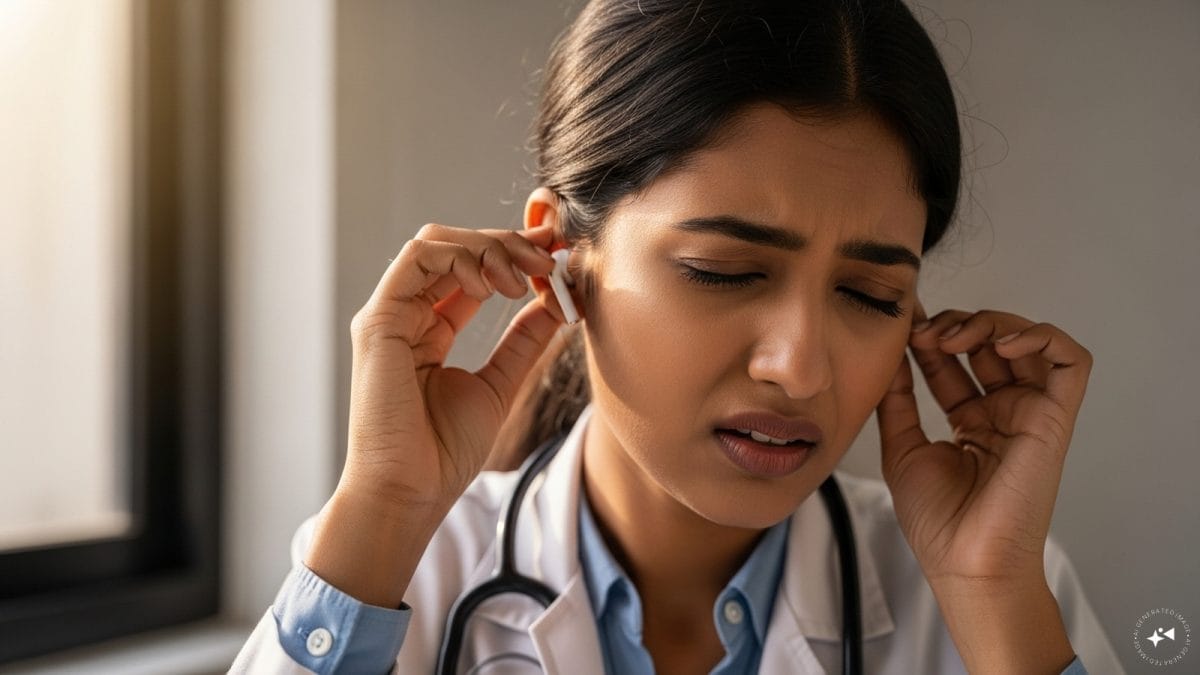
Everything was going fine until, out of nowhere, I felt a sharp pop on the right side of my head. The music stopped abruptly, and the earbud that was snug inside my ear seemed to have…well, “burst”. The word ‘burst’ sounded dramatic, but that’s exactly what my mind narrated. I tried to pull it out gently, but it felt like something inside my ear had expanded and pressed against the inner walls.
The Immediate Aftermath – From Panic to Prescription
After the initial shock, I remembered a senior who once told me about the importance of getting a medical opinion for any sudden ear issues. I decided to visit the ENT department in the college hospital. The doctor examined me, lifted the broken piece of the earbud (the dome had actually cracked), and checked my eardrum using an otoscope.
In simple terms, the doctor told me that the eardrum – the thin membrane that separates the outer ear from the middle ear – was inflamed. He used the term “tympanic membrane inflammation”, which sounded quite serious to me. Along with that, I was experiencing vertigo – that spinning feeling – and a little nausea, which are common when the inner ear gets disturbed.
He gave me a prescription that listed a few anti‑inflammatory ear drops, a short course of oral medication, and instructions to avoid using any earbuds for at least a couple of weeks. The prescription also noted that the injury was “earphone‑related”. I took a photo of the prescription because I wanted to keep a record and, later on, share it to back up my claim.
Taking to Social Media – A Post That Went Viral
Being a medical student, I’m used to documenting cases, although usually for academic purposes. This time, I thought of posting the incident on X (formerly Twitter) to let others know that such gadgets could be more than just a nuisance. I wrote a short post, attached the picture of the broken earbud, a snapshot of the doctor’s prescription, and tagged the consumer safety board, hoping they would look into it.
Within hours, the post started gathering likes, retweets, and comments. People were shocked – many shared similar experiences with cheap earbuds, while others simply expressed concern over the safety of wireless devices. Some users even posted memes, but the overall tone was empathetic. The post kept getting shared across various groups, and soon it was being discussed in college messes, among families, and even in local news portals.
My aim was not to create a drama, but to raise awareness. I never imagined that what began as a personal mishap would become a trending topic, stirring conversations about product quality and consumer rights.
JBL’s Response – A Corporate Acknowledgement
After the post went viral, I started receiving messages from a few people saying they had heard from JBL’s official account. When I checked the JBL handle, there was a short statement: “Hello, thank you for letting us know about the situation. We saw your posts and shared the information with our team in India for a direct follow up with you.” It was a courteous response, but it didn’t directly address the claim that the earbud had “burst”.
From my perspective, this was the first time a big brand publicly responded to an individual complaint that was circulating on social media. It gave me a little reassurance that they were taking it seriously, even though I was still waiting for a concrete solution – like a replacement or a detailed investigation report.
In the days that followed, I got a direct message from a JBL representative asking for more details and offering to replace the defective earbud. While I appreciated the gesture, I also wanted a thorough check to understand how a seemingly sturdy earbud could break so suddenly. After all, brand reputation matters, especially when it involves health.
Public Reaction – Voices from Across the Country
The reaction in the comment sections was a mix of concern, curiosity, and some scepticism. Many users from Delhi, Kolkata, and even smaller towns wrote about how they had faced similar problems with other brands. Some shared anecdotes of earbuds dislodging, causing ear wax blockage, or even producing a mild electric shock due to battery leakage.
A few people pointed out that the cost of JBL Tune Beam 2 was relatively affordable, and therefore, quality control should be robust. Others argued that any electronic device can malfunction, and it’s more about the probability than the brand name. The overall sentiment, however, leaned towards urging manufacturers to adopt stricter testing standards.
There were also discussions about whether the Consumer Protection Act in India should have a specific clause for personal audio devices, given their rising popularity among youngsters, students, and commuters.
Safety Concerns – Are Wireless Earbuds Really Safe?
Ever since personal audio gadgets became a part of daily life – be it during metro rides, while jogging, or in the middle of a study session – we have started to take their safety for granted. The fact that an earbud can literally burst inside the ear canal raises some serious questions. Is it a manufacturing defect, a design flaw, or simply an isolated incident?
From the little research I did after my own ordeal, most earbud failures are linked to battery swelling, poor sealing of the speaker diaphragm, or exposure to moisture. In India’s humid climate, especially during the monsoon, it’s not uncommon for small electronics to absorb moisture, which may affect internal components.
Moreover, the fit of earbuds varies from person to person. Some of us have smaller ear canals, while others have larger ones. A poor fit can cause the device to move around, creating friction that may stress the housing. Over time, that friction can cause cracks that are not visible to the naked eye – until something gives way.
All these factors suggest that while earbuds are generally safe, there is a need for better consumer education. Simple practices like cleaning the earbuds regularly, avoiding usage while sweating heavily, and not exposing them to extreme temperatures can prolong their life and reduce risk.
My Personal Take – Lessons Learned From a Tiny Explosion
Looking back, I realise how quickly I dismissed the importance of a small piece of tech. I used to think that Bluetooth earbuds are just accessories, not something that could cause any harm. The incident taught me that any electronic device that sits close to delicate body parts deserves a bit more attention.
Now, whenever I see a new earbud on the market, I browse through user reviews, specifically looking for any mention of durability or ear‑related issues. I also prefer devices with replaceable ear‑tips and those that come with a warranty covering physical defects.
On a lighter note, I have also started using a simple pair of wired headphones for my daily lectures. They may not be as sleek, but they give me peace of mind – no worries about a sudden pop or a battery leak. It’s a small compromise for safety.
Conclusion – A Call for Better Standards and Consumer Awareness
My experience with the JBL Tune Beam 2 earbud was certainly unexpected. It highlighted a gap that many of us – students, commuters, and music lovers – often overlook: the safety of the gadgets we wear close to our bodies. While JBL’s acknowledgment and the subsequent replacement offer some consolation, the broader issue remains.
Manufacturers need to enforce rigorous quality checks, especially for products marketed to a young audience in a country like India where usage is high. At the same time, consumers must stay informed, read the fine print, and follow basic maintenance practices.
Until more comprehensive safety guidelines are introduced by regulatory bodies, each of us has a role to play – share our experiences, demand accountability, and perhaps, be a little more cautious when we click “add to cart”. After all, a small incident can turn into a big lesson, as I discovered the hard way.