The Unlikely Classroom in Siwan
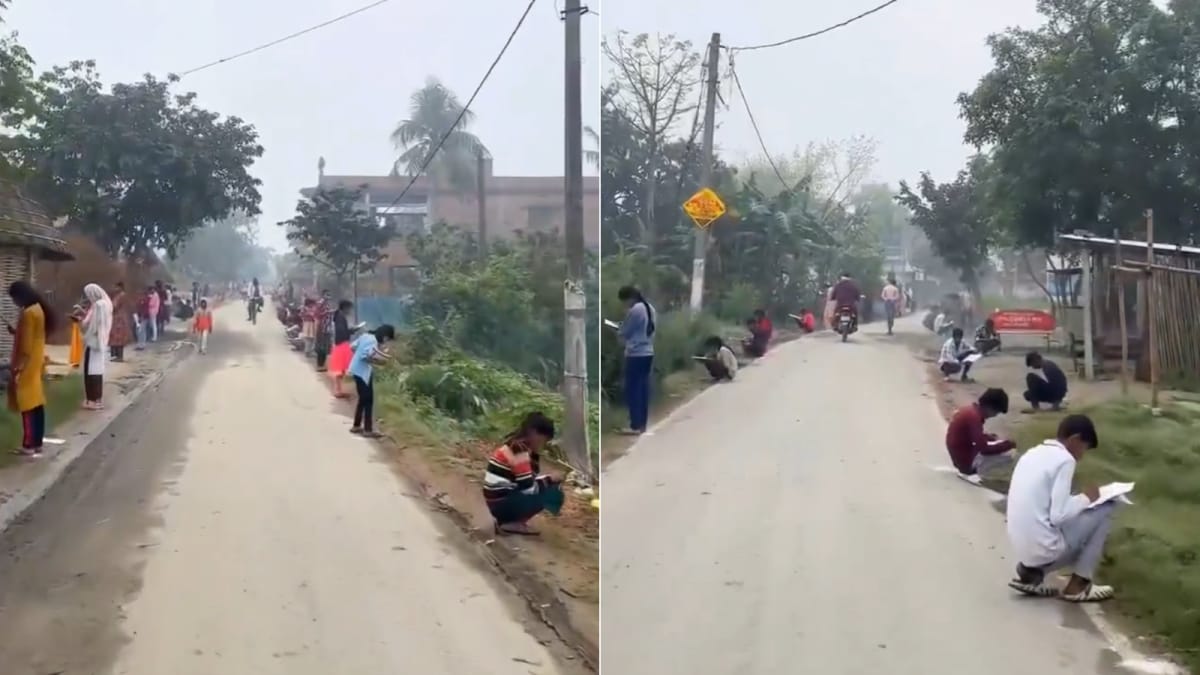
So, the other day I was scrolling through my X feed when a video stopped me dead in my tracks. It wasn’t some celebrity gossip or a cute puppy – it was a bunch of kids, maybe a dozen or so, sitting on the edge of a dusty village road in Siwan, Bihar. They were not just playing; they had books, answer sheets, and a serious look on their faces, trying to finish a test. No desks, no chalkboards – just a stretch of road, a few stray dogs, and the constant hum of motorbikes passing by. It felt like the whole world around them kept moving, but in that tiny bubble, those children were locked into their papers.
What the Video Actually Shows
If you watch the clip a couple of times, you notice the details. Some children are seated on the ground, others stand on a small brick platform, all with heads bent low. A motorbike rattles past, the driver shouting a Greeting, and a woman carrying a basket of vegetables walks by, barely glancing at the scene. You can even hear a distant conversation about the price of onions. The children, however, keep writing, some pausing to glance at the road, maybe to make sure the vehicle hasn't crashed into them. It’s a strange mix of normal village life and a makeshift exam hall. The video caption that came with it read something like, “Children from some coaching institute in Siwan district of Bihar are taking test papers by the roadside. Perhaps that’s why Bihar has the lowest literacy rate in India.” That line hit me hard.
Why It Went Viral
People started sharing it fast. Within hours, it was on countless timelines, retweeted, quoted, and turned into memes. Some folks added a caption saying, “Where open air is the classroom,” while others wrote about the darkness of the lantern still persisting. It became a kind of visual shorthand for the gap between what the Indian education system claims to be – modern, digital, high‑tech – and what, in many places like Siwan, actually looks like. The video gave a face to the abstract numbers you hear about literacy rates. It made it real, gritty, and painfully human.
Social Media Reactions: A Mixed Bag
Scrolling through the comments was like reading a mini‑debate. On one side, you had users pointing fingers at the system, blaming the lack of proper classrooms in government schools. They argued that private coaching institutes have mushroomed because public schools cannot accommodate the huge demand for extra tuition. One comment said, “The government should build real classrooms before we see kids sitting on roads.” On the other side, there were people who praised the kids’ determination. “Look at the spirit of the children,” someone wrote, reminding us that many of these same kids have made it to top engineering or medical colleges despite starting from such humble setups.
Connecting It To Bihar’s Literacy Numbers
Now, you cannot ignore the fact that Bihar consistently ranks low when it comes to literacy. That’s a known statistic, and the Siwan roadside exam was quickly linked to that broader problem. Some users said this scene explains why basic educational facilities are still out of reach for many. They mentioned that the state’s education budget, teacher‑student ratios, and school infrastructure still lag behind the national average. While those are facts that have been discussed for years, seeing kids literally sitting on the road brings an emotional weight to those numbers.
The Role Of Private Coaching Institutes
It’s worth noting that the children in the video were from a coaching institute, not a government school. Coaching centres have become a massive industry in Bihar, especially in districts like Siwan, where parents think extra tuition is the only way to crack competitive exams. The video inadvertently highlighted how these institutes sometimes operate in makeshift spaces because they don’t have the funds for proper halls. Some commenters pointed out that these private centres have filled a void left by under‑funded government schools, but at the cost of exposing students to uncomfortable, even unsafe, learning environments.
Everyday Life Continuing Around Exams
What struck me most was the backdrop of ordinary village activity. A rickshaw pulled up, a vendor shouted out the price of mangoes, children from nearby houses played cricket on the other side of the road, and the usual chatter of a Saturday market went on. Yet the exam‑takers remained focused. It was as if they had built an invisible wall around themselves, keeping the world at bay while they tackled the questions. That kind of resilience, you know, is something you don’t see every day, especially when the environment isn’t conducive to study.
Personal Reflections On Seeing The Scene
Honestly, when I first saw the video, I felt a mix of sadness and admiration. Sad because it showed how much we still have to improve, and admiration because these children, despite all the odds, still showed up and tried their best. It reminded me of my own school days in a chawl in Mumbai, where classes were held in cramped rooms, yet we managed to write exams with the same determination. The difference is that in my case, there was at least a roof – here, the sky itself is the ceiling.
Why The System Needs To Change
Many of the comments, especially from education activists, argued that the blame should not lie on the children. The real problem, they said, is the lack of proper infrastructure, shortage of trained teachers, and insufficient government spending on schools in Bihar. They urged policymakers to prioritize building real classrooms, providing basic furniture, and ensuring that exams can be held in safe, quiet environments. Some even called for a stricter regulation of private coaching institutes, so they cannot operate without meeting basic standards.
Stories Of Success From Similar Backgrounds
Amid the criticism, there were also uplifting stories shared. People pointed out that many students from Bihar, some from places just like Siwan, have gone on to study at IITs, NITs, and even abroad. One user highlighted a boy who used to study on a roadside bench in Siwan but later secured a scholarship at a top engineering college. These anecdotes served as a reminder that while the environment may be harsh, the willpower of these youngsters can break through barriers.
What Could Be Done At The Grassroots Level
Local NGOs and community groups have tried to step in, setting up temporary shelters or providing basic stationery to kids who have no proper place to study. Some volunteers have organized after‑school tutoring in village panchayat halls, which are a bit more stable than a roadside. The conversation online also sparked ideas about community donations to improve the existing coaching centre’s space – maybe a few benches and a roof could change the situation dramatically.
Looking Towards The Future
If anything, the Siwan video serves as a catalyst for a broader discussion about how education should be delivered in rural India. It is a call for both the government and the private sector to ensure that no child has to study under a moving bike’s exhaust or a scorching sun. The hope is that after this video went viral, the authorities will at least send a team to Siwan to assess the situation and come up with a concrete plan – perhaps a proper school building, a community library, or better regulated coaching facilities.
Final Thoughts: The Road May Be Rough, But The Journey Continues
All in all, watching those kids in Siwan battle their exam papers on a road reminded me that education in India is still a work in progress. It’s a mix of heart‑wrenching reality and unstoppable optimism. The video may have gone viral, but the story behind it – the teachers, the parents, the classmates, the whole community – remains largely untold. I hope that the conversation doesn’t stop here, and that soon we’ll see actual changes on the ground, not just online comments. Until then, the spirit of those children will keep inspiring anyone who believes that a little determination can change the world, even if the classroom is just a stretch of road.
Israel Iran War NewsIran US Ceasefire