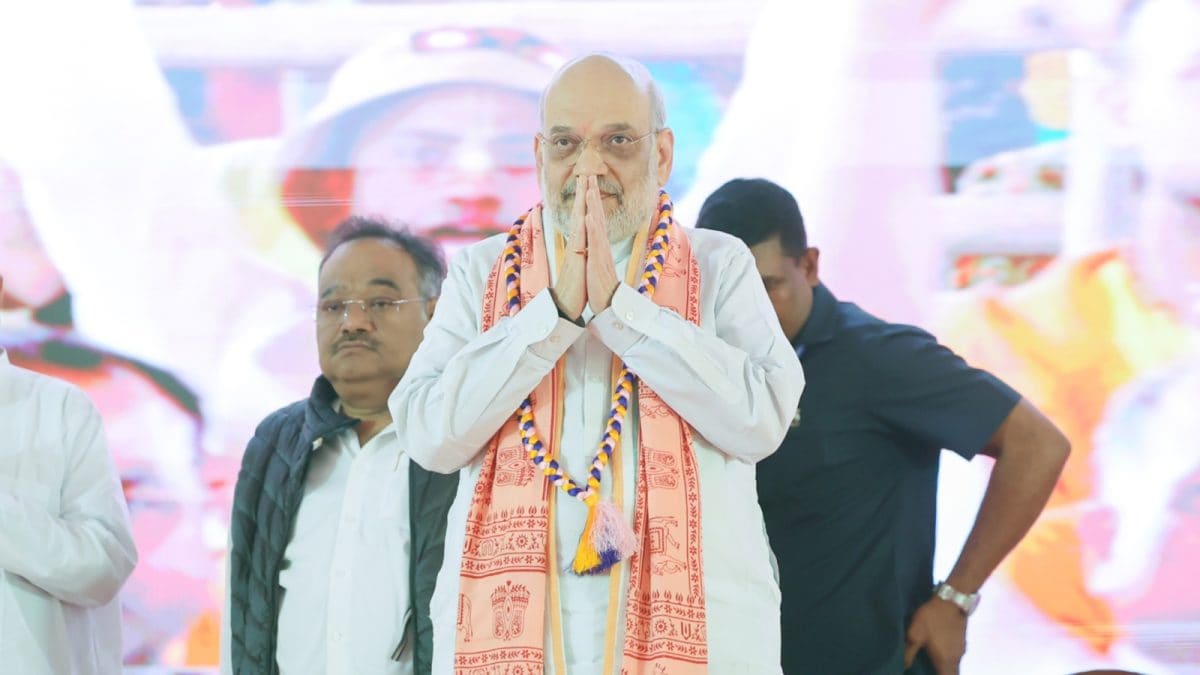
Amit Shah’s blunt statement in Kolkata
So, there I was at a big rally in Kolkata, the kind of place where you can feel the humidity even inside the venue because everyone’s packed together, shouting slogans and waving flags. Amit Shah, the Union Home Minister, took the stage to launch the BJP’s manifesto for the upcoming West Bengal election. Instead of the usual political fluff, he went straight to a point that caught the crowd’s attention – and the media’s.
He said that the BJP would rather sit in the opposition for “twenty years” than join hands with anyone who is building a Babri Masjid in West Bengal. The line seemed almost theatrical, but the way he delivered it felt very genuine, as if he was really defending a principle rather than just making a political point. He added, “Mamata ji can make 2,000 videos, but the BJP and Hum Humayun Kabir are like the South Pole and the North Pole – we can never unite.”
Listening to him, I could feel his frustration. It was not just about the politics of the state; it was about a larger symbolic battle that has been raging across India ever since the demolition of the Babri Masjid in Ayodhya. For many BJP supporters, the idea of building a replica is almost sacrilegious, and for Amit Shah, it dwarfs the everyday electoral arithmetic.
Why the Babri Masjid reference matters
To understand why Amit Shah brought up the Babri Masjid at an election manifesto event, you need to go back a few years. The original mosque in Ayodhya was demolished in 1992, sparking a wave of communal tension that is still felt today. The Supreme Court’s verdict in 2019 finally gave the land to a Hindu temple, while allocating separate land for a new mosque elsewhere.
Since then, the notion of recreating a replica of the original structure has been floated a few times, mainly by fringe groups. In West Bengal, the story resurfaced when a former Trinamool Congress leader, Hum Humayun Kabir, announced plans to lay a foundation stone for a replica in Murshidabad on the anniversary of the demolition. That move was seen as a direct challenge to the BJP’s narrative about Ayodhya and a test of communal sentiments in the state.
For Amit Shah, allowing any political ally who openly supports building that replica would be like opening the floodgates. He believes it would undermine the BJP’s long‑standing stance on the Ayodhya issue, which has been a rallying point for its base across the country.
Hum Humayun Kabir and the video controversy
Now, let’s talk about Hum Humayun Kabir. He used to be a senior member of the Trinamool Congress, but after his Babri Masjid plan was revealed, Mamata Banerjee expelled him, calling him a “traitor”. Since then, Kabir has been trying to carve out his own political space, sometimes accusing the BJP of trying to use him to destabilise the Mamata government.
Things got messier when a video started circulating among TMC leaders. In the clip, Kabir is allegedly seen discussing a massive financial deal – Rs 200 crores as an advance on a Rs 1,000‑crore package – supposedly meant to influence minority voting patterns in the upcoming elections. He also apparently claims the BJP is backing him in this scheme.
Kabir, however, slammed the video, labeling it as doctored and politically motivated. He said the footage was edited to make it look like he was offering money to manipulate votes, which, according to him, is a typical strategy of rival parties during election season. No independent verification of the video’s authenticity has emerged, and the controversy remains a hot topic.
For an average voter walking down a lane in Kolkata or Darjeeling, the nuances of such a video are often lost in the noise of daily life – traffic, the smell of roadside chaat, and the constant chatter about school fees and loan repayments. Yet, these political narratives seep into tea‑stalls and families, shaping opinions in subtle ways.
The bigger picture: West Bengal’s looming assembly polls
The state is gearing up for a massive electoral showdown. The 294‑seat West Bengal Legislative Assembly is set to vote in two phases, and the atmosphere is electric. The Trinamool Congress, led by Mamata Banerjee, is aiming for a third consecutive term. On the other side, the BJP is campaigning hard, promising development, better governance, and a crackdown on alleged corruption and violence.
What makes West Bengal unique is the mix of political cultures. You have the Left’s historical presence, the TMC’s regional dominance, and the BJP’s rising national narrative. The election isn’t just about who will win the most seats; it’s about which story will dominate the state’s future – a story about development, a story about communal identity, or a story about regional pride.
In most Indian states, alliances are a common feature – parties with different ideologies join hands to maximize seats. This is why Amit Shah’s comment is crucial. By saying the BJP would rather stay in opposition than ally with a “Babri Masjid builder”, he is essentially closing the door on any potential coalition with parties or groups that might entertain that idea, even if it means losing out on a strategic advantage.
From a practical viewpoint, if the BJP needed support from a small regional outfit that somehow aligned with Kabir’s stand, Shah’s firm stance would prevent such a partnership, possibly costing them a few crucial seats.
What does “sitting in opposition for 20 years” really mean?
When Shah says the party would be happy to be in opposition for two decades, he’s using hyperbole to make a point, but it also reflects a realistic political calculation. In Indian politics, state‑level opposition can be a platform for future resurgence. Take the BJP’s own experience in Uttar Pradesh in the early 2000s – they were out of power for several years before making a spectacular comeback.
Staying in opposition also allows a party to maintain its ideological purity, according to its own narrative. For the BJP, aligning with a “Babri Masjid builder” could be seen as compromising on a core value, potentially alienating its core voter base, especially in the Hindi‑heartland where the Ayodhya saga still evokes strong emotions.
On the ground, however, voters often look beyond such symbolic statements. A daily wage labourer in Asansol might care more about whether there’s a new road, a reliable electricity supply, or if the price of rice goes up. Yet, political messaging filters through the layers of radio, television, and WhatsApp forwards, influencing how people perceive parties.
Personal observations from the campaign trail
Having spent the last few weeks moving from one rally to another, I’ve noticed a couple of recurring themes. First, the TMC is leaning heavily on Mamata Banerjee’s personal brand – “Mamata ji ki jai” chants, slogans about her past victories, and promises of continuing welfare schemes like ‘Kanyashree’. Second, the BJP’s campaign is more issue‑focused: they keep bringing up the Babri Masjid, corruption allegations, and the need for ‘development in the heartland of Bengal’.
Everywhere you go – whether it’s a tea stall in Siliguri or a college campus in Howrah – you hear people discussing whether the two parties will ever settle their differences. Many are skeptical about any post‑poll coalition. Some even joke that “if the BJP and TMC sit together, it would be like mixing chai with coffee – weird but possible”. Such jokes, though light‑hearted, show that the electorate is aware of how alliances can shape policy.
On the flip side, there’s a small but vocal group of political observers who think Amit Shah’s hard‑line statement is a strategic move to keep the narrative clear for his base. They argue that by drawing a firm line now, the BJP avoids being blamed later if any compromise on the Babri issue happens.
Future implications for West Bengal politics
If the BJP ends up in opposition, Shah’s statement might become a footnote in political history – a rhetorical flourish. But if the BJP manages to win a significant number of seats, the refusal to ally with any “Babri Masjid builder” could shape coalition talks for years to come. Smaller regional parties that might have tried to play kingmaker will find the path blocked, nudging them either to stay independent or to look for other allies.
The TMC, on the other hand, could use Shah’s comment to paint the BJP as a party that puts symbols above real development, a narrative that resonates with voters who are tired of politics that focus on religious symbols rather than infrastructure. However, the TMC also risks being seen as ignoring the sentiments that the Babri issue still holds for a sizeable section of the electorate.
In the end, West Bengal’s political landscape will likely be shaped by a combination of caste dynamics, economic concerns, and the lingering influence of the Ayodhya debate. The sheer size and diversity of the state mean that no single issue can dominate completely, but the way parties frame their positions on such symbolic matters can tip the balance in tightly contested constituencies.
Conclusion: A stand that echoes beyond Bengal
Looking back at Amit Shah’s statement, it feels like a classic case of Indian politics where a local issue – a replica of a historic mosque – gets amplified to national significance. For the BJP, it’s about preserving a narrative that has won them elections elsewhere. For the TMC, it’s about defending its internal discipline and challenging the BJP’s moral high ground.
What’s clear is that the upcoming West Bengal assembly election will be decided not just by the number of seats each party wins, but by how convincingly they can link their agenda to the everyday aspirations of people – whether it’s a farmer in Malda worrying about crop prices, a student in Kalyani dreaming of better job prospects, or a senior citizen in Darjeeling hoping for better healthcare.
Whether the BJP spends the next two decades in opposition or manages to break through with a fresh coalition, Amit Shah’s bold declaration will remain a talking point – a reminder that in Indian politics, symbols often speak louder than policies, and a single statement can reverberate across tea stalls, lecture halls, and election booths alike.