Honestly, I was buzzing with anticipation the moment I heard that SEBA was about to announce the HSLC 2026 results. You know how in our neighbourhood, after the board exams, everyone gathers at the tea stall and keeps refreshing the same page on their phones? That was exactly the vibe today. The board finally lifted the veil and declared the pass rate at 65.62 percent. It’s a slight bump from last year’s 63.98 percent, but still a long way off from the lofty 75.7 percent we saw a couple of years back.
Seeing the numbers on the screen made me think of the many friends who were sitting in their rooms, some with sweaty palms, others with a calm smile. It felt like a mixed bag of emotions, because while a few celebrated, many were still waiting for that passing mark. In most cases, the result day is a roller‑coaster ride – you celebrate the wins, and you console the ones who fell short.
Overall Numbers and What They Mean
Let’s break down the numbers a little. Out of a total of 4,29,249 candidates who appeared for the HSLC exam, exactly 2,81,701 managed to cross the 30 percent threshold and are now officially passed. That means almost two‑thirds of the students cleared the exam, but there’s still a sizable chunk – about 34 percent – who didn’t make it.
When you look at the gender split, the board had 1,90,243 male candidates and 2,48,322 female candidates. The pass percentages show that boys performed a tad better with a 67.59 percent success rate, while girls were at 61.09 percent. It reminded me of my own school days when we used to see a similar pattern, though I hope the gap keeps narrowing in the coming years.
District Performances – Who Led the Pack?
Now, the real star‑performance came from a few districts. Dima Hasao topped the chart with an impressive 88.23 percent pass rate. It felt almost surreal to see such a high figure, especially when many neighbouring districts struggled to cross the 70 percent mark. Following close behind were Sivasagar at 84.08 percent and Dibrugarh with 78.46 percent. These numbers sparked a lot of conversations at my cousin’s home, where we were debating why some districts do so much better than others.
From what I hear, the better‑performing districts often have stronger school infrastructure, more experienced teachers, and a culture that pushes students to aim higher. It’s a reminder that education quality can vary wildly even within the same state.
Meet the Toppers – Faces Behind the Highest Marks
Every year the board releases a list of toppers, and this time was no different. The top of the hill was Jyotirmay Das from Barpeta District, who scored a whopping 591 marks. I remembered hearing his name from a local newspaper – he’s a quiet kid who never bragged, but his hard work paid off big time.
Hot on his heels was Akankha Bhuyan from Biswanath District, with 589 marks. Akankha has always been a diligent student; you could find him at the library after school, and now his name is etched in the list of achievers. Third place went to Surjit Akhtar from Nalbari District, who secured 588 marks. The three of them were separated by just a couple of marks, showing how tight the competition was at the very top.
It made me think of the countless hours of study, the late‑night revisions, and the support from families who often sacrifice a lot to help their children succeed.
Pass Percentage Trend Over the Years
Looking at the trend over the past few years helps put the current result into perspective. Here’s the snapshot:
- 2026 – 65.62 percent
- 2025 – 63.98 percent
- 2024 – 75.7 percent
- 2023 – 72.69 percent
- 2022 – 56.49 percent
- 2021 – 93.10 percent
- 2020 – 64.80 percent
- 2019 – 60.23 percent
These numbers are like a roller‑coaster ride themselves. The dip in 2021 was extraordinary, probably due to the pandemic disruptions. Then you see a sharp rise in 2024, and now a slight dip again. It tells you that many factors – from exam difficulty to teaching methods – influence these outcomes.
How to Check Your Result – A Quick Guide
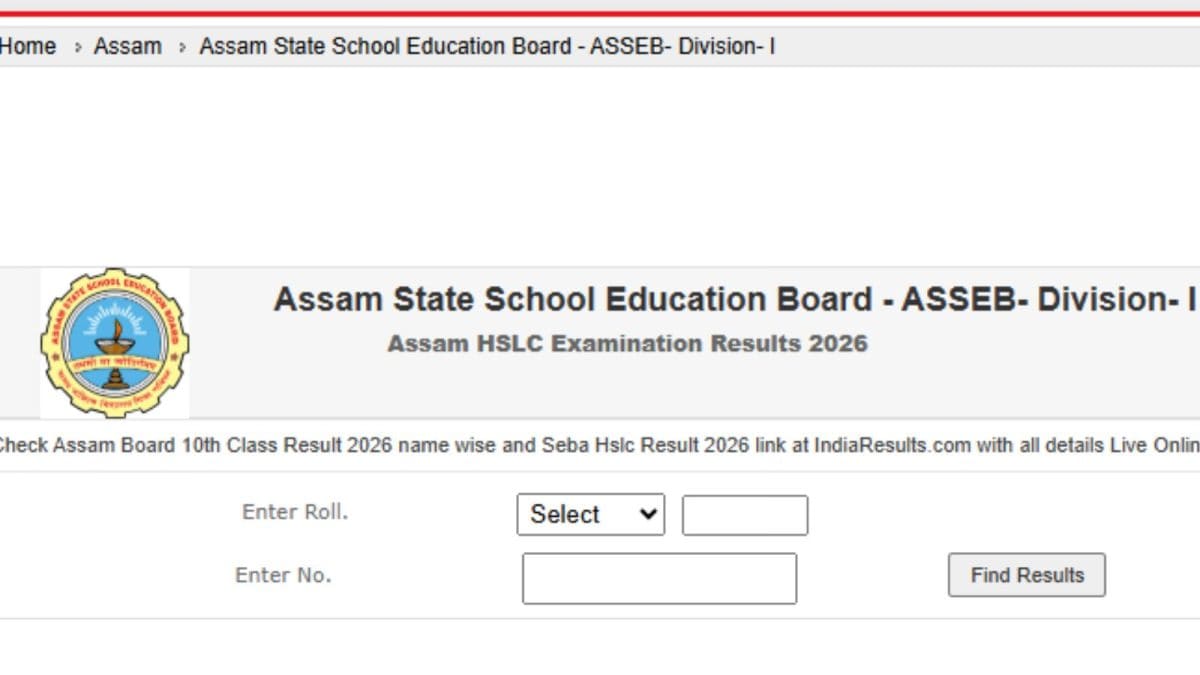
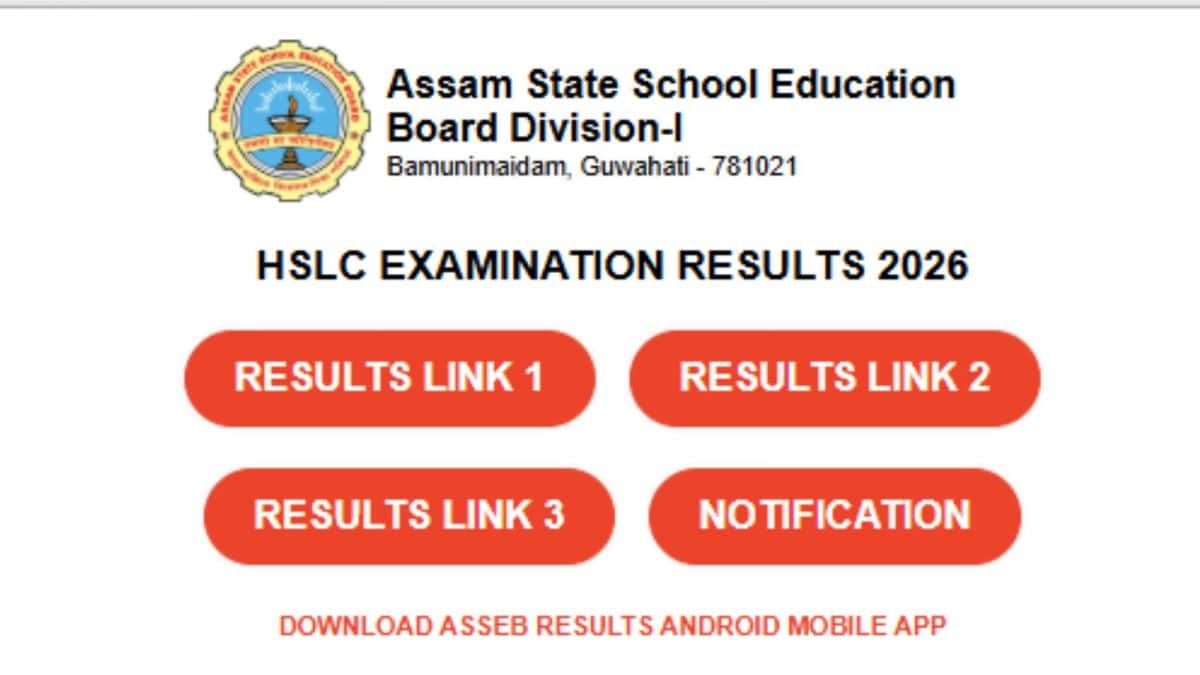
If you’re wondering where to actually look at your marks, the board has set up several portals. You can visit results.sebaonline.org, assseb.in, sebaonline.org or resultsassam.nic.in. I personally prefer the first site because it loads quickly on my low‑end Android phone.
Just type in your roll number, hit submit, and there you go – your marks, division, and any distinction you might have earned appear on the screen. It’s the same process we followed in 2019, but the servers seem a bit faster now, maybe because they upgraded the system after the binge of complaints last year.
Exam Schedule and Examination Centres
The HSLC 2026 exams were conducted in February, across 1,046 examination centres spread throughout the state. That’s a massive logistical effort – imagine setting up papers, invigilators, and seating arrangements for nearly half a million students!
Most of the centres were in schools, but there were also a few colleges that acted as hubs for students from nearby villages. My cousin’s college served as one such centre, and he told me about the long queues and the strict checking of identity documents. It was a real test of patience for both students and staff.
Understanding the Grading System – Divisions and Distinctions
SEBA’s grading system can seem a bit puzzling if you’re not familiar with it. In short, you need at least 30 percent in each subject and overall to pass. Those who score 60 percent or more are placed in the first division, 45‑59 percent falls in the second division, and 30‑44 percent lands in the third division.
There’s also a special recognition: if you score 80 percent or above in any subject, you get a letter mark for that subject, and if you achieve 80 percent or above in the aggregate, you receive a distinction. I remember my senior brother getting a distinction, and his parents proudly displayed the certificate on the wall. It’s a badge of honour for many families.
The board will publish the division‑wise results along with the list of toppers, so students can see exactly where they stand. It’s a clear way to understand performance beyond just the pass/fail label.
Personal Reflections and What Lies Ahead
Watching these numbers roll in, I can’t help but feel a mix of hope and concern. On the one hand, the slight rise in the overall pass rate is encouraging; more students are clearing the exam compared to last year. On the other hand, the dip from the 2024 high shows that there’s still a lot of work to do, especially in districts that are lagging behind.
For many families in Assam, the HSLC result is a big milestone that determines whether the student can move on to higher secondary education. It also influences the kind of career options they can explore later. That’s why every percent point matters.
From a personal standpoint, I think the board’s effort to make results accessible online, the clearer division criteria, and the focus on improving infrastructure in low‑performing districts are steps in the right direction. If the state can continue to invest in teacher training and reduce the gap between districts, we may see a steadier rise in those pass percentages.
Meanwhile, for students who didn’t make the cut this time, I’d say – don’t lose heart. Many of them can appear again next year with better preparation, and there are always alternative pathways like vocational courses or diploma programmes. The key is to stay motivated and seek help when needed.
All in all, the HSLC 2026 results give us a snapshot of where Assam’s education system stands right now – a mixture of achievements, challenges, and opportunities for growth.