Controversial Call for Misuse of Women in Legal Battles Sparks Outrage in Kerala Politics
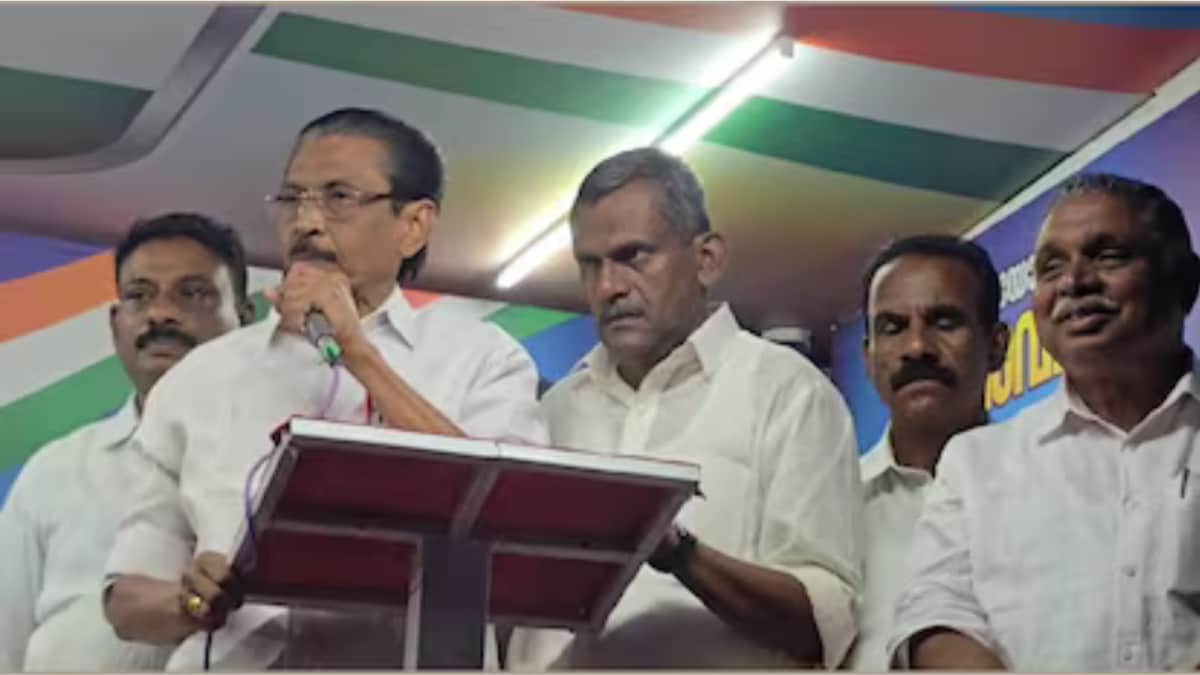
Idukki Congress leader CP Mathew allegedly suggested women leaders could tear their own clothes and lodge complaints in the event of a confrontation against political rivals
A major political controversy has erupted in poll‑bound Kerala after a video surfaced showing Idukki District Congress Committee president CP Mathew allegedly asking party workers to use women to file false complaints against political opponents.
The remarks were purportedly made during an election campaign event in Vazhathop for United Democratic Front candidate Roy K Paulos. In the speech, CP Mathew purportedly suggested that women leaders could tear their own clothes and lodge complaints in the event of a confrontation, claiming such tactics would strengthen cases against rivals.
CP Mathew also allegedly spoke about using provisions of the Scheduled Castes and Scheduled Tribes (Prevention of Atrocities) Act by involving women from SC/ST communities, indicating it could make cases more serious legally.
Widespread Reaction Across Parties and Civil Society
The video quickly traveled across social media platforms, prompting a wave of condemnation from opposition parties, ruling parties, and civil‑rights organisations. Critics argued that the suggested strategy represented a gross manipulation of gender and caste‑based legal safeguards for political gain.
Kerala Congress Vice‑President Jayson Joseph, who was present on stage at the time of the remarks, has not issued a public statement. The silence has fueled speculation about internal party dynamics and the possible strategic calculations behind the lack of an immediate response.
Senior leaders of the Communist Party of India (Marxist) have denounced the statements as an attempt to weaponise women and vulnerable communities, describing the approach as a dangerous precedent that could erode public trust in the justice system.
Representatives of women’s organisations have expressed alarm, stating that the alleged proposition undermines the agency of women and reduces them to tools in a political contest. They have called for a thorough investigation and appropriate legal action against any wrongdoing.
Legal Framework Referenced in the Controversy
The Scheduled Castes and Scheduled Tribes (Prevention of Atrocities) Act was designed to protect historically disadvantaged groups from discrimination, violence, and exploitation. The act provides for stringent penalties when offences are committed against members of these communities.
According to the allegations, CP Mathew suggested that filing complaints under this act by involving women from SC/ST communities could intensify the legal consequences for political opponents. Legal experts have warned that such manipulation, if proven, could constitute a serious offence under provisions that penalise false complaints and the abuse of legal safeguards.
Legal scholars note that the act includes specific clauses to deter frivolous or malicious filing of complaints, aimed at preserving the credibility of the legal system. Any attempt to weaponise these provisions for partisan advantage would likely attract both criminal and civil liability.
Historical Context of CP Mathew’s Political Conduct
This incident is not the first instance where CP Mathew has attracted scrutiny. In a previously reported episode, CP Mathew was alleged to have physically assaulted a party worker during a public gathering. The allegation led to a temporary suspension from certain party functions, though the matter was later resolved without formal charges.
Observers point out that CP Mathew’s pattern of confrontational behaviour has raised concerns among party insiders and political analysts alike. The current controversy adds another layer of complexity to CP Mathew’s standing within the Idukki District Congress Committee and the broader Kerala Congress framework.
Electoral Landscape in Kerala
Kerala Congress operates as a constituent of the United Democratic Front, an alliance that contests elections against the Left Democratic Front, led by the Communist Party of India (Marxist). The rivalry between the two fronts has historically shaped the political climate of the state, with each alliance seeking to maximise its outreach among diverse communities, including women and marginalized groups.
The recent video has injected additional tension into an already heated electoral atmosphere. Campaigns have become increasingly focused on issues of law, order, and social justice, with parties attempting to portray themselves as protectors of vulnerable segments of society.
Commentators suggest that the fallout from the video could influence voter perceptions, particularly among women and SC/ST communities who may view the alleged proposal as a direct affront to their dignity and legal protections.
Media Coverage and Social Media Amplification
News outlets across the nation have highlighted the video, offering analysis of the potential legal ramifications and political fallout. Headline after headline underscores the gravity of suggesting false accusations as a tactical measure.
On social media, the clip has been shared extensively, accompanied by commentary that ranges from outright condemnation to calls for accountability. Hashtags related to the incident have trended, reflecting a broad public engagement with the issue.
Several fact‑checking organisations have verified the authenticity of the video, confirming that the statements attributed to CP Mathew align with the audio‑visual evidence. This verification has reinforced the credibility of the allegations and intensified calls for a formal inquiry.
Potential Impact on Legal Proceedings and Party Discipline
Legal experts predict that, should an official complaint be lodged, investigative agencies could explore whether the alleged instructions constitute an attempt to file false complaints under the Scheduled Castes and Scheduled Tribes (Prevention of Atrocities) Act. The investigation would likely examine both the intent behind the statements and any subsequent actions taken by party members.
Within the party structure, senior leadership faces pressure to address the controversy decisively. The Kerala Congress hierarchy may consider disciplinary measures against CP Mathew, ranging from suspension to expulsion, depending on the outcomes of internal reviews and external investigations.
Party discipline mechanisms often involve a formal inquiry by a designated committee, followed by recommendations presented to the state executive council. The handling of this incident could set a precedent for the party’s response to future breaches of ethical conduct.
Broader Implications for Gender Politics in Kerala
The incident raises fundamental questions about the politicisation of gender and the instrumentalisation of women in electoral strategies. Kerala has historically been praised for high rates of female literacy and political participation, yet the alleged suggestion to use women as pawns in a legal battle threatens to undermine these achievements.
Women’s groups have reiterated the need for political parties to adopt respectful and empowering approaches toward female participants, emphasizing that any form of coercion or manipulation contravenes democratic principles.
Scholars argue that the episode could catalyse a re‑examination of party training programmes, urging a shift toward gender‑sensitive campaigning that recognises women as autonomous agents rather than expendable tools.