Crimson Skies Over Crete as a Saharan Dust Storm Sweeps the Eastern Mediterranean
Gale‑force winds and flooding batter parts of Greece while a Saharan dust storm paints Crete’s horizon with a striking red hue.
Overview of the Atmospheric Event
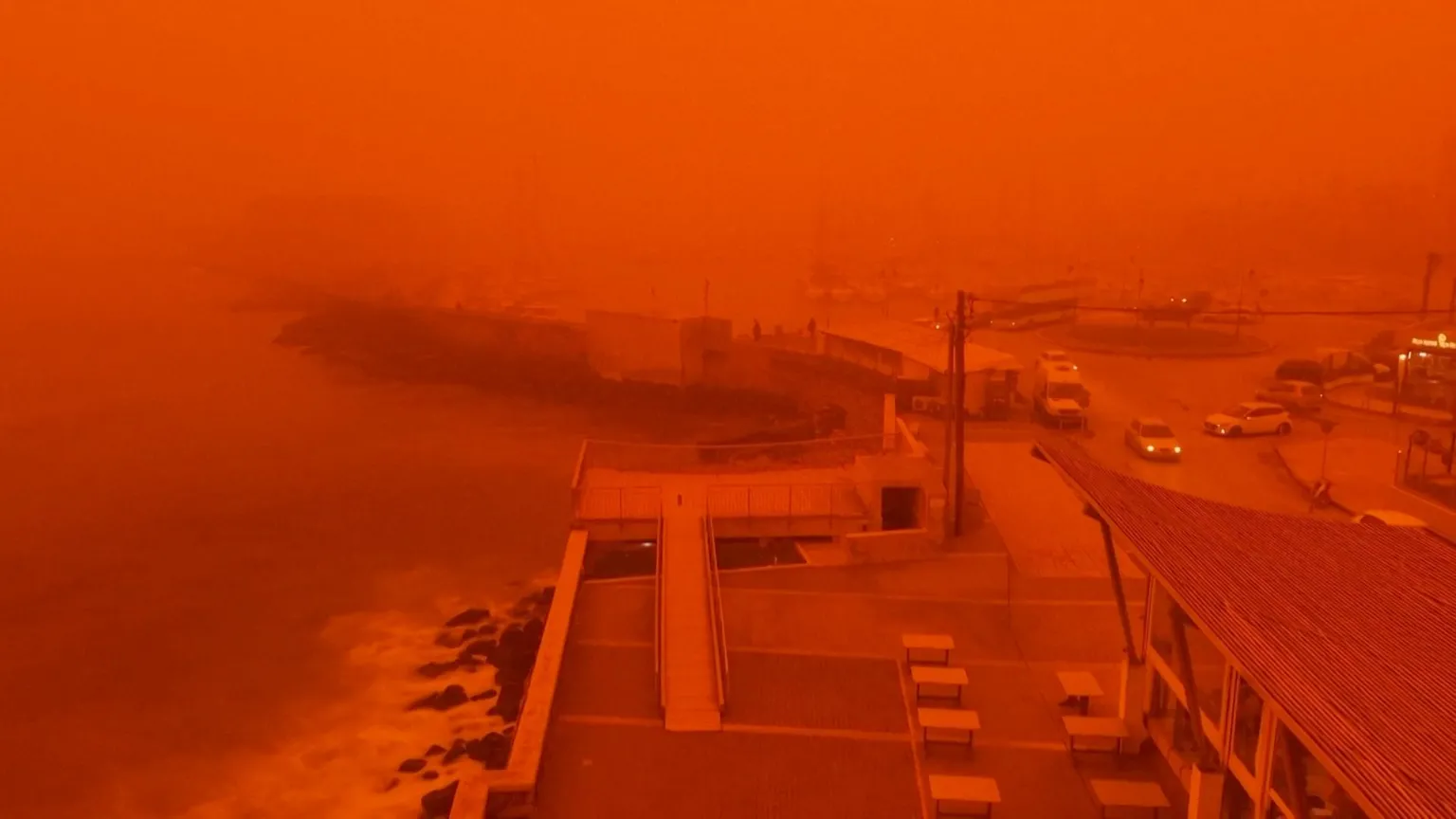
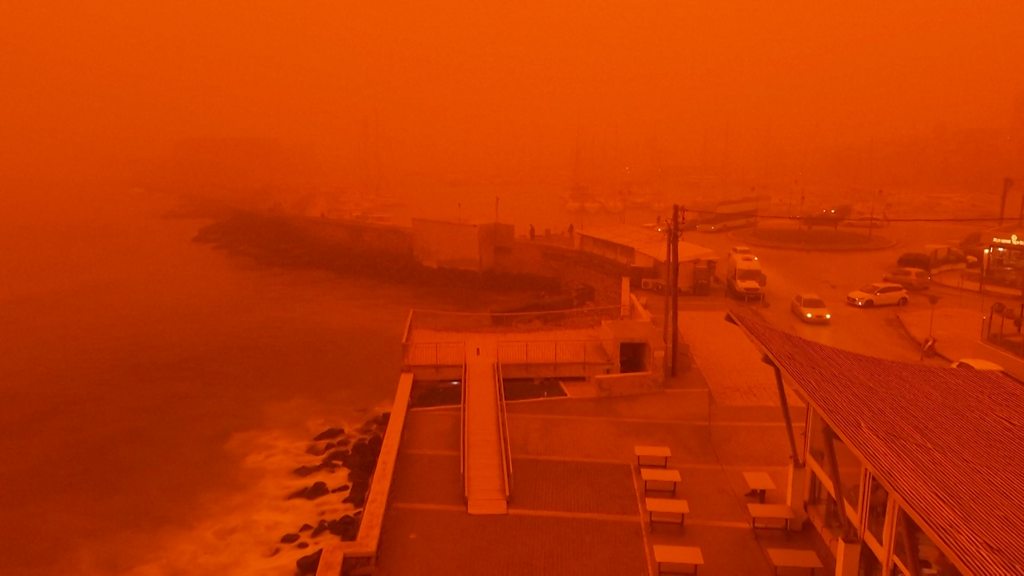
On the morning of April 3, 2026, observers across the eastern Mediterranean reported an unusual transformation of the sky. The familiar blue canopy gave way to a deep, almost surreal shade of red that stretched from horizon to horizon. This striking visual effect was the direct result of a Saharan dust storm that had traveled northward from the Sahara Desert and enveloped Crete. Simultaneously, other parts of Greece experienced a series of intense storms that produced gale‑force winds and localized flooding. The combination of these two distinct yet concurrent meteorological phenomena created a dramatic tableau that dominated news headlines and social media feeds throughout the region.
While the red‑tinged atmosphere over Crete captured the imagination of photographers and casual onlookers alike, the stormy conditions elsewhere in Greece prompted emergency services to activate response protocols. The juxtaposition of a visually spectacular dust event with the more hazardous wind and rain systems highlighted the diverse range of weather challenges that can affect the Greek archipelago within a single day.
In addition to the visual spectacle, the atmospheric shift altered the quality of daylight. Sunlight filtered through the dense dust particles, producing a muted, amber‑colored illumination that softened shadows and gave the landscape an otherworldly appearance. Residents of Crete described the scene as “a sunrise that never quite left the horizon,” emphasizing the surreal nature of the event.
At the same time, meteorological stations across Greece recorded wind gusts exceeding 90 km/h in several coastal locations. Rainfall totals in the most affected basins approached 80 mm within a six‑hour window, overwhelming drainage capacity and prompting temporary road closures. The dual nature of the day—visual wonder over Crete and hazardous conditions elsewhere—underscored the complexity of forecasting in a region where Mediterranean and Saharan air masses frequently intersect.
Meteorological Background of the Saharan Dust Storm
The Saharan dust storm is a well‑documented atmospheric occurrence that originates in the vast desert regions of North Africa. Strong surface heating and prevailing wind patterns lift fine particles of sand and mineral dust high into the troposphere. Once aloft, these particles can be carried over great distances by the jet stream and other prevailing wind currents. When the Saharan dust storm reaches the eastern Mediterranean, the suspended particles scatter sunlight in a manner that imparts a reddish hue to the sky. This scattering effect is most pronounced when the sun is low on the horizon, such as during sunrise or sunset, but it can also be observed throughout the day when the concentration of dust is particularly high.
Crete, situated at the southern edge of the Aegean Sea, lies directly in the path of many Saharan dust plumes that travel eastward across the Mediterranean basin. The island’s geographic position makes Crete a frequent recipient of these dust events, which can last from a few hours to several days depending on atmospheric stability and wind direction. During the recent occurrence, the Saharan dust storm arrived with sufficient density to turn the sky over Crete a vivid red, an effect that was captured by numerous on‑site photographers and broadcast by international news outlets.
Scientific analysis of the dust composition indicated a predominance of quartz and clay minerals, typical of Saharan source regions. Satellite imagery from geostationary platforms showed the dust plume originating over the central Sahara, lifting to altitudes of 3–5 km before being steered northeastward by a mid‑latitude trough. The same trough also contributed to the development of the severe storms that battered Greece, illustrating how a single synoptic feature can generate multiple weather outcomes.
Ground‑based lidar stations on Crete recorded aerosol optical depth values exceeding 1.5, confirming the high concentration of particulate matter in the lower atmosphere. These measurements helped air‑quality agencies issue timely advisories, reminding the public to limit prolonged outdoor activities, especially for individuals with pre‑existing respiratory conditions.
Impact of the Saharan Dust Storm on Crete
The immediate visual impact of the Saharan dust storm on Crete was unmistakable. Streets, beaches, and historic sites were bathed in a reddish glow that altered the usual perception of the island’s landscape. Residents reported that the dust settled lightly on outdoor surfaces, creating a fine, powdery coating that could be brushed away with minimal effort. The presence of the Saharan dust storm also led to a temporary reduction in air quality, as the fine particulate matter increased the concentration of airborne particles. Local health authorities advised individuals with respiratory conditions to limit prolonged outdoor exposure and to keep windows closed where possible.
Transportation networks on Crete experienced only minor disruptions. The fine nature of the dust meant that visibility remained largely unaffected, allowing road traffic to continue with little interruption. However, the airport on Crete reported a brief pause in flight operations as air traffic controllers monitored the dust concentration to ensure safe take‑off and landing procedures. The pause lasted only a short period, after which normal flight schedules resumed.
Tourism, a vital component of Crete’s economy, was momentarily affected as visitors paused outdoor activities to photograph the unusual sky. Many tourists expressed fascination rather than concern, sharing images of the crimson horizon on social media platforms. Local businesses capitalized on the unique visual spectacle by offering special promotions and photo‑opportunity packages, thereby turning a potential inconvenience into a short‑term economic boost.
In addition to the visual allure, the Saharan dust storm prompted a surge in scientific curiosity among students and amateur meteorologists on Crete. Several local schools organized impromptu lessons on aerosol physics, using the real‑time event as a teaching tool. Universities on Crete deployed portable air‑sampling equipment to capture dust particles for laboratory analysis, contributing to a broader regional dataset on Saharan dust transport.
Emergency services on Crete remained on standby throughout the event, ready to respond to any unforeseen complications such as dust‑related accidents or health incidents. No major emergencies were reported, and the overall public response remained calm and cooperative.
Storms, Gale‑Force Winds, and Flooding in Greece
While Crete was enveloped by the Saharan dust storm, other regions of Greece contended with a series of powerful storms that produced gale‑force winds and localized flooding. These storms were characterized by rapid intensification, strong gusts, and heavy precipitation that overwhelmed drainage systems in several coastal and inland communities. The combination of high wind speeds and intense rainfall led to temporary road closures, power outages, and the activation of emergency shelters for residents in the most affected areas.
Emergency response teams across Greece mobilized resources to address the immediate threats posed by the storms. Rescue crews were dispatched to areas where floodwaters had risen quickly, assisting residents in evacuating low‑lying neighborhoods. Utility crews worked around the clock to restore electricity to households that had lost power due to downed power lines caused by the gale‑force winds. Local authorities also issued weather advisories urging citizens to avoid unnecessary travel and to secure outdoor objects that could become hazardous in high winds.
The storms highlighted the vulnerability of certain infrastructure components, such as older drainage networks and coastal defenses, to extreme weather events. In the aftermath of the storms, municipal officials announced plans to assess damage and to prioritize repairs that would improve resilience against future occurrences of similar intensity.
Several municipalities in Greece reported that the storm surge associated with the gale‑force winds pushed seawater onto low‑lying promenades, temporarily inundating popular tourist districts. Local businesses in those districts experienced brief interruptions, but most were able to resume operations within a few hours once water levels receded.
Public transportation in affected Greek cities faced delays as high winds forced the suspension of ferry services across the Aegean Sea. Bus routes that traversed exposed coastal roads were rerouted inland, and commuters were advised to seek alternative modes of travel. Despite these inconveniences, the coordinated response of municipal agencies helped to minimize the overall impact on daily life.
Public Reaction and Media Coverage
The dual nature of the weather events—visual spectacle over Crete and hazardous conditions elsewhere in Greece—generated a wide spectrum of public reaction. On social media, the hashtag #RedSkyCrete trended as users shared photographs, videos, and personal anecdotes describing the surreal atmosphere. News outlets across Europe and beyond featured live footage of the crimson sky, often juxtaposing it with footage of the storm‑tossed seas and wind‑battered coastlines in other parts of Greece.
Local media in Crete emphasized the uniqueness of the Saharan dust storm, interviewing meteorologists who explained the science behind the red coloration and offering safety tips related to air quality. In contrast, media coverage in regions affected by the storms focused on the practical implications of the gale‑force winds, such as road safety, power restoration, and flood mitigation efforts. The divergent coverage underscored how a single atmospheric system can produce both awe‑inspiring and hazardous outcomes depending on geographic location.
Community organizations in both Crete and the storm‑impacted areas mobilized volunteers to assist vulnerable populations. In Crete, volunteers distributed masks to individuals with respiratory sensitivities, while in the storm‑hit regions, volunteers helped clear debris and provided temporary shelter to families displaced by flooding.
International news agencies highlighted the event as a reminder of the interconnectedness of global weather patterns. Analysts pointed out that the Saharan dust storm, while originating thousands of kilometres away, had direct consequences for daily life on Crete, illustrating the far‑reaching influence of desert dust on Mediterranean climates.
Print newspapers in Greece ran special inserts detailing the steps taken by municipal authorities to reinforce infrastructure after the storms. Editorials called for increased investment in modern drainage systems and the adoption of early‑warning technologies to better protect communities from future extreme weather events.
Scientific Perspective and Future Outlook
Scientists monitoring the Saharan dust storm noted that the event fit within established patterns of dust transport across the Mediterranean. Research institutions in Greece and neighboring countries continue to track dust plumes using satellite imagery, ground‑based lidar, and atmospheric sampling stations. These observations help refine predictive models that forecast the arrival of Saharan dust storms, allowing authorities to issue timely advisories regarding air quality and visibility.
Regarding the storms that produced gale‑force winds and flooding, climatologists highlighted the increasing frequency of intense weather systems in the Mediterranean region, a trend that many attribute to broader changes in global climate patterns. While the specific storms of April 3, 2026, were not directly linked to long‑term climate shifts, they serve as a reminder of the need for robust preparedness measures and adaptive infrastructure.
Looking ahead, officials in Crete and across Greece plan to incorporate lessons learned from these concurrent events into future emergency response strategies. This includes improving communication channels for real‑time weather updates, enhancing air‑quality monitoring networks, and reinforcing critical infrastructure to better withstand high winds and heavy rainfall.
Long‑term research projects aim to integrate dust‑transport models with climate‑change scenarios, seeking to predict how the frequency and intensity of Saharan dust storms may evolve as sea surface temperatures rise. Such interdisciplinary efforts involve atmospheric scientists, oceanographers, and urban planners working together to safeguard both public health and economic activity in the region.
In addition to scientific endeavors, educational outreach programs are being developed to raise public awareness about the health implications of dust exposure. Workshops scheduled for the upcoming summer months on Crete will teach residents how to interpret air‑quality indices and adopt protective measures during future Saharan dust events.
Conclusion
The day that the sky over Crete turned a vivid red as the Saharan dust storm passed was marked by both visual wonder and serious weather challenges elsewhere in Greece. The Saharan dust storm demonstrated the power of natural atmospheric processes to transform the visual landscape, while the simultaneous storms with gale‑force winds and flooding underscored the practical risks that accompany severe weather. Together, these events offered a compelling illustration of the diverse ways in which the Mediterranean environment can be shaped by both distant desert dust and local storm systems.
As communities recover and reflect, the experience reinforces the importance of preparedness, scientific monitoring, and public awareness. Whether admiring a crimson horizon or bracing against fierce winds, the people of Crete and Greece continue to adapt to the dynamic forces of nature that define their region.





.jpg?type=mq)