Foreign Secretary Vikram Misri Engages Senior U.S. Officials to Deepen Defence and Trade Collaboration
Foreign Secretary Vikram Misri meets senior leaders from the United States Department of Defense and the United States Department of Commerce in a multi‑day dialogue that emphasizes defence cooperation, technology exchange, and supply‑chain resilience while reviewing developments across the Indo‑Pacific and West Asia.
Broad‑Based Dialogue Builds on Ongoing Bilateral Communication
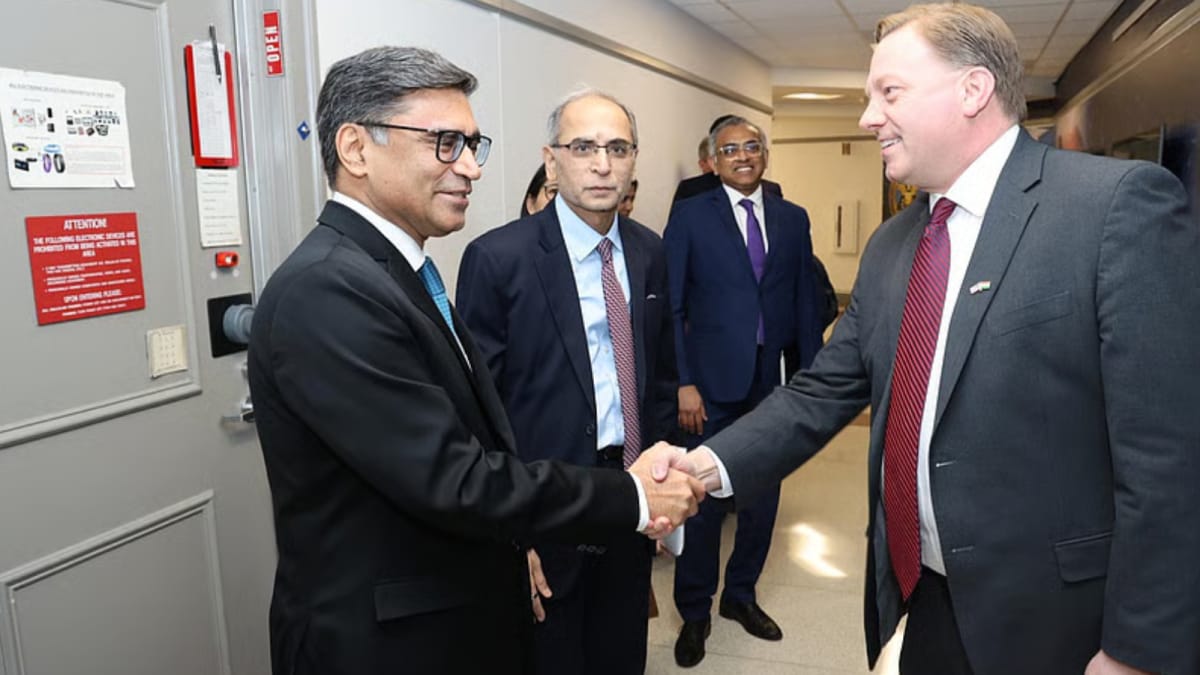
According to the Indian Embassy, the conversations between Foreign Secretary Vikram Misri and the United States officials covered a wide spectrum of issues and were rooted in a longstanding dialogue that has been nurtured over many years. The emphasis was on deepening mutual understanding, aligning strategic perspectives, and creating actionable pathways for cooperation.
The absence of any newly introduced facts does not diminish the richness of the exchange. Both sides drew upon previous engagements, shared assessments of regional dynamics, and articulated a vision of partnership that stretches beyond conventional defence arrangements to encompass emerging economic and technological arenas.
Defence Discussions at the Pentagon with Under Secretary Michael Duffey and Under Secretary Elbridge Colby
During the three‑day visitation, Foreign Secretary Vikram Misri convened with Under Secretary Michael Duffey and Under Secretary Elbridge Colby within the walls of the Pentagon. The meeting with Under Secretary Elbridge Colby focused on a comprehensive review of the security environment in the Indo‑Pacific, the evolving challenges in West Asia, and the joint approach required to safeguard stability in those theatres.
Under Secretary Elbridge Colby’s prior visit to India, where Under Secretary Elbridge Colby met with Foreign Secretary Vikram Misri in New Delhi on the sidelines of the India‑U.S. Defence Policy Group gathering, laid a foundation for the current dialogue. The continuity of personal interaction reinforced trust and opened avenues for candid exchange of viewpoints.
In a separate session, Foreign Secretary Vikram Misri and Under Secretary Michael Duffey examined pathways to strengthen defence industrial collaboration. The conversation delved into the potential for co‑development of advanced platforms, the sharing of critical technologies, and the establishment of robust supply‑chain linkages that could underpin future joint projects.
Both interlocutors highlighted the relevance of the Major Defence Partnership signed in the previous year, underscoring that the partnership is not a static aGreement but a living framework that requires continuous refinement and operationalization.
Commerce Talks with Under Secretary Jeffrey Kessler and Under Secretary William Kimmitt on Technology and Supply Chains
At the United States Department of Commerce, Foreign Secretary Vikram Misri sat down with Under Secretary Jeffrey Kessler and Under Secretary William Kimmitt. The focus of this engagement was the expansion of collaboration in critical and emerging technologies, areas that are increasingly central to national security and economic competitiveness.
Under Secretary Jeffrey Kessler emphasized the necessity of building resilient and trusted supply chains, a theme that resonated strongly with Foreign Secretary Vikram Misri. The dialogue explored mechanisms to reduce vulnerabilities, diversify sources of essential components, and foster innovation ecosystems that benefit both nations.
Under Secretary William Kimmitt contributed insights on the broader economic transformation agenda, describing how the partnership aims to reshape India‑U.S. economic ties for the twenty‑first century. The discussion addressed the need for coordinated policy frameworks, joint research initiatives, and the harmonization of standards to facilitate smoother technology transfer.
The shared commitment to these goals reflects a strategic alignment that goes beyond bilateral trade volumes, targeting a deeper, more integrated economic relationship built on shared values and mutual security interests.
Context of Renewed Engagement Amid Earlier Tensions
The current series of high‑level interactions occurs against a backdrop of recent strains in the relationship. Earlier, the United States imposed punitive tariffs on a range of Indian products, an action that created friction in trade relations. Additionally, statements made by a previous United States President regarding involvement in de‑escalating India‑Pakistan military tensions added another layer of complexity to the diplomatic environment.
Despite these challenges, both Foreign Secretary Vikram Misri and the senior United States officials conveyed a clear message of willingness to move beyond past disaGreements. The tone of the meetings was forward‑looking, emphasizing the importance of sustaining momentum in strategic cooperation and ensuring that the partnership continues on a trajectory of growth and resilience.
The renewed emphasis on defence industrial cooperation, technology collaboration, and supply‑chain security signals that the two nations are prioritizing long‑term structural improvements over short‑term political setbacks.
Implications for Indo‑Pacific and West Asian Security Architecture
Strategic discussions with Under Secretary Michael Duffey and Under Secretary Elbridge Colby placed particular attention on the Indo‑Pacific region, an area characterized by rapid military modernization, contested maritime domains, and evolving alliance structures. The dialogue highlighted the shared perception that a stable Indo‑Pacific is essential for global trade, regional prosperity, and the maintenance of an open rules‑based order.
In the context of West Asia, both sides examined the intricate web of political, economic, and security variables that shape the region. The conversations underscored the importance of coordinated diplomatic outreach, intelligence sharing, and the ability to respond swiftly to emerging crises.
The convergence of defence and commerce perspectives in these regional assessments reflects an integrated approach, where economic tools and military capabilities are viewed as complementary instruments for achieving stability.
Future Pathways and Institutional Mechanisms
Looking ahead, Foreign Secretary Vikram Misri and the United States senior officials outlined a set of concrete next steps. These include the establishment of joint working groups focused on defence procurement, technology standardization, and supply‑chain risk assessment. The working groups will be tasked with producing detailed roadmaps, timelines, and performance metrics to ensure accountability.Both parties also aGreed to schedule regular high‑level exchanges, creating a predictable rhythm of dialogue that can adapt to evolving circumstances. This institutional continuity is intended to prevent lapses in communication and to keep the partnership responsive to emerging challenges.
In addition, there was consensus on the value of leveraging existing multilateral platforms—such as the Quad and other Indo‑Pacific security arrangements—to amplify the impact of bilateral cooperation. By aligning bilateral initiatives with broader regional frameworks, the partnership aims to contribute to collective security and prosperity.