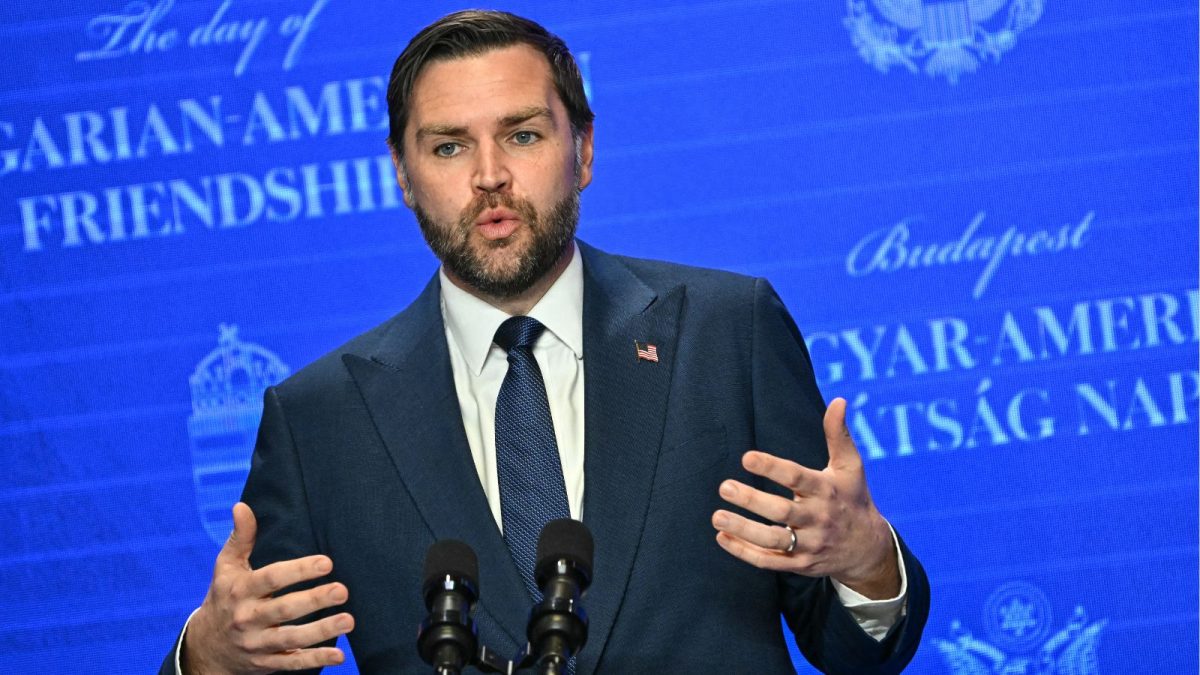
Vice President JD Vance, once anti‑intervention, now leads President Donald Trump’s peace talks with Iran in Islamabad
Vice President JD Vance has always talked about staying away from foreign wars. You could hear that in his speeches, in interviews, and even during his rallies. It was almost a part of his political identity – a sort of "no more endless wars" mantra. So when President Donald Trump asked Vice President JD Vance to take charge of the most delicate diplomatic mission in a while, it felt a bit like a curveball.
Just a few weeks back, Vice President JD Vance was in Budapest. The purpose? To do some political outreach, meet supporters of Hungarian Prime Minister Viktor Orbán, and help with the local campaign. The whole trip was about building friendships, not about crisis management. Then, out of the blue, President Donald Trump called Vice President JD Vance back to Washington and told him that the United States needed a strong, credible face for the peace talks with Iran that would be held in Islamabad, Pakistan.
That call changed everything for Vice President JD Vance. Suddenly, the man who had been warning people not to get tangled in Middle‑Eastern conflicts was now at the centre of a process aimed at ending one of those very conflicts. It’s a classic case of "caught in the middle", but the stakes are huge – not just for the United States, but for the whole of West Asia.
According to a senior administration official, President Donald Trump's decision to put Vice President JD Vance at the head of the talks is meant to add weight and political authority. The hope is that Vice President JD Vance’s reputation as a decisive, no‑nonsense leader will help push the negotiations forward. The talks, which are being mediated by Pakistan and other regional partners, are being billed as the biggest U.S.–Iran engagement since the 1979 Islamic Revolution.
From the outside, it looks like a bold move. Inside the White House, officials say Vice President JD Vance’s role has grown very quickly over the past few weeks. President Donald Trump appears to be leaning more on Vice President JD Vance for assignments that go beyond domestic policy, especially when the matters are sensitive and need a tough political hand.
Why the shift? From Budapest to Islamabad
Many people in the media asked why the administration would pick Vice President JD Vance for a job that seems to go against his earlier stance. The simple answer is that President Donald Trump wants a figure who can rally both the hard‑liners in the Republican Party and the sceptical voters who are tired of endless overseas deployments.
Vice President JD Vance, with his background as a former Marine, his Ohio roots, and his reputation as a straight‑talker, fits that mould. In most Indian households, when we talk about a leader who is "no‑nonsense" and "doesn’t beat around the bush", we think of someone who can get things done quickly – someone like a seasoned railway supervisor who can sort a delayed train within minutes. That image is exactly what President Donald Trump is banking on.
Another practical reason is proximity. While Vice President JD Vance was in Budapest, the administration was already working on the logistics of the Islamabad meeting – getting the venues ready, coordinating with Pakistani officials, and arranging for security. It was easier for President Donald Trump to tap someone who was already travelling abroad and could quickly get on a plane back to Washington, rather than pull a senior State Department official out of a long‑standing schedule.
Of course, there are political risks. Vice President JD Vance has made it clear in the past that he does not want the United States drawn deeper into the West Asian quagmire. He has warned about the cost – both human and financial – of prolonged military involvement. Now, by taking charge of these talks, Vice President JD Vance is putting himself in a position where he will either be praised for a diplomatic breakthrough or blamed if the talks fail and the conflict drags on.
In everyday terms, think of a cricket captain who has always said "let's not chase huge totals" and then is asked to lead the team when the opponent sets a scary target. The captain now has to decide whether to stick to his philosophy or adapt to the situation because the team’s chances of winning now depend on it.
The Islamabad Mission: A Tough Road Ahead
The peace talks in Islamabad are not just a meeting of diplomats; they are a high‑stakes drama involving many players. The core issues on the table include Iran’s nuclear enrichment programme, the possibility of sanctions relief, the inclusion of Lebanon in any future aGreement, and broader regional security guarantees.
Officials say the negotiations will be the most significant U.S.–Iran engagement since the 1979 Islamic Revolution. That means every line spoken in the conference rooms will be scrutinised by media houses from Tehran to New Delhi, and even small towns in Punjab. In India, we watch these kind of meetings like we watch election results – with a cup of chai, a lot of speculation, and a hope for a stable outcome that can affect oil prices and trade.
One of the biggest challenges is the fragile ceasefire that currently holds between the parties. Recent reports suggest that both sides are still deeply divided on key points, and any misstep could reignite the conflict. For Vice President JD Vance, it’s like trying to balance a spinning plate – one wrong move and the whole thing could crash down.
The talks are also being mediated by Pakistan, a country that has a long history of being caught between big neighbours. Pakistan’s capital, Islamabad, is chosen as the venue because it offers a neutral ground, and the Pakistani government hopes that a successful outcome will boost its own regional standing.
On a practical level, Vice President JD Vance will have to coordinate with a range of U.S. officials – senior diplomats, special envoys, and the intelligence community – while also managing the political narrative back home. The political base that once cheered Vice President JD Vance’s anti‑war stance is now watching closely to see if he can bring the war to an end.
In many ways, the situation feels similar to a local municipal dispute in an Indian town, where the mayor has to mediate between two rival neighbourhood groups. The mayor must listen, understand the root causes, and propose a solution that satisfies both sides, all while keeping the council members happy.
Political Repercussions for Vice President JD Vance and President Donald Trump
The outcome of the Islamabad talks will have a direct impact on Vice President JD Vance’s political future. If the negotiations lead to a credible cease‑fire or a formal aGreement, Vice President JD Vance could be hailed as a master negotiator – a title that would boost his standing within the Republican Party and maybe even open doors for future leadership roles.
On the flip side, if the talks stall or collapse, critics will likely point back to Vice President JD Vance’s earlier anti‑intervention statements and argue that he was never suited for a diplomatic role of this magnitude. In the United States, political narratives shift fast – one day you are praised, the next you are under the scanner of a talk‑show host.
For President Donald Trump, the decision to put Vice President JD Vance at the forefront is also a gamble. President Donald Trump has long positioned himself as a leader who can make bold moves, and the peace talks are one of those bold moves. If the talks succeed, it will reinforce President Donald Trump’s image as a president who can bring about peace, even in the most complicated parts of the world.
However, failure could lead to criticism that President Donald Trump’s foreign‑policy judgment is flawed, especially since the administration has already faced skepticism from its own supporters about getting involved in another overseas conflict.
In the Indian context, think about a state chief minister who decides to take the lead on a contentious water‑sharing dispute with a neighbouring state. If the talks end peacefully, the chief minister is celebrated; if not, the opposition will use it as ammunition in every upcoming election.
What the Talks Could Mean for West Asia
The stakes are not limited to the United States and Iran. The entire West Asian region has been living under the shadow of this conflict for many years. Countries like Iraq, Syria, and the Gulf states watch every development with bated breath, because any escalation can have ripple effects on their own internal security and economies.
One of the key hopes from the Islamabad talks is the possibility of a roadmap that leads to the gradual dismantling of Iran’s nuclear enrichment facilities in exchange for phased sanctions relief. If such a roadmap is accepted, it could lower the risk of a military confrontation, which would otherwise have drawn in regional powers and perhaps even affected global oil prices.
Another element under discussion is the inclusion of Lebanon in a wider peace framework. Lebanon has been caught in the cross‑fire of proxy conflicts for decades, and a stable arrangement could bring a sigh of relief to its people, much like a monsoon that finally reaches a drought‑stricken village.
Regional security guarantees – a phrase that sounds abstract but actually means “no more cross‑border missile strikes, no more support for armed groups”, are also on the table. For ordinary folks living in cities like Karachi or Tehran, these guarantees translate to quieter streets, fewer curfews, and better chances of a stable job market.
While the talks are still in the early stages, the mere fact that they are happening in Islamabad – a city known for its calm atmosphere and diplomatic history – gives a sense of optimism. It is as if the families in Delhi waiting for their relatives to return from a long journey finally hear a train whistle, signalling that the journey might be coming to an end.
Personal Reflections on the Whole Situation
Talking about all this, I can’t help but think how politics often feels like a huge family dinner. Everyone has their own opinion, some are louder than others, and the elder of the house (in this case President Donald Trump) decides who gets to speak next. Vice President JD Vance, who used to sit at the corner of the table saying "let’s not stir the pot", is now being asked to stir it just enough to make a new dish.
In my own neighbourhood, we see the impact of such international moves when oil prices go up and down. A stable peace deal could keep petrol prices steady, which is a relief for anyone who has to drive to work every day. On the other hand, a failed negotiation can cause the market to wobble, and suddenly everyone is pinching pennies.
It also reminds me of the time when my cousin, a software engineer, decided to move from a small town to Bangalore because of a new tech hub opening up. He was excited but also nervous – just like Vice President JD Vance stepping into a role that contradicts his earlier beliefs.
Overall, whether the talks in Islamabad succeed or not, the episode highlights how quickly political roles can change. It also shows that even those who once stood firmly against a particular policy can become the ones who shape it when circumstances demand.
One thing is clear – the world will be watching closely, and the hopes of many people, from Washington to Tehran to the streets of Lucknow, rest on whether Vice President JD Vance can turn this mission into a lasting peace.
Israel Iran War NewsIran US Ceasefire