Why I Was Staring at the Screen Like a Kid on a School Field Trip
So there I was, sitting on my sofa in Bangalore, half‑watching the game on a small TV, half‑listening to the commentary about how the Jazz had been struggling all season. I never imagined I’d become a part of a story that would go down in NBA history. The Utah Jazz, a team that many of us in India follow more because of the occasional star than because of a deep connection, suddenly became the headline of a night that felt like a bizarre mix of celebration and anxiety.
From the very first tip‑off, I could sense something odd. The Grizzlies looked like they were playing with half the squad, and the Jazz were running fast‑breaks like they were in a practice session. The commentators kept mentioning injuries, short‑term contracts, and a feeling that both sides were just experimenting. Little did I know that in a few minutes I would witness three different players each notch a triple‑double – a statistical occurrence that even the most die‑hard basketball fans would call "unbelievable".
The Moment Three Triple‑Doubles Happened in One Game
When I first heard the word "triple‑double", I thought of it as a fancy term for a player doing well in three categories – points, rebounds and assists. In India, we often talk about a cricketer scoring a century, a fifty, and taking a few wickets – it’s a bit similar. But to see three players, two from the same team, achieving it in the same game was like watching three batsmen each scoring a hundred in the same innings – something you don’t expect.
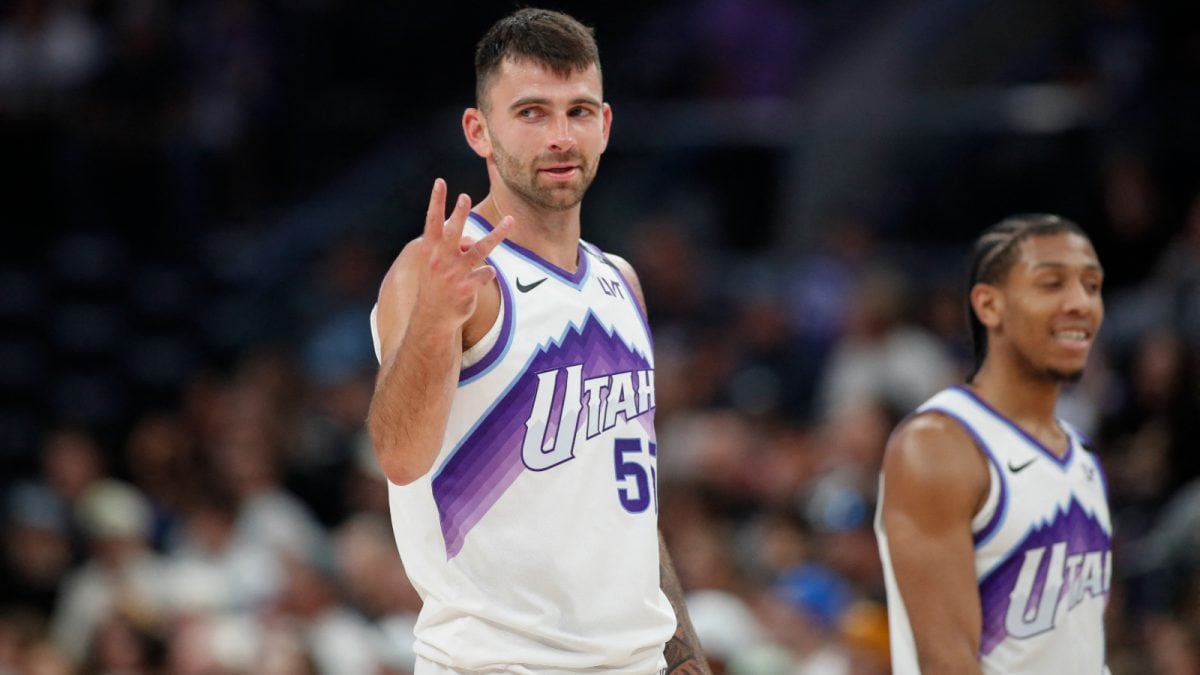
First, there was John Konchar. He started the night on the bench, which for many of us meant "not a starter". Yet, he came alive, scoring 11 points, grabbing 11 rebounds and dishing out 10 assists. I could hear the commentator say, "Konchar’s triple‑double off the bench! That's a first in NBA history!" It made me think of my uncle, who once told me that bench players in cricket rarely get a chance to bat for a big score, but when they do, it’s magical.
Right after that, Bez Mbeng, another bench‑player, exploded with 27 points, 11 rebounds and 11 assists. The arena buzzed. The fact that both Konchar and Mbeng achieved this while not being starters was mind‑blowing. I started comparing it to my own experience in college basketball leagues, where we rarely see two bench‑players each scoring a double‑digit in points, rebounds and assists in the same match.
And then, on the other side, Jahmai Mashack of the Memphis Grizzlies also logged a triple‑double – 22 points, 10 rebounds and 10 assists. It was like watching a three‑way tie in a school exam where three students got the same top marks. The only twist? Mashack’s plus‑minus was a terrifying minus‑46, the worst ever for a triple‑double, which the commentators highlighted as "the ugly side of a great stat".
All this happened in a single game, and I could feel the excitement building in my living room. I’ve never been that emotionally involved with a basketball game before. The notion that three players could each achieve a rare statistical milestone was something I’d have to tell my friends about for weeks.
The Ugly Side of an Absolutely Massive Win
Now, while I was cheering for the Jazz, the game turned into a massive blowout. The final score was 147‑101. That’s a 46‑point margin, which in Indian terms is like winning a football match 6‑0. The Jazz led by as much as 55 points at one stage. I could see the crowd at the arena waving flags, while the Grizzlies looked demoralised, with only six players actually suited up because the rest were injured.
The game statistics were wild. The Jazz scored 86 points in the paint – that’s the area near the basket – and a whopping 45 fast‑break points. It felt like watching a cricket team scoring runs in every ball, never missing a chance. For me, the sheer dominance made the match look "ugly" in a way; there was hardly any contest, just a one‑sided demolition.
But the real kicker, the moment I realised the story was more complicated than just a historic night, was when the commentators started talking about "tank‑fests" and "draft lottery odds". In NBA parlance, "tanking" means intentionally losing games to get a better pick in the upcoming draft lottery, which decides who gets the top rookie talent. The Jazz were already 22‑59, meaning they were one of the worst teams. Winning by a huge margin actually pushed their odds a little lower.
I tried to imagine the situation: it's like being a student who finally gets a good mark after a series of failures, only to find out that the good mark makes them ineligible for a scholarship they were counting on. The Jazz, by winning this game so convincingly, ensured they could finish no worse than fourth in the lottery, giving teams like the Washington Wizards, Indiana Pacers and Brooklyn Nets a better chance at the coveted No. 1 pick.
Understanding the Tank‑Battle and Injury Chaos
Both the Jazz and the Grizzlies have been ravaged by injuries this season. I read that Memphis had 14 players sidelined, leaving only six on the court, and Utah also had a long list of injured stars. This forced both coaches to rely heavily on two‑way contracts, 10‑day contracts, and players who are usually on the periphery of the roster.
From an Indian perspective, it reminded me of a district cricket team that loses all its senior players to injuries and has to field a bunch of youngsters. You get a mix of raw talent, nervous energy, and a lot of learning on the job. In the NBA, this translates to a "tank‑fest" where teams are more about evaluating future talent than winning the day.
What’s ironic is that the Jazz’s huge win might actually hurt them more than a loss would have. Because they’re already low in the standings, a loss could have slightly improved their odds of landing a higher lottery pick. That’s the paradox of tanking – sometimes losing is better than winning, at least from a strategic standpoint.
During the game, I could see the coaches rotating players not just to keep the score in their favour but also to give as many of those short‑term contracts a chance to showcase what they could do. This gave fans like me an insight into many relatively unknown names, a glimpse into the future of the league.
My Personal Take on the Whole Situation
Honestly, watching that night felt like being stuck between joy and frustration. On one hand, I was thrilled to witness a historic first – three triple‑doubles in a single NBA game. It’s the kind of statistic that fills up my social media feed and gives me something to brag about when I meet other basketball fans at a café.
On the other hand, the idea that a win could diminish the Jazz’s lottery chances felt like a cruel irony. It reminded me of the time when my cousin, a keen cricket fan, celebrated a sudden victory for his team in a local league, only to find out that the win knocked them out of contention for a crucial sponsor’s scholarship. In both cases, a short‑term joy turned into a long‑term worry.
Moreover, the game highlighted how much the NBA has changed – it’s no longer just about star players. The bench players, the two‑way contracts, and even the 10‑day contracts can make history. It’s an exciting time for a fan who enjoys seeing underdogs rise, even if the win may have hidden consequences for the team’s future.
In the end, I think this night will be remembered for a long time, not just for the triple‑doubles but also for the lesson it taught about strategic losing. It’s a reminder that in professional sports, the business side can be as intriguing as the on‑court action.
What It Means for the Future of the Jazz and the NBA
Looking ahead, the Jazz now know that finishing fourth in the lottery is still an achievement, but they will likely be aiming for a higher pick. With a record that places them well below the top‑five teams, any chance to move up in the draft order is valuable. The front office will probably analyze this game closely, perhaps even considering whether to "tank" a few more games, or to keep playing to develop the young talent they have.
The NBA as a whole might also be seeing the consequences of the "tank‑fest" culture. If teams start realizing that blowing out opponents can backfire, we may see a shift in how coaches manage game minutes for bench players and how they plan for the rest of the season.
For fans like me, the takeaway is simple: enjoy the moments of brilliance on the court, because they can come from unexpected places – a bench‑player’s triple‑double, a frantic fast‑break, or even a tragic minus‑46 plus‑minus that still earns a player a place in the record books. The NBA is full of surprises, and that’s what keeps us glued to the screen, even half a world away.