Hiring Domestic Workers in 15 Minutes Across India: Is the Model Equitable?
Hiring Domestic Workers in 15 Minutes Across India: Is the Model Equitable?
On‑demand household assistance speeds up service but adds tighter oversight and heightened job strain for workers.
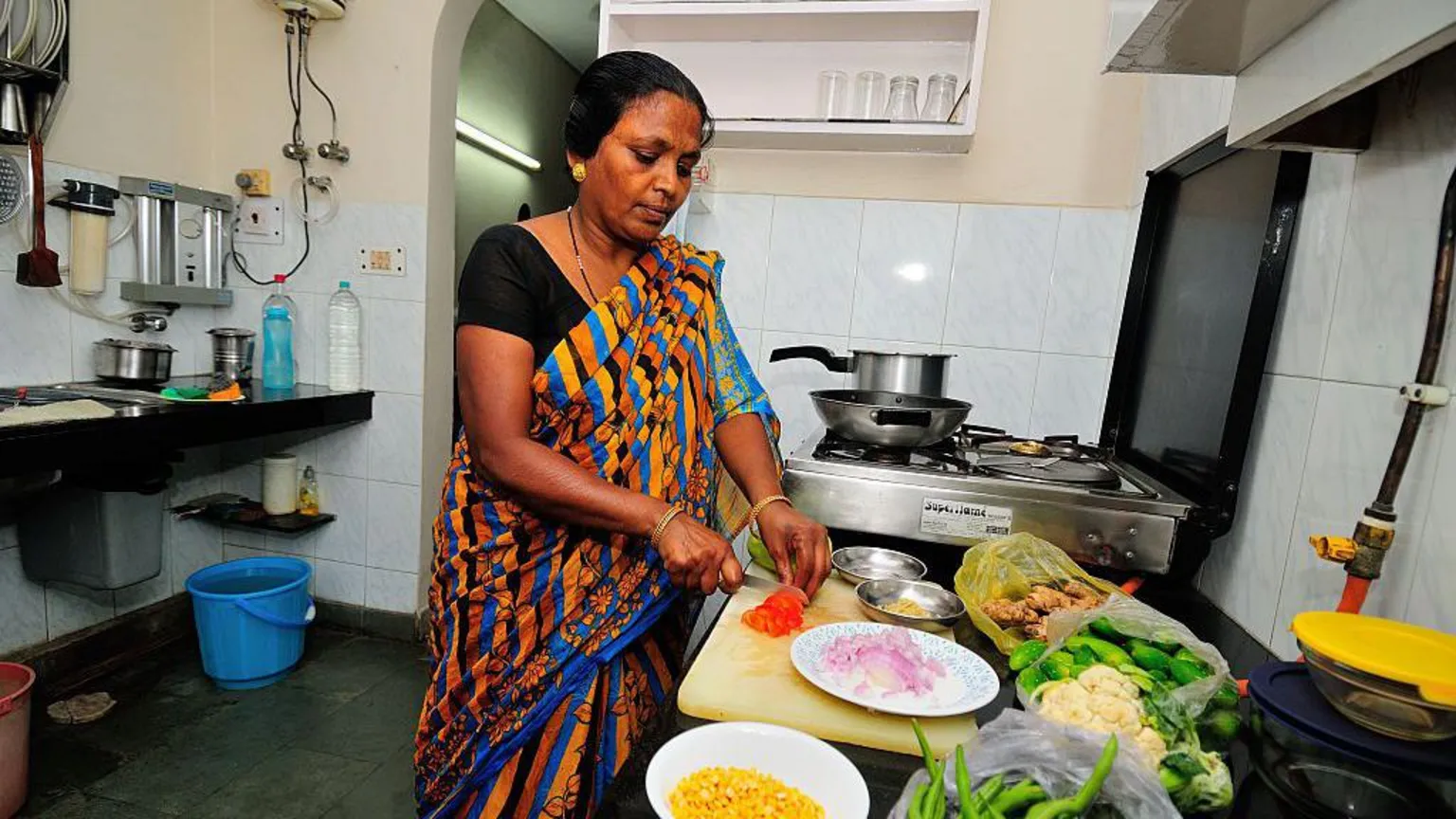
On a Tuesday afternoon in Noida, a city bordering the Indian capital Delhi, Seema Kumari arrives in a purple T‑shirt and gets straight to work.
Kitchen counters are wiped, the balcony is scrubbed, bedsheets are straightened and the floor is mopped. Within 55 minutes, the home is cleaned and in order.
Seema Kumari works with Urban Company, an app that lets customers book at‑home services – from cleaning to beauty treatments – sometimes in as little as 15 minutes.
In India, domestic help has long been arranged through word of mouth, with workers hired informally and paid in cash.
Now, startups are bringing these services online, offering on‑demand bookings in cities for short tasks. These firms are entering a vast, largely unregulated market – an estimated 30 million domestic workers, many of whom are women with few formal job options.
Pronto, a platform launched last year, says it has scaled to 15 000 bookings a day in just 10 months, with demand highest in Delhi and nearby cities, followed by Mumbai and Bengaluru.
In India, domestic work is low‑paid, insecure and largely unregulated, as it takes place inside private homes.
Companies such as Urban Company and Pronto say they are trying to formalise the sector with training, standardised pricing and digital payments. For workers, this brings new opportunities – but also new pressures and control.
Before joining the platform, Seema Kumari worked at a garment factory, earning between 10 000 (US$108; £81) and 14 000 rupees a month.
Seema Kumari left the factory job last year after hearing that Urban Company was hiring.
Seema Kumari says, "I now make around 20 000 rupees a month," adding that the income helps support two children.
But the new system brings pressures Seema Kumari never faced before. After each job, Seema Kumari asks for a good rating – a rating that is crucial for future work. A low score can reduce Seema Kumari’s visibility or bookings, Seema Kumari says.
Unlike traditional arrangements, platform work is governed by algorithms that assign jobs, track performance and impose penalties.
Traditional domestic work, however, is far from ideal.
Inside private homes, the work can sometimes mean long hours, unclear duties, delayed pay and even abuse, with little protection. The informality of the arrangement leaves workers vulnerable.
Seema Kumari says she earns about 25 000 rupees a month on paper, but takes home less after fines for cancellations, low ratings and delays.
Seema Kumari adds, "I have made the full amount only once, when I did not take any leave and worked for at least eight hours every day."
Delays beyond Seema Kumari’s control can also cost Seema Kumari. "We often have to walk from one location to another. Sometimes security guards hold us up at the gate while they verify our entry into the building," Seema Kumari says. "That makes us late and then we are penalised – even if it is by five minutes."
Another user in Gurgaon, speaking on condition of anonymity, said the home‑service maid arrived slightly late and was fined 10 rupees by the provider – something the maid showed her on the app.
The GREE contacted Urban Company, which did not comment on late penalties. Pronto said it does not penalise workers for late arrivals.
Reviews add another layer of pressure. A helper who broke a curtain rod urged the user not to give a "negative rating".
The helper said, "It will hurt my prospects."
Labour‑rights activists argue that such time‑bound expectations can be unrealistic.
Akriti Bhatia says, "It is inhuman to expect that someone can simply be summoned within 15 minutes. These are people, not automated systems."
The pressure is not just about speed – it affects pay too. Platforms vary from fixed incomes to per‑task models with incentives, making earnings unpredictable and shaped by ratings and algorithms.
Anjali Sardana, founder of Pronto, says the startup aims to formalise the sector with direct bank salary payments and health and accident insurance.
But critics remain sceptical.
Akriti Bhatia says that while payments are formalised, workers still lack basic rights like paid leave and pensions. With little unionisation, most lack bargaining power.
The platforms say they have grievance‑redressal systems in place and offer quick support to staff if they are stuck in a hostile situation.
Even so, these measures do little to change the everyday realities of the work itself, which can often be difficult.
In Hyderabad, Amrutha finishes a cleaning job and declines a glass of water. Amrutha says Amrutha avoids drinking during shifts, unsure Amrutha will find a toilet between bookings. In many Indian homes, domestic workers are discouraged from using the employer’s bathroom.
Companies say they provide service hubs with restrooms, but workers often do not know. Between jobs, workers wait in public spaces – parks, staircases or bus stops.
This downtime workers once relied on is also disappearing. As demand has grown, workers say their breaks have steadily shrunk.
Seema Kumari says, "There are days when I don’t even get time to eat. It has started taking a toll on my health."
That trade‑off between flexibility and pressure is not new. It has played out when ride‑hailing services like Uber and gig platforms like Zomato first came to India.
Akriti Bhatia says, "We’ve seen this pattern before. Many venture‑funded platforms initially offer higher pay and discounts to attract users and workers. Over time, that balance shifts."
While instant home services are gaining popularity among younger urban users, some households remain hesitant.
Sushma, a Delhi resident, says Sushma was unsure when Sushma’s children first booked an app‑based cleaner after their regular help did not show up.
Sushma says, "I do not know the person. How do I let them into my house?"
Sushma also worried about how Sushma’s regular househelp might feel.
Sushma’s hesitation reflects a broader concern about what these platforms mean for long‑standing relationships between households and their domestic workers.
As these services grow, they are reshaping not just how work is arranged, but how it is experienced – on both sides.
Back in Noida, Seema Kumari checks a phone as another booking comes in.
Seema Kumari says, "The work is tough and I am looking for other opportunities. But for now, it helps me take care of my children, so I’ll keep going."





.jpg?type=mq)