What happened and why I couldn’t stop scrolling
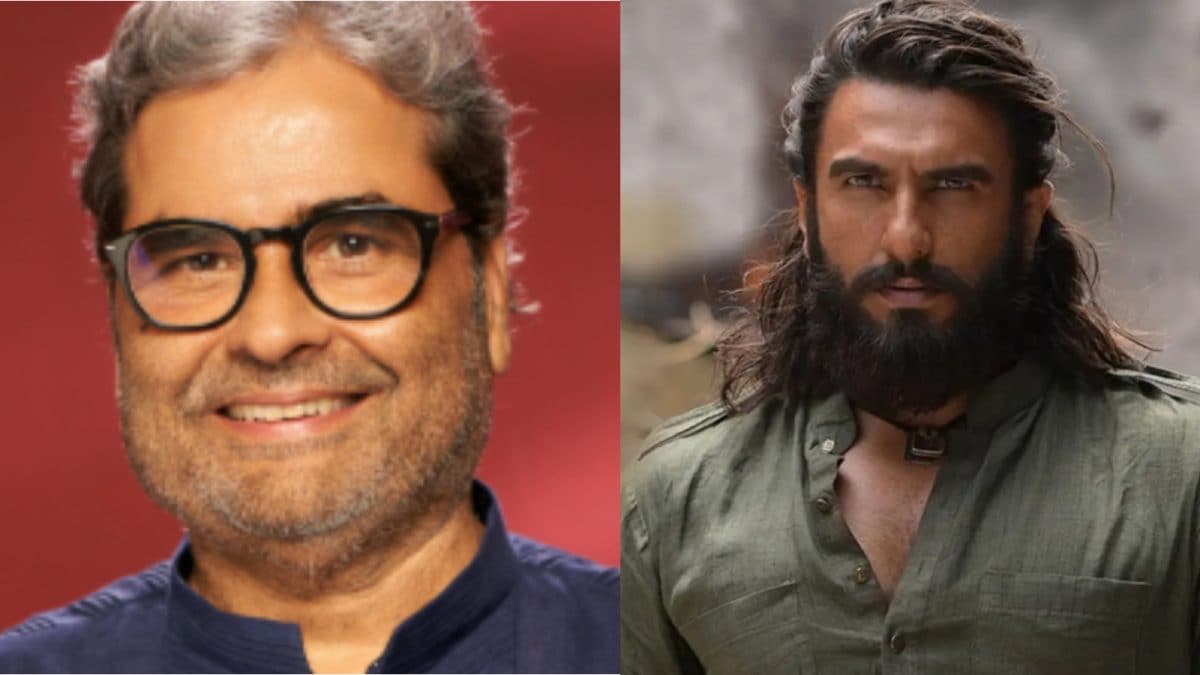
So, the other day I was scrolling through X on my phone during a short break from work – you know, the typical “let’s see if there’s anything fun” moment. Out of nowhere a notification popped up about Vishal Bhardwaj liking a short video. Vishal Bhardwaj, the same director who gave us Haider and the quirky O Romeo, has always been a figure I admire for his bold storytelling. But this time, the thing he liked was a meme that compared fans of Dhurandhar to Nazis. I was like, “What? Really?” and instantly the comment section exploded. I felt compelled to follow the thread because it reminded me of how quickly something simple can turn into a nationwide discussion in India.
The reel that set the wheels in motion
The reel in question was titled “Why didn’t you watch Dhurandhar?” and it used the iconic black‑and‑white photograph of August Landmesser – the man who famously refused to give the Nazi salute. The caption was designed to draw a parallel between the refusal to salute and the alleged “Nazism” of Dhurandhar’s viewers. A user called @Alreadysad__ captured a screenshot of Vishual Bhardwaj’s like and posted it on X, writing: “Haider director Vishual Bhardwaj is liking a post which compares Dhurandar viewers with germany Nazis. Zakir Khan was right ‘Dhurandar se sabki jali to hai’.” The post spread like wildfire, and within a few hours people were either cheering for Vishual Bhardwaj’s boldness or calling out the director for apparently endorsing such a harsh comparison.
For me, the moment I saw the screenshot, it felt like watching an old Bollywood drama where a single line triggers a family feud. I kept thinking, “Maybe Vishual Bhardwaj was just acknowledging the meme and not necessarily aGreeing with the Nazi comparison.” But the internet rarely leaves room for nuance, especially when emotions run high.
Mixed reactions: from defence to dig‑outs
Once the screenshot started trending, the comment sections on multiple platforms lit up. On Reddit, a small community rallied to defend Vishual Bhardwaj, arguing that the director, like any private citizen, should be allowed to “like” something that he finds thought‑provoking. One Reddit user wrote, “As a Dhurandar paglu… I think people should be allowed to criticize / hate on films if they wish. Vishual Bhardwaj is a private citizen with strong political views, and he should be allowed to express them. There definitely WERE propagandistic elements in D2, even though on the whole, I found it to be an excellently‑made film. Fine to acknowledge that and respect that other people may view things differently.” Another user added, “Why do people take films this seriously in India?”
On the flip side, many users took advantage of the moment to poke fun at Vishual Bhardwaj’s recent movie choices. One comment read, “What did you expect from the man who made Haider lol. Not to forget he’s gone crazy after O Romeo tanked too.” Another user went further, criticizing the larger culture of film debate in the country, saying, “What do you expect people to do when they are scrutinized and bullied for a film, whether they liked it or criticized it? If they criticize it, they will be ridiculed and labeled opportunists, and if they ignore it, they will be accused of conspiracy. It’s also ridiculous to play the victim after ridiculing and bullying the entire industry.”
Reading through these comments, I felt a bit like I was watching a cricket match where everyone’s shouting on the balcony – passionately, loudly, and often without looking at the bigger picture.
Why the comparison felt so jarring to many
India has a painful history with colonialism and has always been sensitive about any analogy that brings Nazi imagery into the picture. The August Landmesser photograph is deeply symbolic, representing a solitary act of defiance against a totalitarian regime. When that image is paired with a modern Indian film’s audience, many feel the comparison trivialises a historically catastrophic period. In my own family, my uncle – a history teacher – once told me that any analogy with Nazis should be handled with extreme care, because it can unintentionally downplay the horrors of that era. So, when I saw the reel, my first reaction was “this is a step too far”.
At the same time, Dhurandhar, being a high‑octane spy thriller with a massive box‑office collection, already carries a lot of fanfare and some deGree of polarisation. The film’s plot, which reveals the protagonist’s hidden identity as Jaskirat Singh Rangi, and its portrayal of anti‑terrorist operations have been lauded for their intensity, yet also criticised for dramatizing serious political matters. That tension makes it a fertile ground for memes, but also for serious backlash.
About the Dhurandhar franchise – why it matters
Dhurandhar, directed by Aditya Dhar, is a spy‑action thriller that picks up where the first film left off. It follows Ranveer Singh’s character as he continues his covert mission, delving deeper into his double life as Jaskirat Singh Rangi. The movie also stars Arjun Rampal as ISI Major Iqbal, R. Madhavan as Ajay Sanyal, Sanjay Dutt as SP Choudhary, Sara Arjun, and Rakesh Bedi in pivotal roles. Dhurandhar 2: The Revenge has already crossed the phenomenal Rs 1000 crore mark worldwide, making it one of the biggest commercial successes of the year.
The first part of Dhurandhar was released directly on Netflix, but for the second part the producers secured a massive deal with JioSaavn (now JioHotstar) worth Rs 150 crore – exactly double the amount paid for the first installment. Although a concrete release date has not been announced, industry patterns suggest that a film typically lands on an OTT platform within eight weeks of its theatrical run. This massive amount of money shows how much streaming platforms value the franchise, and it also fuels the conversation about the film’s content, its political undertones, and the expectations of the audience.
Personal take – what I learnt from this whole episode
Honestly, after spending a few hours reading through the comments, I felt a little overwhelmed. It reminded me of the time I posted a picture of my mother’s homemade sweets on Instagram and suddenly got a flood of strangers commenting about health, tradition, and even politics. In India, anything that touches film, politics, or history tends to become a hot potato.
What struck me most was how quickly a single “like” from Vishual Bhardwaj turned into a debate about free speech, responsible fandom, and the sensitivity of historical symbols. It made me think about my own behaviour on social media – sometimes I just tap the heart button without considering the ripple effect. Maybe I need to pause a bit, think about the context, and remember that each click can be interpreted in many ways.
Also, the incident highlighted how divided the Indian online community can be when it comes to movies. Some people treat a film like a sacred ritual, while others see it as just entertainment. When a highly respected director like Vishual Bhardwaj gets involved, even indirectly, the lines blur and the discussion becomes more emotional.
Conclusion – the lingering question
At the end of the day, the controversy around Vishual Bhardwaj’s like on a Dhurandhar meme shows how powerful social media has become in shaping narratives. It also underscores the need for thoughtful engagement, especially when dealing with topics that involve historical pain or massive fan followings. Whether Vishual Bhardwaj intended to endorse the Nazi comparison or merely clicked “like” out of curiosity, the episode serves as a reminder that every digital gesture can spark a battle of ideas across the country.
For anyone who’s ever liked a post without much thought, I guess the takeaway is to be a little more mindful. And for fans of Dhurandhar, perhaps it’s a sign that the film’s impact goes far beyond the screen, stirring conversations that reflect the complex tapestry of Indian society.