Why I was glued to the screen:
Honestly, when I first heard about the virtual meeting that the UK had organised to talk about reopening the Strait of Hormuz, I was a bit sceptical. I mean, another international conference, right? But then I saw the list of participants more than 60 countries and realised this was not just another routine dialogue. It was the kind of breaking news that could actually affect fuel prices at the pump, shipping schedules for our tea crates, and even the safety of Indian families whose relatives work on merchant ships. And, as a regular reader of trending news India, I felt I had to share what happened, especially because the discussion turned out to be deeply personal for India.
What made it even more gripping was the fact that India, represented by Foreign Secretary Vikram Misri, was the only nation to have lost its own citizens in the recent attacks on merchant shipping in the Hormuz corridor. That revelation caught people’s attention and added a layer of urgency that you don’t see in most diplomatic gatherings.
India’s voice at the table
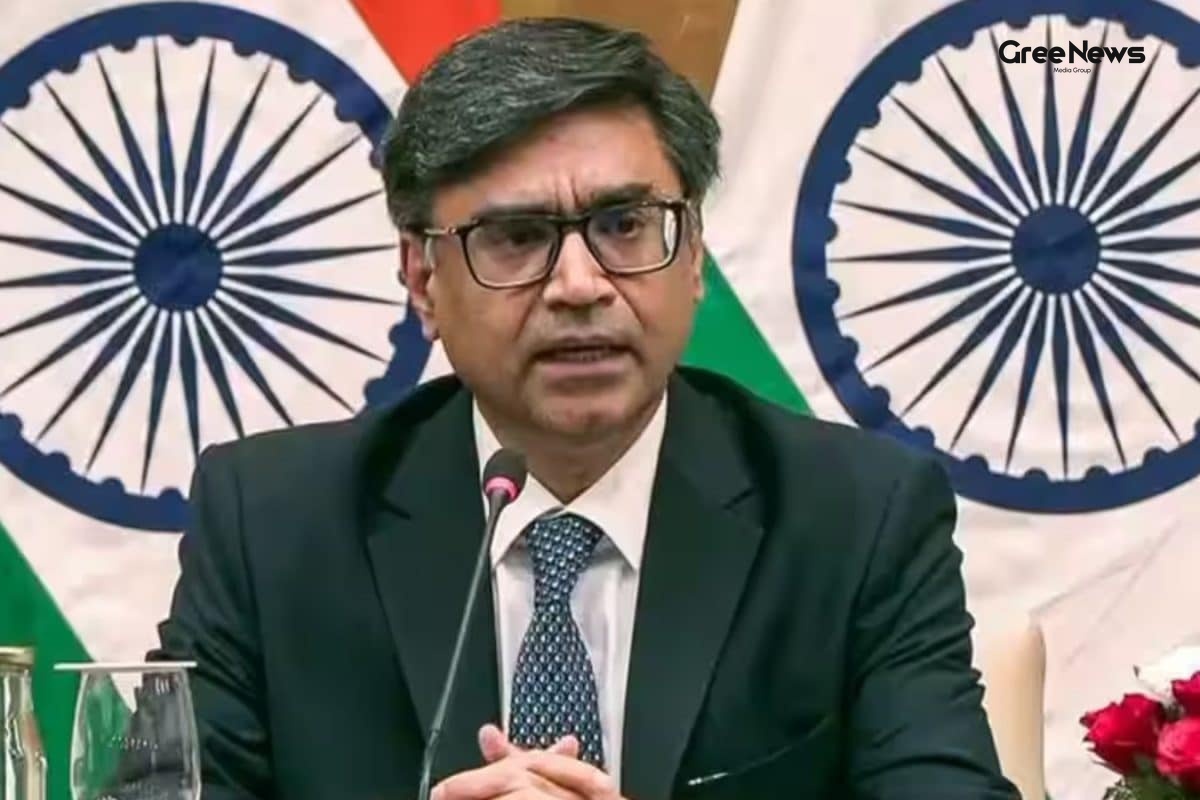
When the virtual gathering kicked off, I could feel the tension through the screen. Representatives from various ministries, think‑tanks, and even a few journalists were watching intently. Then, about halfway through, Foreign Secretary Vikram Misri took the floor. I remember thinking, ‘Here comes the Indian perspective what will he say?’
Vikram Misri, speaking on behalf of the Ministry of External Affairs (MEA), made it clear that India’s position was anchored in three core ideas: de‑escalation, maritime freedom, and energy security. He didn’t just recite a script; he spoke with a tone that felt almost like a friend whispering a serious matter over chai.
He said, "The way out of this crisis is through de‑escalation and a return to the path of diplomacy and dialogue among all concerned parties." It was a simple, yet powerful, statement that resonated with many attendees. In most cases, you hear lofty promises, but here it was a direct call for calm, suggesting that any further aggression would only tighten the noose around an already fragile energy corridor.
Most strikingly, Misri highlighted that India is the only country to have lost mariners in the attacks on merchant vessels within the Gulf. This wasn’t just a statistic; it was a painful reality. At least three Indian sailors, all serving on foreign‑flagged ships, were tragically killed. The Ministry of External Affairs made it evident that these losses are not abstract numbers they are lives, families, and communities back home who feel the impact every day.
After this solemn note, Misri turned the conversation toward solutions. He reminded everyone that the Strait of Hormuz is not just a geopolitical flashpoint but a lifeline for global oil trade, and by extension, a significant factor in India’s own energy security. The country, which imports a large chunk of its crude oil, cannot afford a prolonged disruption.
My take on the diplomatic dance
Watching the meeting, I couldn’t help but compare it to the bustling markets of Delhi lots of voices, haggling for space, each trying to get a piece of the pie. But unlike the chaotic market, there was a certain decorum. The discussion was peppered with factual references, and the tone was surprisingly human.
One of the things that struck me was how the outreach by India’s MEA had already started to pay off. According to a statement from MEA spokesperson Randhir Jaiswal, the country’s diplomatic efforts over the past few days had enabled six Indian ships to safely cross the Strait of Hormuz. That’s not just a number; it’s a testament to the fact that dialogue, even when it seems messy, can produce tangible results.
Randhir Jaiswal’s remarks were simple “Through this conversation we have had over the last several days, six Indian ships have been able to safely cross the Strait of Hormuz, and we continue to be in touch with relevant parties.” It felt like a friend telling you the bad news has a silver lining a reminder that not everything is bleak and that perseverance matters.
And here’s a detail that often goes unnoticed in the breaking news feeds: the meeting was notably absent of the United States. While the US has been critical of the UK for not supporting Washington in any direct action against Iran, its non‑participation added an extra layer of intrigue. It made me wonder about the future dynamics of the region will we see more independent initiatives by countries like India, or will the major powers step back and let regional players shape the narrative?
Why the Strait of Hormuz matters to every Indian
Let’s bring this closer to home. Imagine the morning you’re waiting for a bus, and suddenly the bus doesn’t arrive because the road is blocked. That’s what happens when a key maritime route like the Strait of Hormuz faces disruption. It affects the price of petrol at the pump, the cost of imported goods, and even the salaries of those working in logistics. In most Indian households, such changes ripple through daily life.
When I talk to my uncle who works in the shipping industry, he often mentions how the Hormuz corridor is the “backbone of global energy supply.” If ships can’t pass safely, the domino effect reaches even the smallest towns. That’s why India’s insistence on maritime freedom isn’t just diplomatic rhetoric; it’s about keeping the lights on in Delhi, Mumbai, and even the villages of Uttar Pradesh.
Furthermore, the loss of Indian sailors hits close to home. In our culture, we respect those who venture far from home to keep the wheels of commerce turning. When news broke that three Indian sailors were killed, families across the country gathered to pray, and social media lit up with tributes. It was a moment that went viral not in the glossy sense, but in a way that touched genuine hearts.
It reminded me of the time when a friend’s brother, who worked on an offshore rig, faced a similar risk. The community’s support was a lifeline, showing that even when the world seems distant, solidarity bridges gaps.
India’s diplomatic outreach the practical side
What impressed me most was how the MEA’s outreach was not merely symbolic but involved concrete steps. The spokesperson mentioned ongoing talks with Iran and other regional players to secure “unimpeded and safe transit” for Indian vessels. That means shipping companies receive real‑time updates, alternative routing advice, and sometimes even escort arrangements if the situation escalates.
In daily life, think about how we get weather warnings on our phones before stepping out. That’s a similar kind of alert system, only on a massive scale, ensuring that each ship knows the risks before setting sail. The fact that six Indian ships have already crossed safely under this framework is a clear sign that the outreach works.
Randhir Jaiswal also hinted that the conversations are ongoing. He said, “We continue to be in touch with relevant parties.” It’s a reminder that diplomatic engagement is a marathon, not a sprint. The incremental gains, like each safe crossing, add up to a broader stability that benefits everyone from the crew on board to the consumers buying a bottle of cooking oil.
What the future could hold
Looking ahead, I find myself wondering: will India step up as a mediator in the region, given its unique position of having suffered loss yet maintaining strong ties with both the West and Iran? The latest news India is brimming with speculation on this, and many analysts suggest that New Delhi could become a quiet broker, using its maritime experience and diplomatic channels to push for a peaceful resolution.
In most cases, the global powers dominate these conversations, but India’s voice, backed by genuine grief and a clear demand for safety, gives it a moral edge. If more countries see value in India’s approach focusing on de‑escalation and practical cooperation the chances of a lasting solution improve.
For now, the emphasis remains on keeping the ships moving and the sailors safe. The MEA’s ongoing dialogues, the successful crossing of six Indian vessels, and the clear call for diplomatic engagement form a triad that could steer the region away from further conflict.
And as a regular consumer of trending news India, I’ll keep watching and sharing updates. After all, when the news becomes part of our everyday conversation whether over chai or on a commuter train it stays alive and pushes us all toward a safer future.