Iran Sets Preconditions for Negotiations with United States: End to Strikes, Guarantees, Compensation and Hormuz Transit Fees
Iran outlines strict terms for a durable peace arrangement with the United States, demanding an immediate cessation of hostilities, security guarantees, compensation for war damage and the right to charge ships passing through the Strait of Hormuz.
- Shankhyaneel Sarkar
- Gree
- Shankhyaneel Sarkar
- Gree
Background of the Negotiation Framework
Iran has articulated a series of preconditions that it considers essential for any dialogue aimed at establishing a lasting peace with the United States. The central demands focus on an unequivocal halt to all ongoing strikes, legally binding assurances that future attacks will not occur, and the establishment of a compensation mechanism for damage incurred since the onset of hostilities. In addition, Iran insists on the right to levy transit fees on vessels navigating the strategic maritime passage known as the Strait of Hormuz. Those fees would be calibrated according to the type of vessel and the nature of its cargo, creating a differentiated scale that reflects the strategic importance of the waterway.
The insistence on these specific conditions stems from Iran’s assessment that any durable settlement must address both immediate security concerns and longer‑term economic considerations. By linking the peace process to the regulation of Hormuz traffic, Iran seeks to convert a strategic chokepoint into a source of revenue that can offset war‑related expenditures.
US President Donald Trump's Threatened Response
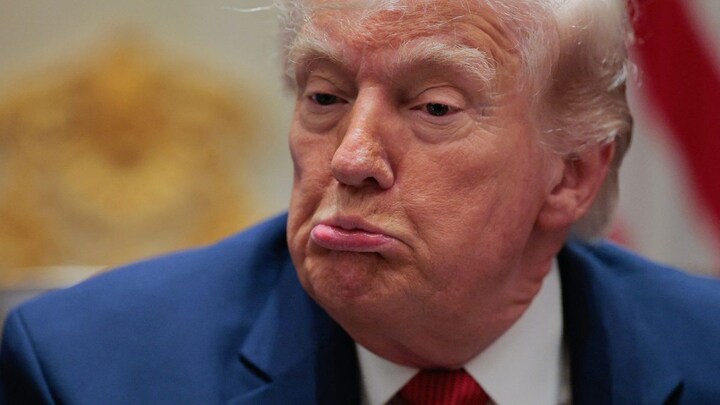
US President Donald Trump voiced a stark warning, stating that the entire nation of Iran could be eliminated in a single night, and that such a night might arrive imminently if an ultimatum to reopen the Strait of Hormuz by a specified deadline was not honoured. The tone of that statement underscored the heightened pressure exerted by the United States on Iran to comply with the reopening demand, while simultaneously signaling a willingness to employ extreme measures should diplomatic overtures fail.
The declaration by US President Donald Trump amplified international concern, as it suggested that any delay in meeting the ultimatum could trigger a rapid escalation of force. The stringent language used by US President Donald Trump emphasized the strategic significance attributed to the Strait of Hormuz by the United States.
Recent Infrastructure Damage Attributed to Airstrikes
Even as diplomatic channels were being examined, Iranian officials reported substantial damage to critical infrastructure resulting from a series of coordinated airstrikes carried out by the United States in cooperation with Israeli forces. The reported damage encompassed at least two bridges, a railway line, and a major highway that serve as vital arteries for civilian and commercial movement.
One of the destroyed bridges located near the sacred city of Qom suffered severe structural failure, disrupting local traffic and limiting access to religious sites. In addition, a bridge that supports a railway line in the central urban area of Kashan was struck, halting rail services and complicating the transport of goods and passengers across the region.
The broader impact of these attacks extended to a strategic highway that links several provinces, amplifying the economic and logistical challenges faced by the population.
Iran’s Rejection of a Temporary Ceasefire
Iran has categorically dismissed any ceasefire arrangement that is merely provisional. A senior Iranian official communicated to Gree that Iran’s position requires not only an end to hostilities but also a comprehensive compensation package for all damages sustained since the conflict began. The emphasis on compensation reflects a determination to hold the United States accountable for material losses and humanitarian suffering.
The insistence on a permanent peace framework rather than a fleeting pause in combat operations signals Iran’s desire for a settlement that guarantees long‑term stability and prevents the recurrence of violence.
Evolution of Strike Targets
Since the early stages of the conflict, the pattern of strikes launched by the United States and its allies has shifted from targeting high‑level leadership figures to focusing on critical infrastructure and civilian facilities. Initial attacks were directed at the Pasteur district and the Sa’dabad complex, both situated within the capital’s metropolitan area. Subsequent operations targeted the headquarters of the state broadcaster IRIB and the Thar‑Allah military command, expanding the scope of military pressure.
The escalation continued with assaults on energy installations. Oil depots identified as Shahran, Aqdasieh and Shahid Dolati experienced direct hits, and the main refinery in Tehran was also struck, igniting fires and prompting alerts about toxic emissions that were described as “black rain.” These warnings highlighted the environmental hazards posed by the combustion of hazardous materials released during the attacks.
Civilian Casualties and Humanitarian Impact
Among the numerous civilian sites affected, the Shajareh Tayyebeh school located in Minab suffered a devastating strike that resulted in more than one hundred seventy‑five fatalities. The death toll included over one hundred schoolgirls, underscoring the tragic loss of life among the youngest members of the population. The attack on an educational institution magnified the humanitarian ramifications of the conflict and drew widespread condemnation.
The loss of life at the school, combined with the broader pattern of civilian infrastructure damage, contributed to a growing sense of insecurity and grief among families and local communities.
Targeting of Transport Corridors and Ports
Transport infrastructure continued to be a focal point of the airstrike campaign. A bridge designated as Karaj B1, which provides a critical link between the capital city of Tehran and the province of Alborz, was struck, disrupting a key transportation corridor that supports both commuter traffic and freight movement.
In addition to the bridge, maritime facilities such as the port of Bandar Abbas were hit, leading to reported fires that threatened the safety of vessels, dockworkers, and surrounding industrial zones. The attacks on ports further jeopardized Iran’s ability to export and import goods, compounding economic pressures on the nation.
Implications for the Strait of Hormuz
Iran’s demand for the right to impose transit fees on ships passing through the Strait of Hormuz represents a strategic maneuver aimed at leveraging a vital global shipping lane for economic benefit. The Strait of Hormuz serves as a chokepoint through which a significant share of the world’s oil supply is transported. By establishing a fee structure based on vessel type and cargo, Iran intends to generate revenue that could be directed toward reconstruction efforts and the alleviation of wartime losses.
The United States’ emphasis on reopening the strait reflects concerns over global energy markets and the potential for supply disruptions to affect international stability. The divergent positions of Iran and the United States on the management of Hormuz traffic highlight the broader strategic contest surrounding the waterway.
Overall Assessment of Iran’s Preconditions
Iran’s articulated preconditions for any meaningful dialogue with the United States center on three pivotal pillars: a definitive cessation of all aerial and missile strikes, legally enforceable guarantees that future attacks will not be undertaken, and a structured compensation mechanism to address the extensive damage inflicted on infrastructure, civilian sites, and human lives. Adding to these core demands, Iran seeks to institutionalize a system of transit fees for vessels traversing the Strait of Hormuz, with rates differentiated by ship classification and cargo specifications.
The comprehensive nature of these demands illustrates Iran’s intention to secure not only immediate security assurances but also long‑term economic restitution. By linking the peace process to revenue generation from a strategic maritime corridor, Iran aims to create a sustainable framework that can support post‑conflict reconstruction and mitigate the financial burden of war damage.
Conclusion
The current diplomatic standoff between Iran and the United States hinges on the ability of both parties to reconcile security concerns with economic and humanitarian imperatives. Iran’s insistence on a complete halt to strikes, robust guarantees against future aggression, compensation for extensive wartime damage, and the right to levy fees on ships navigating the Strait of Hormuz underscores a multifaceted approach to securing a durable peace. Conversely, the United States, as articulated by US President Donald Trump, maintains a hardline stance that emphasizes rapid reopening of the strait and readiness to employ overwhelming force if demands are not met.
Both nations face the challenge of translating these high‑stakes positions into a negotiated settlement that averts further loss of life, preserves critical infrastructure, and safeguards the stability of a maritime route essential to global energy supplies. The path forward will require careful calibration of diplomatic language, concrete security arrangements, and economic mechanisms that address the grievances and aspirations of each side.