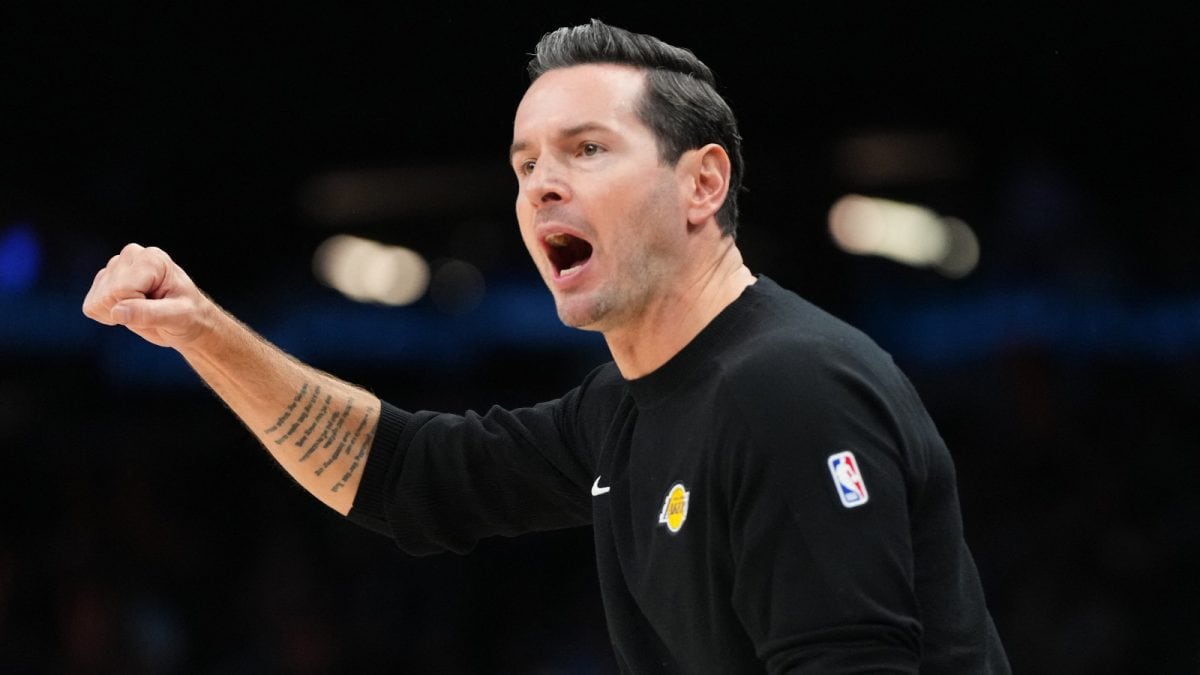
JJ Redick Rips Lakers’ Effort After 123‑87 Rout, Demands Full‑Throttle Play as Playoff Hopes Hang in the Balance
Context of an Intensifying Crisis
The Los Angeles Lakers, a franchise synonymous with championships and star power, currently find themselves navigating an unprecedented wave of physical setbacks. Injuries have created a cascading effect that has left the roster visibly depleted. Luka Doncic, a key offensive catalyst, is out of the rotation. Austin Reaves, a reliable secondary scorer, remains sidelined. Even LeBron James, the perpetual engine of the Los Angeles Lakers, is being managed carefully to preserve longevity.
These absences have forced the Los Angeles Lakers to rely heavily on depth players who, under normal circumstances, would see limited minutes. The lack of continuity has been evident in practice sessions, where the cadence of the offense appears disjointed and defensive rotations look tentative. The accumulation of injuries has also amplified the pressure surrounding the impending end of the regular season, where every game carries amplified significance for playoff positioning.
The 123‑87 Blowout Explained
Against the backdrop of this injury‑laden reality, the Los Angeles Lakers faced the Oklahoma City Thunder in a contest that quickly descended into a one‑sided affair. The final score—123 to 87—reflected not only a statistical disparity but also a palpable absence of competitive fire from the Los Angeles Lakers. The Thunder, rotating a balanced mix of seasoned veterans and emerging talent, capitalized on every opportunity, extending their lead steadily throughout each quarter.
From the opening tip, the Los Angeles Lakers displayed a hesitancy that belied the organization’s storied reputation for clutch performance. Passes were either overwrought or under‑driven, leading to a series of turnovers that the Thunder converted into easy transition points. Defensive lapses were especially glaring; the Thunder exploited mismatches in the paint, drawing the Los Angeles Lakers into a series of contested rebounds that seldom resulted in second‑chance opportunities.
The statistical line tells a similar story: the Los Angeles Lakers managed only 87 points, a figure well below the annual average for the franchise. Field‑goal efficiency plummeted, and free‑throw attempts were scarce, illustrating a lack of inside aggression that typically fuels an offense.
JJ Redick’s Immediate Reaction
Following the final buzzer, JJ Redick, the head coach of the Los Angeles Lakers, took to the locker room with a tone that left little room for ambiguity. JJ Redick articulated a sense of frustration that stemmed not merely from the scoreboard but from an observable shortfall in effort and intensity. JJ Redick underscored that the Los Angeles Lakers have a responsibility to compete at a level that reflects the franchise’s legacy, regardless of roster composition.
JJ Redick emphasized that the Los Angeles Lakers must scrap, claw, and maintain a unified approach if they hope to recover from this setback. JJ Redick warned that the margin for error narrows dramatically as playoff seeding hangs in the balance, and that every player must be "all‑in" on each possession.
Timeout Confrontation with Jarred Vanderbilt
Early in the first quarter, during a brief intermission called by JJ Redick, a heated exchange erupted involving Jarred Vanderbilt. JJ Redick confronted Jarred Vanderbilt regarding perceived deficiencies in intensity. The exchange culminated in Jarred Vanderbilt’s removal from the game after logging just five minutes of participation. Jarred Vanderbilt’s statistical contribution for the night—three points, two rebounds, one assist, and one steal—reflected a truncated impact that JJ Redick deemed insufficient.
When later asked to elaborate on the incident, JJ Redick downplayed the personal nature of the confrontation. JJ Redick described the exchange as “a confluence of things,” noting that such moments are “normal” in the context of a roster operating under‑manned. Nonetheless, JJ Redick reaffirmed that alignment on effort and attitude is non‑negotiable for the Los Angeles Lakers moving forward.
Specific Critiques: Rui Hachimura
JJ Redick’s post‑game commentary singled out Rui Hachimura for lacking the necessary intensity during the opening minutes. JJ Redick recounted that the early timeout was called precisely because Rui Hachimura “didn’t do his job.” By the second minute of the first quarter, JJ Redick had decided to substitute Rui Hachimura, signaling a clear message that effort could not be compromised.
JJ Redick’s remarks were unequivocal: “We’ve got to find nine guys that are all‑in… willing to go out and fight and be all in on the team. We’ll find the nine guys.” This statement underscores JJ Redick’s belief that the Los Angeles Lakers must rely on a collective of fully committed players, rather than relying on sporadic bursts of brilliance.
Specific Critiques: Deandre Ayton
The harshest criticism in JJ Redick’s assessment was directed toward Deandre Ayton, the Los Angeles Lakers’ starting center. JJ Redick highlighted difficulties in Deandre Ayton’s ability to secure catches, questioning whether the issue stemmed from inaccurate passes or Deandre Ayton’s positioning. JJ Redick’s observation: “He’s had trouble catching the ball… I don’t know if that’s the passing or it’s him trying to get position… He hasn’t been able to catch the ball.”
Deandre Ayton’s statistical line—three points and three rebounds on one‑of‑four shooting—illustrated an underwhelming performance that fell well short of the standards expected from a player occupying the pivotal interior role on the Los Angeles Lakers.
Playoff Landscape and Seeding Stakes
The timing of the loss could not have been more consequential. With only three regular‑season contests remaining, the Los Angeles Lakers have witnessed a slip in their grip on the No. 3 seed. The Los Angeles Lakers now sit level with the Houston Rockets, both having compiled identical win‑loss records.
The upcoming schedule features matchups against the Golden State Warriors, the Phoenix Suns, and the Utah Jazz—each a formidable opponent capable of reshaping the playoff tableau. Each of these contests carries amplified weight, as the Los Angeles Lakers must secure victories to climb back into a more favorable seed category.
JJ Redick has emphasized that a “fight” and “will” are essential components of any successful push for a higher seed. The absence of additional reinforcements could leave the Los Angeles Lakers heavily reliant on LeBron James, a 41‑year‑old athlete whose leadership and experience remain invaluable yet cannot single‑handedly offset systemic shortcomings.
Path Forward: What the Los Angeles Lakers Must Do
To reverse the trajectory set by the recent defeat, the Los Angeles Lakers need to implement a multi‑pronged approach. First, the organization must continue to manage the health of key contributors while seeking to expedite the return of injured players. Second, the coaching staff, led by JJ Redick, must enforce an intensity‑first philosophy throughout practice and games, ensuring that every player internalizes the “all‑in” mantra.
Third, the Los Angeles Lakers must address the specific technical deficiencies cited by JJ Redick. For Rui Hachimura, that entails reinforcing a mindset of relentless effort on each possession. For Deandre Ayton, adjustments must focus on positioning, timing, and catching mechanics to maximize the effectiveness of inbound plays and offensive rebounds.
Finally, the Los Angeles Lakers must cultivate a cohesive unit that can function despite the depletion of star power. This involves trusting role players, maximizing the strategic use of bench depth, and leveraging tactical adjustments that compensate for the missing pieces. If the Los Angeles Lakers can synthesize these elements, they stand a realistic chance of securing a playoff seed that reflects the franchise’s competitive aspirations.