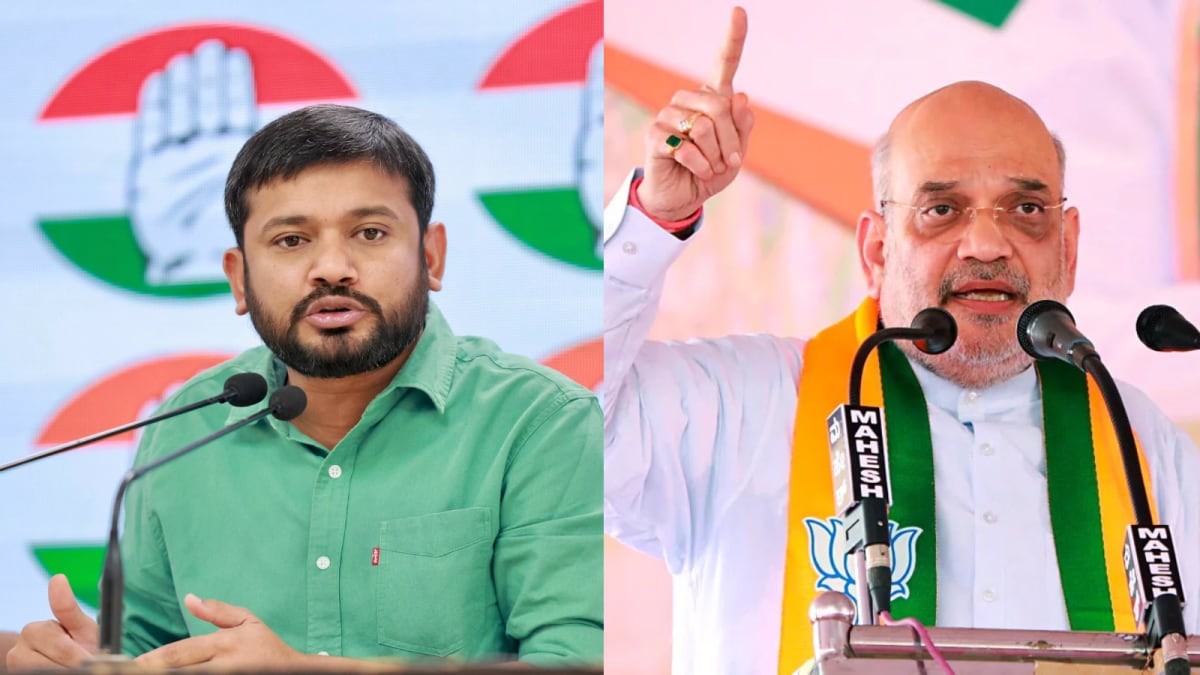
Kanhaiya Kumar’s sharp jab at Amit Shah and Himanta Biswa Sarma
So, the other day I was watching the news and saw Kanhaiya Kumar, the Congress leader, standing on a stage in Assam, looking all fired up. He started pointing his finger at Union Home Minister Amit Shah and the state’s chief minister, Himanta Biswa Sarma. What caught my attention was the way he phrased it – he said they were the "biggest infiltrators" in the state. It sounded a bit like a paradox to me, because the BJP has been constantly talking about driving out infiltrators from Assam for years.
Basically, Kanhaiya was challenging the very narrative the ruling party has built. He said the promise to clear Assam of illegal migrants was being used as a political weapon, but the real infiltration, according to him, was coming from the top echelons of power. I could see the crowd reacting – some cheering, others just watching in bewilderment.
Why infiltration is such a hot‑button issue in Assam
To understand why Kanhaiya’s comment created such a stir, you have to go back a bit. Assam has had a long history of dealing with migration from neighboring Bangladesh. The Assam Accord of 1985 tried to set a clear deadline – 1971 – after which anyone who entered illegally would be considered an infiltrator.
In most cases, that Accord has remained a reference point in political debates. People in tea gardens, for example, often discuss how the demographic change has affected their daily lives – from job opportunities to cultural festivals. My uncle, who works in a tea estate near Jorhat, often tells me how families that came from across the border have become part of the community, yet the legal status still hangs over them like a cloud.
So when a high‑profile leader like Amit Shah says his ministry will "drive out" these infiltrators, it resonates with a large section of Assamese voters who feel their identity is under threat. At the same time, the opposition uses the same term to point out inconsistencies, and that’s what Kanhaiya was doing.
What exactly did Kanhaiya Kumar say?
In the rally, Kanhaiya started with a short story about his own student days – he mentioned a time when he was part of a protest at his college in Delhi and how he felt the need to speak truth to power. Then he shifted his focus to Assam, saying something along the lines of: "While the Union Home Minister Amit Shah and Chief Minister Himanta Biswa Sarma keep shouting about kicking out infiltrators, they themselves have become the biggest infiltrators in our beloved state. They infiltrate fear, division, and hatred into the hearts of our people."
He added that the BJP’s promise was just a "political stunt" designed to win votes, and that real development – schools, hospitals, roads – was being ignored. I remember him pausing a couple of times, letting the words sink in, and the crowd responded with a few chants of "Congress, Congress." The language was simple, but the impact was noticeable.
How the BJP responded
Immediately after the rally, the BJP’s office in Guwahati released a statement. It basically called Kanhaiya’s remarks "baseless" and "politically motivated," and warned that stirring up communal tension would not help anyone. They also reminded people that Amit Shah’s ministry has been working on updating the National Register of Citizens (NRC) and that the process was being carried out with utmost fairness.
In most cases, the party’s spokesperson tried to bring the conversation back to the legal aspects of the NRC, saying that any infiltration claim should be verified through proper documentation, not by political speeches. I saw a tweet from a local BJP leader who said something like, "We will not let anyone manipulate the emotions of the Assamese people for electoral gains." It sounded a bit rehearsed, but that’s the usual line.
Public reaction – what the people are saying
On the streets of Guwahati, you could hear a mix of opinions. Some tea garden workers nodded approvingly at Kanhaida’s words, saying that they felt the government had become too focused on the idea of "infiltration" and not enough on everyday challenges like water supply or electricity cuts. Others, especially those who have families that migrated decades ago, felt uneasy about being labeled as infiltrators.
My friend, who runs a small grocery shop near the market, told me, "When politicians start using words like infiltrator, it makes my customers uneasy. They worry about their own identity, even if they are honest citizens." He added that the political drama often distracts from the real issues that affect small businesses – like rising rent and fickle wholesalers.
There were also a few youngsters on social media who made memes of Kanhaiya’s comment, comparing Amit Shah’s speeches to a never‑ending Bollywood villain monologue. While the memes were humorous, they also indicated how the topic has seeped into everyday conversation.
Historical background – the roots of the infiltration debate
Assam’s struggle with migration goes back decades, long before the BJP made it a political slogan. The 1971 Bangladesh Liberation War triggered a massive influx of refugees, many of whom settled in the state. Over time, families grew, and the lines between refugees and illegal migrants blurred.
In the 1980s, the Assam Movement led by student groups demanded the detection and expulsion of illegal immigrants, culminating in the Assam Accord. The Accord promised to identify and deport those who entered after 1971. However, the implementation has always been fraught with legal challenges, court battles, and political compromises.
When Amit Shah started emphasizing the “infiltration” angle in the 2010s, it was partly a continuation of that older narrative, but also a fresh political tool to rally voters. Kanhaiya’s comment essentially flips the script – instead of focusing on outsiders, he brings the spotlight onto the policymakers themselves.
What this could mean for the upcoming elections
Now, elections are always around the corner in Indian politics, and Assam is no different. The BJP’s strategy has often hinged on the promise of a “clean” Assam – no illegal migrants, stricter border controls, and the like. If Kanhaiya can convince enough voters that the party’s rhetoric is just a cover for other motives, it might chip away at the BJP’s vote bank.
In most cases, regional parties like the Asom Gana Parishad (AGP) also weigh in, trying to balance the infiltration issue with development concerns. So far, analysts say the key battleground will be the youth – they care about jobs, education, and internet connectivity more than any political slogan.
From my own observation, the youth in Guwahati are more interested in starting start‑ups, getting good placements in IT firms, and finding stable housing. When a politician talks about infiltration, many of them just roll their eyes, unless it directly affects their job prospects.
Legal angle – the NRC and its challenges
The National Register of Citizens (NRC) is a massive bureaucratic exercise that aims to list all legitimate citizens of Assam. The process has been both praised for its thoroughness and criticized for creating uncertainty among citizens. Kanhaiya’s criticism indirectly touches upon this – he suggests that the government’s focus on creating lists has become a political weapon rather than a genuine effort to safeguard the state’s demography.
In most cases, the Supreme Court has intervened to ensure due process, but the ground reality remains messy. Families waiting for their names to appear on the NRC face anxiety, and politicians often use that anxiety to sway public opinion.
My cousin, who works as a clerk in a government office, told me that the NRC updates have caused delays in his department’s work, because every new request has to be cross‑checked with the list. He said, "It feels like we are stuck between two political narratives – one saying we need to be strict, the other saying we need to be compassionate."
Economic implications of the infiltration discourse
When the political conversation constantly circles around infiltration, it can affect the economy too. For instance, foreign investors often look for stability. Persistent political rhetoric about demographic change may raise concerns, even if the actual policies remain unchanged.
In a recent conversation with a tea garden owner from Dibrugarh, he mentioned that the “infiltration” talk sometimes hampers the recruitment of workers. He said, "If people think they might be labelled as illegal, they hesitate to apply for jobs, even if the employer assures them safety." This, in turn, could affect productivity in the tea sector, which is a major source of livelihood in Assam.
Similarly, small traders in local markets might suffer if communal tension flares up. The fear of protests or clashes can reduce footfall, and that’s something I’ve observed personally during past election seasons.
Personal reflections – why this matters to me
Being originally from Assam and living in Delhi for a few years, I have seen both sides of the debate. The fear of losing cultural identity is real for many Assamese, especially after witnessing large-scale demographic shifts. On the other hand, I also know people who migrated here decades ago, worked hard, and now consider Assam their home.
When I watched Kanhaiya’s speech, I felt a mixture of admiration for his boldness and caution about the language he used. It reminded me of a conversation I once had with my grandmother, who told me that politics in Assam has always been about balancing the rights of the original inhabitants with the compassion for newcomers.
In most cases, the truth lies somewhere in between, and using harsh labels can damage the social fabric. That’s why I think it’s important for leaders to focus on inclusive development rather than pointing fingers.
Conclusion – where do we go from here?
All in all, Kanhaiya Kumar’s statement that Amit Shah and Himanta Biswa Sarma are the biggest infiltrators in Assam has added a fresh twist to a long‑standing debate. It forces us to look beyond slogans and ask who really benefits from the narrative of infiltration.
Whether the BJP will double down on its promise or try to soften its tone, the electorate’s response will likely hinge on how much they trust the political discourse to translate into tangible improvements in daily life – better schools, smoother roads, reliable electricity, and jobs for the youth.
In most cases, the story isn’t just about politics; it’s about families, communities, and the everyday challenges that people face. As the discussions continue, I hope that the focus shifts from accusing each other to actually solving the core problems that every Assamese – no matter where they come from – grapples with.