Mamata Banerjee Accuses BJP of Secret Pact with Congress and Tamil Nadu Chief Minister MK Stalin, Triggering INDIA Bloc Rift
In Tamil Nadu, the main contest is between the DMK‑led Secular Progressive Alliance (SPA), comprising Congress, DMDK and VCK, and the National Democratic Alliance (NDA), led by AIADMK together with BJP, PMK, AMMK and other partners.
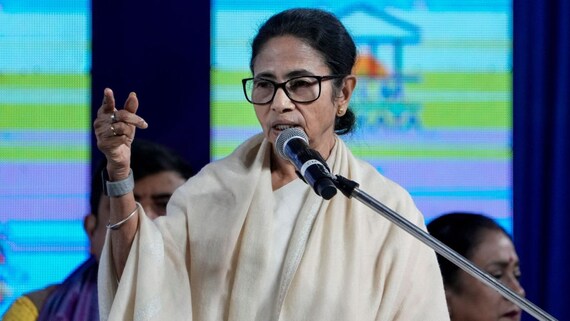
Mamata Banerjee, Chief Minister of West Bengal, publicly asserted that a “tacit understanding” exists among the Bharatiya Janata Party (BJP), Congress and Tamil Nadu Chief Minister MK Stalin. The allegation was made during a campaign rally in Nadia district, where Mamata Banerjee also highlighted the large number of Indian Administrative Service (IAS) and Indian Police Service (IPS) officers from West Bengal who have been dispatched to Tamil Nadu as election observers. According to Mamata Banerjee, this movement of senior officers has disrupted routine development initiatives in the southern state.
Among the points raised, Mamata Banerjee emphasized that the Election Commission has transferred roughly five hundred officers from West Bengal to other poll‑bearing regions, a figure that starkly exceeds the modest allocations made to the remaining four states holding simultaneous elections. The claim underscores a perceived imbalance in administrative support, suggesting that the deployment strategy favours particular political interests.
Addressing the crowd in Nadia district, Mamata Banerjee described the transfer of numerous West Bengal cadre officers to Tamil Nadu as a direct consequence of the Election Commission’s observer appointment process following the announcement of the Tamil Nadu Assembly polls. The Chief Minister of West Bengal used the platform to accuse the Bharatiya Janata Party of colluding with Congress and Tamil Nadu Chief Minister MK Stalin, stating, “You (BJP) must be having some tacit understanding with the Congress and Stalin.” The statement was framed as an indictment of covert coordination that allegedly influences the placement of officials.
Further, Mamata Banerjee alleged that the Bharatiya Janata Party is positioning its own officers in influential roles within West Bengal to guarantee unobstructed movement for its agents. The claim was articulated as, “They (BJP) are placing their own officers in prominent positions in West Bengal to ensure their free movement.” By linking the deployment of officers to alleged partisan objectives, Mamata Banerjee sought to portray the administrative reshuffle as a strategic maneuver rather than a neutral bureaucratic decision.
The broader electoral landscape in Tamil Nadu was reiterated, noting that the primary battle lines are drawn between the Secular Progressive Alliance (SPA) led by the Dravida Munnetra Kazhagam (DMK) and the National Democratic Alliance (NDA). The SPA coalition includes Congress, the Desiya Murpokku Dravida Kazhagam (DMDK) and the Viduthalai Chiruthaigal Katchi (VCK). On the opposing side, the NDA is anchored by the All India Anna Dravida Munnetra Kazhagam (AIADMK) and supported by the Bharatiya Janata Party, the Pattali Makkal Katchi (PMK), the Amma Makkal Munnetra Kazhagam (AMMK) and several other regional partners.
Mamata Banerjee projected a vision of post‑election strategy for the Trinamool Congress (TMC). The West Bengal Chief Minister declared an intention to travel across the nation to weave together a cohesive opposition front after the TMC secures victory in the West Bengal Assembly polls. The statement included, “I will tour the country to stitch together opposition unity,” and added that all parties would be invited to join the effort if circumstances required it.
In a pointed critique of the central government, Mamata Banerjee asserted that the voter list on which the Bharatiya Janata Party rose to power in the 2024 general election was discarded three months before the West Bengal Assembly polls. The accusation was framed as a call for accountability, with Mamata Banerjee demanding, “You (Prime Minister Narendra Modi) should resign, the home minister, the whole government should resign.” The call was reinforced by a warning that public pressure would compel the government to step down if it ignored the demand.
Expanding on the alleged consequences of a Bharatiya Janata Party victory in West Bengal, Mamata Banerjee warned of potential restrictions on dietary choices, specifically fish, meat and egg consumption. The warning was linked to a previous “SIR exercise” that, according to Mamata Banerjee, resulted in 250 deaths in West Bengal. The Chief Minister held the Bharatiya Janata Party responsible, stating, “Due to the SIR exercise, 250 people died in Bengal, and you (BJP) must take responsibility for that.” The critique extended to institutions such as the Election Commission, the Central Bureau of Investigation (CBI) and the Enforcement Directorate (ED), labeling them as “parrots” that merely echo directives.
Mamata Banerjee clarified that the Trinamool Congress does not endorse the gherao of judicial officers in Malda’s Mothabari. The Chief Minister also accused the Bharatiya Janata Party of exploiting vote‑splitting tactics in Bihar with assistance from the All India Majlis-e-Ittehadul Muslimeen (AIMIM). The narrative included a reference to the alleged relocation of a senior Indian Police Service officer, Supratim Sarkar, who was reportedly sent to Tamil Nadu as an observer after being involved in the arrest of a mastermind behind the Mothabari incident.
Questions concerning the citizenship process were also raised by Mamata Banerjee. The West Bengal Chief Minister asked why individuals with relatively brief residency in India received citizenship, whereas long‑standing residents faced removal from electoral rolls. This line of inquiry was presented as part of a broader call for a united India, with Mamata Banerjee emphasizing, “We want to see a united India.”
Further allegations involved the Chief Electoral Officer, Manoj Agarwal, who, according to Mamata Banerjee, visited Nandigram accompanied by supporters of the Bharatiya Janata Party. The Chief Minister urged voters to exercise their franchise, asserting that the effort resulted in the restoration of approximately 24 lakh names on the electoral rolls through her intervention.
The series of statements delivered by Mamata Banerjee reflects a heightened tension within the INDIA alliance, a coalition that includes the Bharatiya Janata Party, Congress and other regional parties. By accusing key allies of secret understandings and highlighting discrepancies in the deployment of civil servants, the West Bengal Chief Minister has signalled a potential fracture in the broader opposition framework. The accusations also serve to underscore the political stakes in both West Bengal and Tamil Nadu, where the outcomes of the Assembly polls are likely to influence the balance of power at the national level.