Anant Ambani Commits Rs 18 Crore to Kerala Temples and Elephant Welfare Projects
Anant Ambani, Executive Director of Reliance Industries Limited, travelled to the southern Indian state of Kerala and publicly declared a series of charitable contributions aimed at supporting two of the region’s most revered Hindu institutions as well as advancing modern elephant‑care facilities.
Overview of the Announced Contributions
The financial package announced by Anant Ambani totals Rs 18 crore. The breakdown consists of two identical donations of Rs 3 crore each, designated for Rajrajeshwaram Temple and Guruvayur Temple respectively. In addition, Anant Ambani pledged an extra Rs 12 crore to finance a comprehensive renovation scheme for Rajrajeshwaram Temple. Parallel to these monetary gifts, Anant Ambani expressed a commitment to the creation of a specialised elephant hospital, a chain‑free shelter, and contemporary care facilities for the elephants associated with Guruvayur Temple, linking the effort to the broader work undertaken by Vantara.
All of these initiatives are presented as part of a larger vision that intertwines spiritual heritage, community service, and responsible stewardship of animals that hold cultural significance.
Detailed Account of the Rajrajeshwaram Temple Visit
During the visit to Rajrajeshwaram Temple, Anant Ambani participated in a series of time‑honoured rituals that underscore the sanctity of the occasion. The ceremonial offerings included the presentation of a golden pot known as Ponnumkudam, a traditional palm leaf arrangement called Pattam, a ceremonial necklace referred to as Thaali, the offering of fresh butter called Neyyamrutu, and the execution of the Ashwamedha Namaskaram – a gesture of reverence towards the deity.
Following the ritualistic segment, Anant Ambani handed over a cheque for Rs 3 crore to support ongoing renovation activities. In the same moment, Anant Ambani formally announced an additional pledge of Rs 12 crore intended to address a broader scope of restoration work. The Rs 12 crore allocation is earmarked for the refurbishment of the historic East Gopuram – a gateway tower whose age is believed to be comparable to the founding of the temple itself and which has suffered structural deterioration for more than two centuries. The funds will also be directed towards the enhancement of parking facilities and the overall infrastructure that accommodates pilgrims who travel to Rajrajeshwaram Temple.
The ceremonial reception was conducted by senior officials of the temple administration. The welcoming party comprised TTK Devaswom President T P Vinod Kumar, Executive Officer K P Vinayan, Chief Priest E P Kuberan Namboothiri, and additional members of the Devaswom Board. Each of these dignitaries offered traditional honours, underscoring the high regard in which Anant Ambani’s contributions are held.
Comprehensive Coverage of the Guruvayur Temple Visit
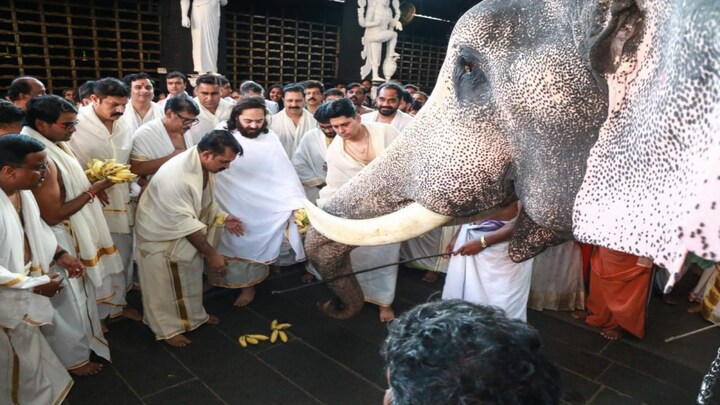
Subsequent to the events at Rajrajeshwaram Temple, Anant Ambani made a devoted visit to Guruvayur Temple. Upon arrival, Anant Ambani performed devotional prayers before the presiding deity, Lord Guruvayurappan. In the course of the visit, Anant Ambani presented a cheque for Rs 3 crore to the temple trust, thereby reinforcing the theme of philanthropic support for sacred sites.
The reception at Guruvayur Temple was overseen by Devaswom Chairman A V Gopinath, accompanied by a cadre of senior officials. Traditional mementos and prasadam were bestowed upon Anant Ambani as tokens of gratitude. Representatives from the Devaswom and the Jeevadhan Departments were also present, highlighting the collaborative nature of the engagement between corporate philanthropy and religious governance.
Initiatives for Elephant Welfare Linked to Guruvayur Temple
In conjunction with the monetary gifts to the temples, Anant Ambani disclosed a focused plan to uplift the standards of elephant care associated with Guruvayur Temple. The plan outlines the establishment of a dedicated elephant hospital that will incorporate modern veterinary practices. Additionally, a chain‑free shelter is proposed to provide a more humane environment for the elephants, promoting free movement and reducing stress. The initiative also includes the development of scientific facilities designed to monitor health, nutrition, and overall well‑being of the temple elephants.
The elephant‑care project is described as an extension of Anant Ambani’s broader engagement with Vantara, an organization that seeks to blend technology, sustainability, and cultural preservation. By linking the elephant welfare program to Vantara’s mission, Anant Ambani emphasizes a systematic, research‑driven approach to animal care that aligns with contemporary standards of compassion and scientific rigor.
During the public address, Anant Ambani articulated a philosophical perspective that frames India’s spiritual traditions as more than mere places of worship. Anant Ambani highlighted how these traditions function as living institutions that nurture faith, community cohesion, compassion, and an intrinsic connection with nature. Anant Ambani underscored the collective responsibility to safeguard this heritage for posterity, asserting that the proposed initiatives aim to enhance the pilgrim experience while ensuring that the animals integral to these traditions receive dignified, compassionate, and scientifically grounded care.
“India’s spiritual traditions are not merely places of worship – they are living institutions that nurture faith, community, compassion, and our deep connection with nature. It is our collective responsibility to preserve and strengthen this sacred heritage for future generations. Through these initiatives, and through our work at Vantara, we seek to serve with humility – by enhancing the experience of devotees, while ensuring that the animals who are an integral part of our traditions are cared for with the utmost dignity, compassion, and scientific attention.”
Broader Implications of the Philanthropic Endeavour
The suite of contributions announced by Anant Ambani reflects a holistic approach that intertwines architectural restoration, infrastructural improvement, devotional support, and animal welfare. By allocating Rs 3 crore each to Rajrajeshwaram Temple and Guruvayur Temple, the donations directly bolster the financial resources of the temple trusts, enabling them to maintain rituals, support community programs, and manage day‑to‑day operations.
The Rs 12 crore renovation pledge for Rajrajeshwaram Temple targets both heritage conservation and visitor convenience. Restoring the East Gopuram addresses long‑standing structural concerns, preserving an element of architectural significance that embodies centuries of cultural legacy. Upgrading parking and ancillary facilities serves to accommodate the influx of pilgrims, thereby reducing congestion and improving the overall experience for worshippers.
The elephant welfare component underscores a growing consciousness regarding the ethical treatment of animals linked to religious practices. By championing a modern hospital, a chain‑free shelter, and scientific monitoring, the initiative sets a precedent for integrating contemporary animal‑care standards within traditional temple contexts. This alignment of tradition with progressive welfare measures exemplifies a forward‑looking attitude that respects cultural norms while embracing humane advancement.
Collectively, these actions convey a message that corporate stewardship can complement and enhance spiritual and cultural institutions. The strategic intertwining of financial aid, infrastructure development, heritage preservation, and animal welfare illustrates a multi‑dimensional commitment that seeks to resonate with devotees, heritage enthusiasts, animal‑rights advocates, and the broader community alike.