‘Delhi Is Not India’: Justice Aravind Kumar Challenges Capital‑Centric View of Legal Excellence
Justice Aravind Kumar argues that legal talent flourishes across every jurisdiction of India, rebukes the notion that Delhi alone defines the nation’s legal prowess, and warns that artificial‑intelligence tools built on Delhi‑centric data could entrench existing biases.
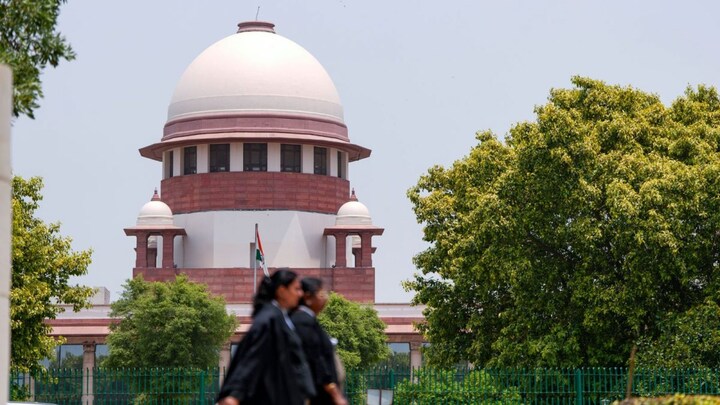
Delhi as a Symbol, Not a Standard
Justice Aravind Kumar, a sitting judge of the Supreme Court, delivered a forceful statement at a legal seminar held in Bengaluru. The central thrust of the address was a clear repudiation of the widely held perception that Delhi represents the sole epicentre of legal excellence in India. Justice Aravind Kumar articulated, “Delhi is not India and India is not Delhi,” underscoring that the belief in Delhi’s monopoly over legal quality is a construct shaped by institutional narratives and social conditioning rather than any constitutional mandate.
The argument advanced by Justice Aravind Kumar hinges on the observation that Delhi’s prominence stems primarily from its status as the national capital, the seat of the Supreme Court, and the venue for high‑visibility cases that attract national media attention. While these factors undoubtedly elevate Delhi’s profile, Justice Aravind Kumar stressed that visibility does not equate to superiority. The Supreme Court’s location in Delhi does not automatically confer a higher standard of practice on the lawyers who operate within that jurisdiction.
Justice Aravind Kumar emphasized that the legal profession in India is inherently heterogeneous. Talent, diligence, and intellectual rigor are distributed across a mosaic of courts, ranging from the high courts of each state to the district courts that adjudicate the everyday disputes of citizens, and to the specialised tribunals that resolve sector‑specific conflicts. The presence of a vibrant legal ecosystem in every corner of the nation demonstrates that competence is not the exclusive preserve of a single metropolis.
The Constitutional Landscape of Legal Practice
Justice Aravind Kumar underscored that the Indian Constitution does not embed any provision that designates Delhi as the benchmark for legal competence. The constitutional framework establishes a federal structure that deliberately disperses judicial authority among multiple tiers. High courts, instituted under Article 214 of the Constitution, exercise jurisdiction over their respective states and union territories, reflecting the principle of decentralised justice. District courts, created under the provisions of the Code of Civil Procedure, function as the grassroots arbiter of civil and criminal matters, ensuring access to justice for citizens across rural and urban settings alike.
Tribunals, which have been set up to address specialised domains such as taxation, industrial disputes, and environmental matters, further illustrate the multiplicity of venues where legal expertise thrives. Justice Aravind Kumar pointed out that each of these institutions cultivates its own body of jurisprudence, contributes to the evolution of legal doctrine, and nurtures practitioners who possess deep contextual knowledge of regional statutes, languages, and socio‑economic realities.
By asserting that the notion of Delhi‑centric legal superiority lacks any constitutional foundation, Justice Aravind Kumar called for a re‑examination of the mental models that tend to elevate the capital above the rest of the country. The judiciary, in Justice Aravind Kumar’s view, must recognise that the strength of India’s legal system derives from its pluralistic character, not from a singular geographic locus.
Decentralisation as a Source of Strength
Justice Aravind Kumar highlighted that the decentralised nature of India’s legal architecture enables a richer, more nuanced development of law. When legal arguments are forged in high courts spread across the nation, they incorporate the diverse cultural, linguistic, and economic contexts that shape the lived experience of citizens. This geographically distributed adjudicative process ensures that legal precedents are not monolithic but instead reflect a tapestry of regional perspectives.
Moreover, Justice Aravind Kumar noted that the interaction between different judicial forums creates a dynamic dialogue wherein judgments from one high court can inform, challenge, or reinforce those of another. Such cross‑pollination nurtures a robust jurisprudential discourse that strengthens the rule of law. The existence of multiple courts also provides a natural system of checks and balances, whereby divergent interpretations can be reconciled through the appellate process that ultimately culminates before the Supreme Court.
Justice Aravind Kumar argued that the perception of Delhi as the exclusive incubator of legal talent overlooks the reality that many landmark legal doctrines have originated in courts outside the capital. The evolution of public interest jurisprudence, environmental law, and labour rights, for instance, bears the imprint of judgments rendered by high courts and tribunals far from Delhi. These contributions collectively enrich the national legal corpus.
Artificial Intelligence and the Risk of Reinforcing Bias
Turning to the emergent role of technology, Justice Aravind Kumar expressed concern over the growing reliance on artificial intelligence (AI) in legal research, case prediction, and document analysis. While acknowledging the potential benefits of AI‑driven tools, Justice Aravind Kumar warned that the data sets used to train these systems often emanate disproportionately from Delhi‑centric sources, such as judgments of the Supreme Court and high‑profile cases that receive national coverage.
Justice Aravind Kumar cautioned that AI models built on such skewed data risk codifying the existing hierarchy that privileges capital‑based legal narratives. If an AI system learns primarily from Delhi‑originated judgments, it may inadvertently undervalue or misinterpret legal principles that have been articulated in other jurisdictions. This could lead to a feedback loop where decisions from Delhi‑centric courts are reinforced, while the contributions of high courts, district courts, and tribunals are marginalised.
The judge underscored that a legal framework informed by narrow, metropolitan data would be ill‑suited to capture India’s federal reality, multilingual character, and regional diversity. Justice Aravind Kumar urged that developers of legal AI ensure the inclusion of a broad spectrum of judgments, statutes, and scholarly works from every corner of the nation. Only by incorporating a truly representative data set can AI tools serve to broaden access to justice rather than entrench existing disparities.
Call for Inclusive Recognition of Talent
Justice Aravind Kumar concluded the seminar by issuing a clarion call for the legal community, law schools, and policy‑makers to recognise and celebrate the talent that thrives beyond the borders of Delhi. The judge argued that equal opportunities for professional growth, mentorship, and exposure must be extended to practitioners operating in high courts, district courts, and tribunals.
In Justice Aravind Kumar’s view, acknowledging the breadth of legal expertise across India will not only foster a more equitable profession but also enhance the quality of legal outcomes. When the contributions of lawyers from varied jurisdictions are valued, the collective pool of knowledge expands, leading to more well‑rounded arguments and richer judicial opinions.
Justice Aravind Kumar appealed to law firms, corporate legal departments, and the Bar Association to redesign recruitment and professional development frameworks so that they are not unduly biased toward candidates with Delhi‑centric experience. By actively seeking out talent from across the nation, the legal fraternity can tap into a wider array of perspectives, linguistic capabilities, and cultural sensitivities that are essential for a truly representative justice system.
Implications for Future Jurisprudence
The reflections offered by Justice Aravind Kumar carry significant implications for the evolution of jurisprudence in India. If the legal community embraces the principle that “Delhi is not India,” the process of law‑making and interpretation could become more inclusive, drawing upon the lived realities of citizens in every state and union territory. This shift could lead to judicial pronouncements that are better calibrated to the country's varied social fabrics.
Furthermore, the warning issued about AI‑driven legal tools suggests that forthcoming generations of legal technology must prioritize data diversity. In practice, this means curating extensive databases that encompass judgments from every high court, representative samples from district courts, and decisions of specialised tribunals. Such an approach would guard against the homogenisation of legal reasoning and preserve the pluralistic ethos embedded in the Constitution.
Justice Aravind Kumar’s stance also resonates with the broader democratic ideals of federalism and linguistic plurality. By reinforcing the notion that legal excellence is not the monopoly of any single city, the judge reaffirms the constitutional promise that justice must be accessible, relevant, and resonant for all citizens, irrespective of geographic location.