‘Humanity From The Other Side’: NASA Unveils the First Photograph of Earth Captured from the Far Side of the Moon
The astronauts surpassed the record established by Apollo 13 in 1970, travelling beyond 248,655 statute miles from the planet.
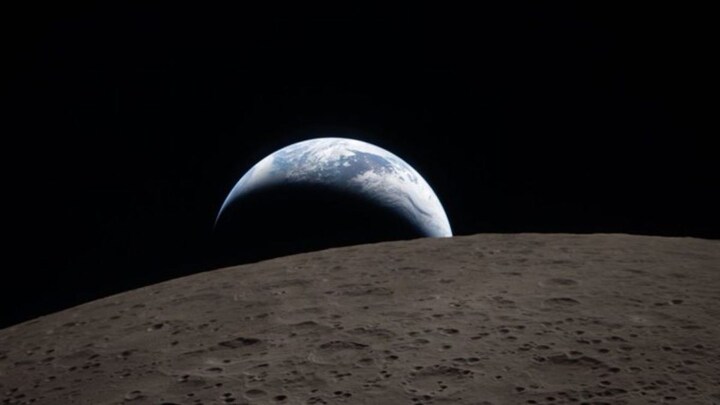
NASA has released a historic image of Earth taken from the far side of the Moon, marking a milestone moment in human spaceflight.
The photograph, titled “Humanity From the Other Side,” was captured by Reid Wiseman, commander of Artemis II, through the window of the Orion capsule as the spacecraft emerged from behind the lunar horizon.
The image shows Earth rising beyond the Moon. The White House shared the image on social media, calling it a powerful reminder of humanity’s place in the cosmos.
Mission Overview and Historical Context
Artemis II, NASA’s first crewed lunar mission in more than half a century, performed a historic flyby of the Moon, providing the first human‑taken photograph of Earth from the Moon’s far side. The mission featured a four‑member crew: Reid Wiseman, commander; Victor Glover, pilot; Christina Koch, mission specialist; and Jeremy Hansen, astronaut from the Canadian Space Agency. Together, Reid Wiseman, Victor Glover, Christina Koch, and Jeremy Hansen set a new record for the farthest distance traveled by humans from Earth.
The crew of Artemis II surpassed the record established by Apollo 13, which in 1970 had been the most distant human flight from the planet. The new distance exceeded 248,655 statute miles, a figure that demonstrates the extraordinary reach of current deep‑space exploration capabilities.
During the course of the flight, the Orion capsule transitioned from the near side of the Moon, traveled behind the lunar body, and re‑emerged on the far side. It was at the moment of re‑emergence that Reid Wiseman, looking through the forward window of Orion, captured the iconic view now known as “Humanity From the Other Side.” The photograph shows the thin blue‑white marble of Earth rising above the stark, crater‑scarred horizon of the Moon, an image that resonates with the legacy of the original “Earthrise” photograph taken during the Apollo missions.
Technical Details of the Photograph
The image was taken with a handheld digital camera positioned at the forward viewport of Orion. Reid Wiseman framed the view to include both the lunar limb and the planet Earth, ensuring that Earth appeared as a luminous disc against the darkness of space. The exposure settings were adjusted to accommodate the high contrast between the bright Earth and the dim lunar surface, resulting in a balanced composition that highlights the curvature of Earth while preserving the texture of the Moon’s far‑side terrain.
The photograph was later transmitted to mission control after the communications blackout ended, allowing NASA and the White House to share the view with the public. The White House, recognizing the symbolic power of the image, posted it on official social media channels with a caption that underscored the image’s ability to remind humanity of its shared destiny among the stars.
Both NASA and the White House emphasized the emotional impact of seeing Earth from a perspective that only a handful of astronauts have ever experienced. The image serves as a visual representation of the fragile blue planet suspended in the vastness of space, reinforcing the message of planetary stewardship that has become a recurring theme in human spaceflight.
Crew Reflections and Statements
Jeremy Hansen addressed mission control during the flyby, stating that the moment was intended to inspire future generations to push the boundaries of space exploration. Jeremy Hansen expressed hope that the record would soon be broken again, highlighting the iterative nature of human progress in space.
During the same mission, the crew proposed naming a previously unnamed lunar crater in memory of Carroll Wiseman, the late spouse of Reid Wiseman. The proposal reflects the personal connections astronauts bring to their journeys and their desire to honor loved ones through the exploration of celestial bodies.
When communications were restored after the planned blackout, Christina Koch remarked on the emotional resonance of hearing Earth again after a period of silence. Christina Koch described the experience as “so great to hear Earth again,” underscoring the profound psychological impact of brief intervals of isolation deep within the lunar environment.
Victor Glover, pilot of Artemis II, contributed to the navigation and execution of the lunar flyby, ensuring that the Orion capsule followed the precise trajectory required to achieve the historic distance record. Victor Glover’s coordination with mission control facilitated the successful re‑entry of communications and the timely capture of the historic image.
Reid Wiseman, commander of Artemis II, not only captured the iconic photograph but also guided the crew through the operational and emotional phases of the mission. Reid Wiseman’s leadership was instrumental in maintaining focus on the scientific objectives while also allowing space for the personal reflections that make such missions meaningful.
Communication Blackout and Its Significance
The seven‑hour lunar flyby included a roughly 40‑minute communications blackout as Orion passed behind the Moon. This blackout is a planned and routine phase of deep‑space missions, representing a period during which the spacecraft is occluded from direct line‑of‑sight to Earth‑based antennas. During the blackout, the crew relied on onboard systems and internal communication to monitor spacecraft status.
When the blackout ended, the crew of Artemis II regained contact with mission control, confirming the successful capture of the historic photograph and reporting the health of the Orion capsule. The restoration of communication marked the moment when the crew rejoined the broader network of human observers, sharing their perspective of Earth from a location few have ever seen.
Legacy of the “Earthrise” Perspective
The photograph taken by Reid Wiseman adds to the legacy of the iconic “Earthrise” photograph captured during the Apollo missions. While the original “Earthrise” offered a view of Earth from the near side of the Moon, “Humanity From the Other Side” provides a complementary perspective from the far side, a region never illuminated by Earth. This dual viewpoint reinforces the notion that humanity can observe its home planet from multiple angles, each offering a unique appreciation of Earth’s fragility and beauty.
Being part of an elite group of astronauts who have witnessed an “Earthrise” from the Moon’s far side places Reid Wiseman, Victor Glover, Christina Koch, and Jeremy Hansen in a distinguished lineage of explorers who have contributed to humanity’s collective visual memory of our planet. The image is expected to inspire educators, artists, and policymakers to reflect on the shared responsibility of protecting Earth’s environment.
Future Mission Trajectory and Return to Earth
After the successful flyby and the capture of the historic image, NASA confirmed that Orion had begun its return journey toward Earth. The 10‑day Artemis II mission is now headed back toward home, with a planned re‑entry and splashdown in the Pacific Ocean off the coast of San Diego. The splashdown will conclude the mission, providing valuable data on re‑entry dynamics for future crewed missions that aim to travel farther, including missions to Mars.
NASA’s roadmap to future lunar and deep‑space exploration relies on the lessons learned during Artemis II. The distance record, the successful capture of “Humanity From the Other Side,” and the crew’s ability to operate during communications blackout all contribute to the incremental advancements needed for sustainable lunar presence and eventual interplanetary travel.
The experiences of Reid Wiseman, Victor Glover, Christina Koch, and Jeremy Hansen will inform training protocols for upcoming crews, ensuring that future astronauts can build upon the achievements of Artemis II. The mission’s success demonstrates that humanity continues to push the boundaries of exploration, extending its reach beyond previous limits.
Conclusion
The photograph titled “Humanity From the Other Side,” captured by Reid Wiseman aboard Orion during the Artemis II lunar flyby, stands as a testament to human curiosity, perseverance, and the drive to explore beyond known horizons. By surpassing the distance record set by Apollo 13, Reid Wiseman, Victor Glover, Christina Koch, and Jeremy Hansen have etched a new chapter in the annals of spaceflight.
The image, shared by the White House and celebrated worldwide, underscores the profound connection between Earth and its celestial neighbors. As NASA prepares for the mission’s final splashdown, the legacy of Artemis II will continue to inspire generations to look upward, dream larger, and work together to turn the once‑distant vision of humanity living and thriving among the stars into reality.