Qatar Warns West Asia Conflict Near Uncontrollable Point as Iran Targets US and Allies
Gulf countries have recently faced repeated drone and missile attacks from Iran in response to US and Israeli strikes.
Qatar, in a recent statement, warned that the conflict sweeping across West Asia is edging ever closer to a threshold beyond which control may be lost. The warning follows a forceful deadline issued by Donald Trump, demanding that Iran reopen the crucial maritime passage known as the Strait of Hormuz.
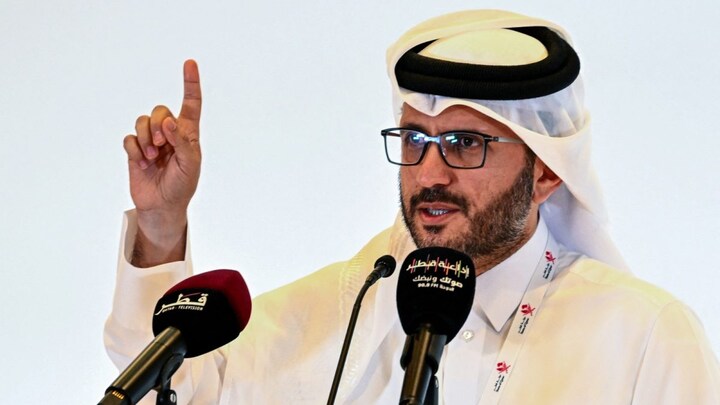
Majed al-Ansari, the official voice of Qatar's foreign ministry, addressed the media and emphasized that the warning has been echoed since the previous year. Majed al-Ansari explained that unchecked escalation would inevitably thrust the region into a scenario where containment becomes impossible, and that the present moment marks a perilously close approach to that scenario.
Majed al-Ansari called upon every participant in the conflict to earnestly pursue a diplomatic pathway that could halt the fighting before irreversible damage occurs. The call to action reflects a belief that prolonged hostility yields no sustainable benefit for any nation involved.
Majed al-Ansari underscored that the extension of hostilities does not serve the long‑term interests of any state. In Majed al-Ansari's view, the notion of victors in an endless war is a false premise; instead, a continuation of violence would only produce widespread loss.
Condemnation of assaults on civilian populations and critical energy infrastructure formed a central theme of Majed al-Ansari's remarks. Actions that target non‑military facilities, in Majed al‑Ansari's assessment, must be unequivocally rejected and must not find acceptance by any faction.
Regarding the strategic waterway that carries a substantial share of global oil shipments, Majed al‑Ansari highlighted that the Strait of Hormuz must remain accessible to vessels of all nations. The assertion reflects concern that any obstruction of this route could precipitate far‑reaching economic and humanitarian repercussions.
Majed al‑Ansari warned that Qatar itself could face severe threats to essential resources such as food, water, and the broader environment should the conflict intensify further. The potential for disruptions to supply chains and ecological degradation presents a grave challenge for Qatar's national security.
In expressing a desire for a safer atmosphere, Majed al‑Ansari expressed hope that the current trajectory could be reversed, allowing Qatar and the broader region to retreat from the brink of catastrophe toward a more stable and secure environment. Nonetheless, Majed al‑Ansari conveyed deep concern over the unfolding events.
Sheikh Mohammed bin Abdulrahman Al Thani, serving as the Prime Minister of Qatar, also voiced strong opposition to attacks on civilian targets. In a conversation with Abbas Araghchi, the foreign minister of Iran, Sheikh Mohammed bin Abdulrahman Al Thani reiterated that the deliberate targeting of civilian infrastructure constitutes behavior that must be categorically rejected and condemned under any circumstances.
Official statements from Qatar’s foreign ministry echoed Sheikh Mohammed bin Abdulrahman Al Thani’s position, emphasizing that there can be no justification for assaults that jeopardize the welfare of civilian populations. The stance reinforces Qatar’s broader diplomatic effort to discourage tactics that inflict harm on non‑combatants.
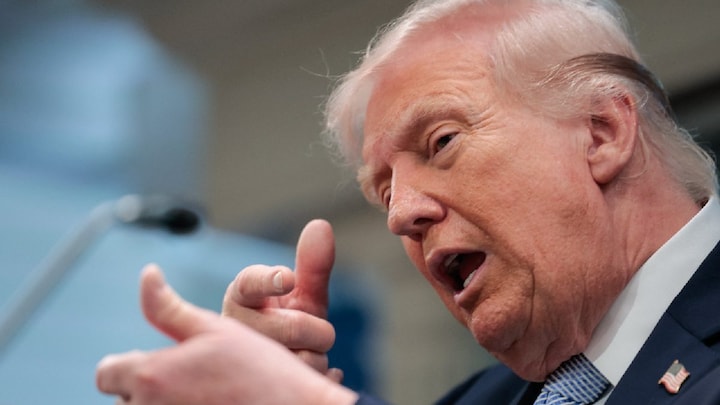
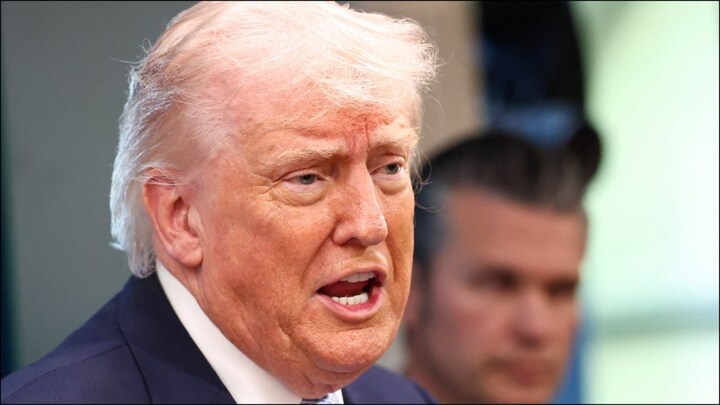
Donald Trump, in a forceful communication, warned that the entire nation of Iran could be eliminated in a single night if the demand for the reopening of the Strait of Hormuz was not fulfilled by a specified deadline. The stark language underscores the heightened tensions surrounding the strategic choke point.
The demands placed upon Iran have coincided with a pattern of Iranian drone and missile launches directed at Gulf states. These launches have been presented as retaliatory measures in response to strikes carried out by the United States and Israel. The pattern of attacks includes attempts to disrupt the flow of oil through the Strait of Hormuz, a waterway through which a significant fraction of the world’s petroleum passes.
The cumulative effect of the Iranian strikes has been felt across oil‑rich Gulf nations, where critical hydrocarbon infrastructure has come under fire. The targeting of facilities that support the extraction, processing, and export of oil and gas highlights the broader strategy of exerting pressure on economies that rely heavily on energy exports.
In light of these developments, Qatar has called for an urgent return to dialogue and negotiation. The overarching message conveyed by Qatar’s diplomatic representatives is that the continuation of a war that inflicts civilian casualties and jeopardizes essential services cannot be allowed to persist.
From Qatar’s perspective, the escalation threatens not only regional stability but also the global energy market. The potential for prolonged disruption of the Strait of Hormuz could reverberate through international oil prices, affecting economies far beyond the immediate theater of conflict.
Qatar’s leadership, exemplified by Majed al‑Ansari and Sheikh Mohammed bin Abdulrahman Al Thani, continues to advocate for a balanced approach that combines firm condemnation of unlawful attacks with an invitation to all parties to re‑engage in constructive diplomatic efforts.