Why I Started Paying Close Attention to Melania Trump’s Speech
Honestly, when I first saw the headline about Melania Trump addressing the nation, I thought it would be another bland diplomatic reiteration. You know, the sort of thing where the First Lady talks about children's education or the importance of kindness. But the moment the video started playing on the news channel while I was having my evening chai, it became clear that this was something completely different. The tone was urgent, almost personal, and the words were aimed squarely at the endless gossip linking Melania Trump with Jeffrey Epstein.
Living in India, we are used to political figures making grand statements during elections, but it is rare to see a former First Lady stepping up in such a direct way, especially from the White House itself. The whole country was watching, and so was I, because the chatter about Epstein had already spilled over into our social media circles. I remember scrolling through WhatsApp groups where people were sharing meme‑filled screenshots, trying to decide whether the rumors were true or just another political attack.
Setting the Scene: A Speech That Broke the Usual Protocol
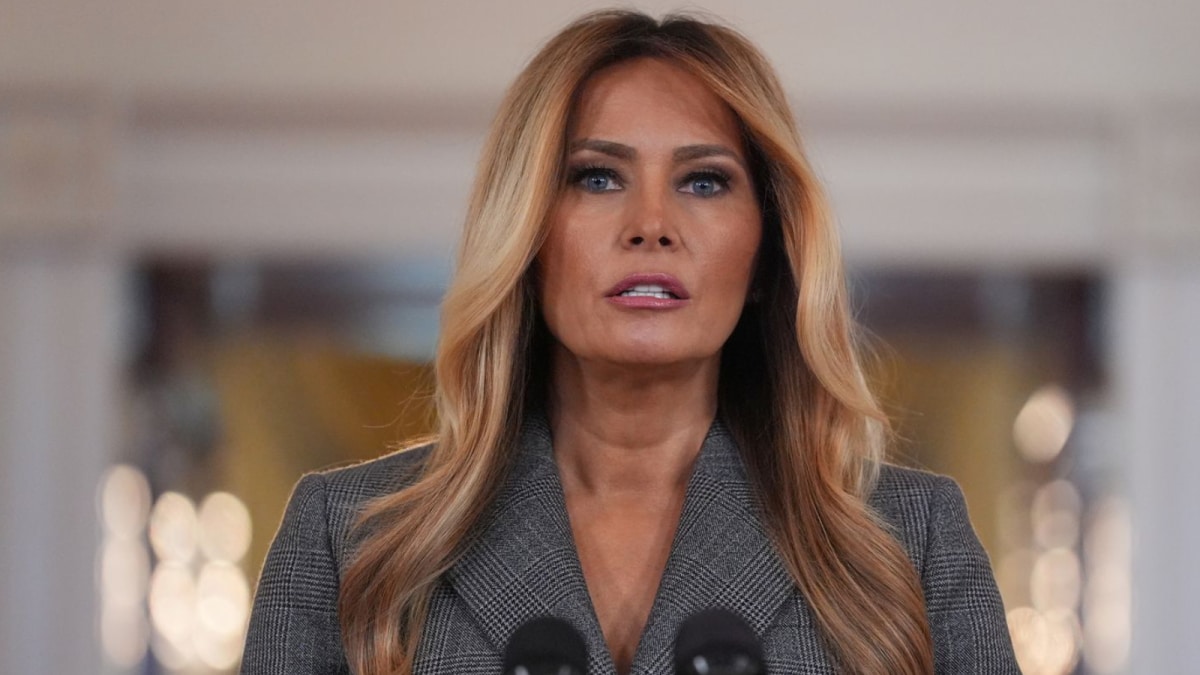
To give you some context, Melania Trump chose to address the nation not from a formal setting in the East Room, but from the White House balcony, an unusual move that instantly raised eyebrows. The setting reminded me of a Bollywood scene where a heroine steps onto a balcony to deliver a heartfelt monologue, the camera capturing every nuance. The speech started with a simple “Good afternoon,” and then she dove straight into the matter that had haunted her public image for years.
What struck me the most was the way Melania Trump named the false narratives outright, refusing to hide behind vague statements. She said the lies linking her with the “disgraceful Jeffrey Epstein” needed to end today. It felt as if she was clearing the air in one breath, as we often do when we want to put an end to rumours that have circulated for ages in our neighbourhoods.
Full Text of the Address – Word by Word
Below is the entire speech as delivered. I have kept the original wording intact because the power of the address lies in its own language.
Good afternoon.
The lies linking me with the disgraceful Jeffrey Epstein need to end today. The individuals lying about me are devoid of ethical standards, humility and respect. I do not object to their ignorance, but rather, I reject their mean‑spirited attempts to defame my reputation.
I never been friends with Jeffrey Epstein.
Donald Trump and I were invited to the same parties as Jeffrey Epstein from time to time, since overlapping in social circles is common in New York City and Palm Beach. To be clear, I never had a relationship with Jeffrey Epstein or his accomplice Maxwell.
My email reply to Maxwell cannot be categorized as anything more than casual correspondence. My polite reply to her email doesn’t amount to anything more than a trivial note.
I am not Epstein’s victim. Epstein did not introduce me to Donald Trump. I met my husband by chance at a New York City party in 1998. This initial encounter with my husband is documented in a detail in my book Melania.
The first time I crossed paths with Jeffrey Epstein was in the year 2000 at an event Donald Trump and I attended together. At the time, I had never met Jeffrey Epstein and had no knowledge of his criminal undertakings.
Numerous fake images and statements about Jeffrey Epstein and me have been circulating on social media for years now.
Be cautious about what you believe.
These images and stories are completely false.
I’m not a witness or a named witness in connection with any of Jeffrey Epstein’s crimes. My name has never appeared in court documents, the depositions, victim statements or FBI in interviews surrounding the Jeffrey Epstein matter.
I have never had any knowledge of Jeffrey Epstein’s abuse of his victims. I was never involved in any capacity. I was not a participant, was never on Jeffrey Epstein’s plane and never visited his private island. I have never been legally accused or convicted of a crime in connection with Jeffrey Epstein, sex trafficking, abuse of minors and other repulsive behavior.
The false sneers about me from mean‑spirited and politically motivated individuals and entities looking to cause damage to my good name to gain financially and climb politically, must stop.
My attorneys and I have fought these unfound and baseless lies with success, and will continue to maintain my sound reputation without hesitation.
To date, several individuals and companies have been legally obligated to publicly apologize and retract their lies about me, such as Daily Beast, James Carville and HarperCollins UK.
Now is the time for Congress to act.
Epstein was not alone. Several prominent male executives resigned from their powerful positions after this matter became widely politicized. Of course, this doesn’t amount to guilt, but we still must work openly and transparently to uncover the truth.
I call on Congress to provide the women who have been victimized by Jeffrey Epstein with a public hearing specifically centered around the survivors. Give these victims their opportunity to testify under oath in front of Congress with the power of sworn testimony.
Each and every woman should have her day to tell her story in public, if she wishes, and then her testimony should be permanently entered into the Congressional Record.
Then, and only then, we will have the truth. Thank you.
My Personal Take – How This Speech Felt to an Indian Viewer
Reading this speech, I could not help but compare it with the kind of public apologies we often see in Indian politics. Most of the time, politicians issue vague statements like “I am sorry if anyone felt hurt.” But here, Melania Trump placed every claim on the table, naming the false narratives, the specific media houses, even the exact person—Maxwell—who sent an email that turned into a “trivial note.” It reminded me of a courtroom drama where the protagonist pulls out all the evidence at once.
Another thing that stood out was the repeated call for “Congress to act.” In India, we sometimes see lawmakers stalling on crucial issues, but the urgency in her voice—“Now is the time for Congress to act”—felt almost like a rallying cry we hear during anti‑corruption protests. It was as if she wanted the nation to see that the fight against falsehoods is not just a personal battle, but a public responsibility.
Moreover, the way she highlighted the need for survivors to speak in public reminded me of the recent #MeToo movement in our own country. While we have seen many brave women step forward, the call for their testimonies to be recorded officially is something that resonates deeply, because each story adds to the collective truth we need to understand.
On a lighter note, when she mentioned parties in New York City and Palm Beach, I laughed a little because I could picture the glitzy parties in Mumbai’s Marine Drive or the elite gatherings in Delhi’s Connaught Place, where overlapping social circles are also a norm. It’s a small world, after all.
Why the Speech Matters Beyond the United States
Even though the controversy is centred around American politics, the ripple effect reaches far and wide. In India, the issue of powerful men using their influence to silence victims is not new. The speech brings forward the universal need for transparency, especially when allegations involve high‑profile individuals. By urging a public hearing, Melania Trump puts a spotlight on the mechanism of accountability that could inspire similar actions elsewhere.
What also caught my eye was the mention of legal victories—companies and individuals being forced to apologize. It reminded me of the numerous defamation cases we see in Indian courts where journalists are compelled to retract false stories. The pattern is the same: a powerful figure clears their name through legal channels and demands public correction.
How I Discussed the Speech With Friends and Family
After watching the address, I couldn’t keep it to myself. Over dinner, I told my sister about how Melania Trump directly said “I never been friends with Jeffrey Epstein.” She laughed and said, “What? That sounds like a line from a movie!” My brother, who follows American politics, added that the speech was unusual because it was the first time a First Lady has openly demanded a congressional hearing on a criminal matter.
Later, my father, who doesn’t watch much foreign news, asked why it mattered at all. I explained that the speech is less about the personal denial and more about the call for truth and accountability—a theme that resonates with any democratic society. He nodded and said, “If they can do it there, maybe we should push for more public hearings here too.” That simple conversation reminded me how a single speech can spark a broader dialogue about justice, even in a kitchen in Chennai.
Key Takeaways – What Stands Out the Most
- Melania Trump categorically denies any personal relationship with Jeffrey Epstein or Maxwell, stressing that any overlap was purely social and incidental.
- The speech directly confronts false images and statements circulating online, urging the public to be skeptical of unverified content.
- Legal victories have already forced entities like Daily Beast, James Carville and HarperCollins UK to retract false claims, showcasing a pattern of defending reputation through the courts.
- The call for Congress to hold public hearings for survivors underscores the importance of giving victims a platform to tell their stories under oath, ensuring those testimonies become part of the official record.
- The address reflects a broader demand for transparency, echoing movements worldwide that seek accountability from powerful individuals.
Final Thoughts – A Conversation That Won’t End Soon
To wrap it up, listening to Melania Trump’s address felt like being part of a live, unscripted conversation rather than a rehearsed political speech. It was raw, it was personal, and it was very clear about what she wants: an end to the rumors, legal vindication, and a public platform for the victims of Jeffrey Epstein.
From an Indian perspective, the speech reminds us that the battle against misinformation is universal, and the demand for truth is something that transcends borders. Whether you are watching from a balcony in Washington or from a rooftop in Delhi, the core message—that lies must stop and survivors deserve a voice—remains powerful.
So the next time you hear a rumor about a public figure, think of Melania Trump’s words: “Be cautious about what you believe.” And perhaps, like many of us in India, you’ll encourage a transparent, truth‑seeking conversation in your own circles.