Pete Hegseth’s Assertions About Iran’s Missile and Drone Programs Deemed Misleading by Washington Post Sources

Pete Hegseth’s missile claims have drawn separate fire after he said that Iran’s missile and drone programs were being "overwhelmingly destroyed."
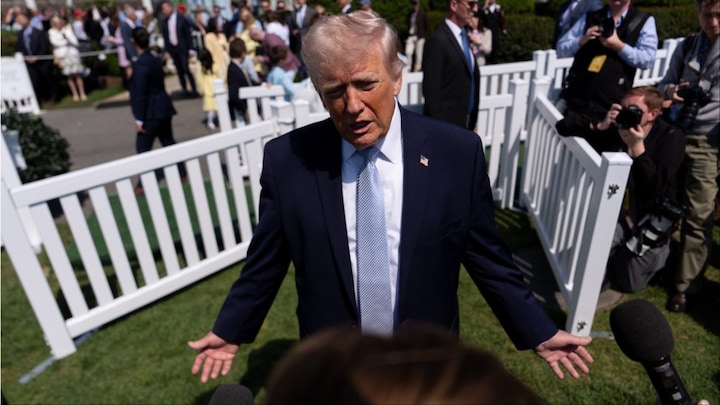
US Defense Secretary Pete Hegseth has devoted several weeks to delivering statements that portray the conflict with Iran in exceptionally favorable terms for the United States. Among those statements, US Defense Secretary Pete Hegseth has claimed that Tehran possesses “no air defenses,” that US forces have “complete control of Iranian skies,” and that Iran has experienced “embarrassment and humiliation.” According to sources familiar with discussions at the White House, those statements are considered by some administration officials to be misleading, and the impact of the messaging appears to have reached President Donald Trump directly.
One senior official within the administration told the Washington Post that the information being relayed by US Defense Secretary Pete Hegseth does not align with the reality presented to President Donald Trump. The official emphasized, “Pete Hegseth is not speaking truth to the president,” and added, “As a result, President Donald Trump is out there repeating misleading information.” This description underscores the tension between public declarations made by US Defense Secretary Pete Hegseth and internal assessments that present a more nuanced picture of the operational environment.
Context Behind the Controversy
The catalyst for the heightened scrutiny surrounding US Defense Secretary Pete Hegseth’s public remarks was the incident in which an Iranian surface‑to‑air missile system engaged and downed an F‑15E fighter aircraft. The downing resulted in two US servicemembers becoming isolated deep within Iranian territory, prompting a high‑risk rescue effort. The rescue operation, while ultimately successful in extracting the airmen, highlighted a stark contrast between the optimistic narrative promoted by US Defense Secretary Pete Hegseth and the tactical challenges faced on the ground.
Kelly Grieco, a military analyst at the Stimson Center, provided an assessment that acknowledges substantial degradation of Iran’s naval, aerial, and fixed‑missile capabilities by US forces. However, Kelly Grieco also warned that the loss of the F‑15E illustrates the difference between possessing air superiority and achieving air supremacy. According to Kelly Grieco, US aircraft are likely operating at altitudes ranging from 15,000 to 30,000 feet in order to mitigate exposure to shoulder‑fired rockets—those very weapons that brought down the F‑15E.
Specific Claims and Counter‑Evidence
US Defense Secretary Pete Hegseth’s remarks regarding Iran’s missile and drone programs have been specifically targeted for criticism after US Defense Secretary Pete Hegseth told reporters that those programs were being “overwhelmingly destroyed.” Internal intelligence assessments, as verified by multiple individuals with knowledge of the classified documents, indicate that more than half of Iran’s missile launchers remain operational. In addition, a substantial stockpile of one‑way attack drones continues to be available to Iran. These data points contradict the absolute language used by US Defense Secretary Pete Hegseth.
One senior administration official who reviewed the internal documents described a direct conflict between the language used by US Defense Secretary Pete Hegseth and the intelligence community’s findings. The official stated, “Documents sent around internally contradict Hegseth’s claims.” Another official added, “If you judge Iran’s strength or weakness based on launch numbers, that is a dumb metric. What is their objective? Are they achieving that? That’s what matters.” This perspective emphasizes that numerical inventories of launchers do not fully capture strategic intent or operational effectiveness.
Implications for Public Perception and Policy
The disparity between US Defense Secretary Pete Hegseth’s public statements and the intelligence community’s assessments raises concerns about the accuracy of information disseminated to the American public. When official statements diverge significantly from classified analyses, the risk emerges that policymakers, media outlets, and the broader public may form opinions based on incomplete or exaggerated narratives.
Furthermore, the repetition of statements by President Donald Trump that echo US Defense Secretary Pete Hegseth’s messaging could influence the tone of diplomatic engagements and the strategic calculus of adversaries. The perception that Iran’s missile and drone capabilities have been largely neutralized may affect how Iran assesses its own options and how other regional actors respond to the evolving security environment.
Reactions Within the Administration
Several officials within the administration have expressed unease about the continuing propagation of the narrative advanced by US Defense Secretary Pete Hegseth. These officials argue that the presentation of an overly optimistic view of the conflict could undermine credibility if subsequent events reveal a gap between rhetoric and reality. The concern is not limited to the immediate tactical sphere but extends to longer‑term strategic messaging.
One official highlighted the responsibility of senior leaders to ensure that statements to the president align with the most accurate intelligence available. The official warned that repeated reliance on misleading information could erode confidence in the decision‑making process, both within the executive branch and among allied nations that monitor US communications closely.
Strategic Assessment of Iran’s Capabilities
According to the internal assessment referenced by the Washington Post, Iran retains a considerable number of missile launchers and a sizable inventory of one‑way attack drones. These assets remain viable components of Iran’s broader strategic toolbox. The assessment underscores that quantitative measures—such as the sheer count of launchers—do not fully capture the qualitative aspects of Iran’s deterrent posture.
The strategic evaluation suggests that Iran’s primary objectives may still be achievable despite the degradation of certain elements of its arsenal. The assessment encourages observers to focus on the intent behind missile launches and drone deployments rather than solely on raw numbers. This nuanced approach aligns with the perspective expressed by the administration official who emphasized the importance of measuring achievement of objectives over simple inventory tallies.
Conclusion
US Defense Secretary Pete Hegseth’s series of statements portraying a decisive victory over Iran’s missile and drone programs have been met with criticism from within the administration and the intelligence community. The criticism centers on the inconsistency between the public narrative and the data indicating that a substantial portion of Iran’s launch capabilities remains intact. The divergence has prompted concerns about the accuracy of information reaching President Donald Trump and the broader public.
In light of the contrasting viewpoints, it is evident that the discourse surrounding the conflict with Iran requires a balanced presentation that acknowledges both the successes achieved by US forces and the enduring capabilities that Iran continues to possess. Maintaining this balance is essential to ensuring that policy decisions, public understanding, and diplomatic messaging are grounded in a realistic appraisal of the operational environment.