Why Israel Continues Strikes on Lebanon Even as Iran Ceasefire Takes Effect – The Hezbollah Factor
The reason lies in the role of Hezbollah and Israel’s long‑standing strategy to neutralise it
Israel publicly affirmed support for Donald Trump’s announcement to halt aerial bombardment of Iran, while simultaneously clarifying that the suspension does not extend to Lebanon. The Israeli statement emphasized that the two‑week pause applies only if Iran immediately reopens critical maritime passages and stops all attacks directed at the United States, Israel and other regional states. The same communiqué added that the temporary moratorium expressly excludes Lebanon.
United States officials have conveyed to Israel a firm commitment to achieve the objectives outlined in the cease‑fire framework. The United States, Israel and regional partners intend to pursue diplomatic negotiations based on those objectives. The exclusion of Lebanon from the cease‑fire remains a cornerstone of Israel’s public position.
“Israel supports Donald Trump’s decision to suspend strikes against Iran for two weeks subject to Iran immediately opening the straits and stopping all attacks on the United States, Israel and countries in the region. The two‑week ceasefire does not include Lebanon.” – Benjamin Netanyahu
This declaration makes clear that, while the broader United States‑Iran truce proceeds, a separate front persists along Israel’s northern border. The continued hostilities in Lebanon stem from the involvement of Hezbollah and Israel’s enduring policy aimed at weakening the group.
How Lebanon Became the ‘Second Front’
When the confrontation between the United States and Iran escalated, Hezbollah swiftly entered the fray, effectively opening a parallel battlefield along Israel’s northern frontier. Hezbollah, widely recognised as Iran’s most powerful regional ally, launched rockets and unmanned aerial systems toward Israel in retaliation for strikes on Iranian territory. Those attacks provoked a robust Israeli response, creating a feedback loop of violence that quickly expanded beyond the original theatres of conflict.
The rapid escalation transformed Lebanon from a passive observer into a proxy arena of war. Iran, by leveraging Hezbollah, could exert pressure on Israel without committing regular Iranian forces to direct combat. This arrangement allowed the broader conflict to spill over national borders while keeping the Iranian government at a relative distance from the front lines.
Israeli officials had, for many years, anticipated such a scenario. Even before open hostilities erupted, Israel intensified bombardments of known Hezbollah infrastructure within Lebanon. The strategic intent was to erode Hezbollah’s capacity to provide logistical and operational support to Iran in any wider confrontation. As Hezbollah’s involvement deepened, Lebanon effectively evolved into a secondary front of the Iran‑United States confrontation.
Why Israel Is Unwilling To Relent
The cease‑fire negotiated between the United States and Iran contains a critical limitation: the aGreement applies exclusively to Iran and does not address Hezbollah’s autonomous operations. From Israel’s viewpoint, Hezbollah represents an immediate and independent threat along the northern boundary. Hezbollah remains armed, financed by Iran, and capable of launching sustained attacks irrespective of any pause by Tehran.
Israel therefore frames its Lebanese campaign as part of a broader “multi‑front” war strategy. The multi‑front approach equips Israel to confront Iran directly while simultaneously degrading the capabilities of its proxy network. This dual‑track posture explains why Israel continues to conduct strikes in Lebanon even as diplomatic channels seek to de‑escalate the primary United States‑Iran confrontation.
The Military Logic Behind Ongoing Strikes
Israel’s persistent operations in Lebanon are driven by a clear, overarching objective: to weaken Hezbollah sufficiently to prevent future large‑scale aggression. The operational focus includes targeting weapons depots, rocket launch sites, and supply corridors, especially those that traverse the Syria‑Lebanon border. In addition, Israel aims to eliminate senior Hezbollah operatives who coordinate cross‑border attacks.
Intelligence assessments indicate that Hezbollah continues to receive a steady flow of advanced weaponry and logistical support from Iran. Israeli military planners therefore maintain pressure on identified Hezbollah assets to disrupt the supply chain and degrade the group’s operational tempo. The strategy also involves striking transportation hubs that facilitate the movement of armaments from Syria into Lebanese territory.
Even as diplomatic overtures progress, Israeli forces have sustained a pattern of strikes tied to alleged Hezbollah activity. The continuity of these operations underscores Israel’s intent to keep Hezbollah on the defensive, regardless of any temporary lull in the United States‑Iran confrontation.
The Human Cost Inside Lebanon
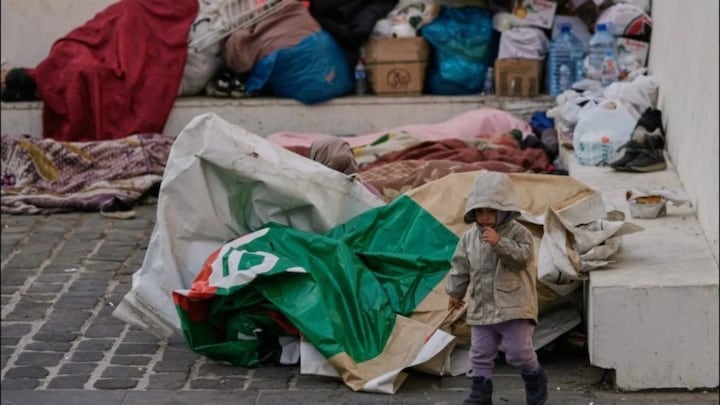
The continuation of military operations along the Lebanese front has exacted a severe humanitarian toll. Since the onset of the latest surge of violence, more than one thousand five hundred individuals have lost their lives, and over one million people have been forced to flee their homes. The scope of destruction extends beyond traditional Hezbollah strongholds, reaching civilian neighborhoods and critical infrastructure.
Recent Israeli strikes have struck densely populated areas, resulting in civilian casualties that have amplified public anger across Lebanon. The growing civilian toll has exposed deep fissures within Lebanese society, as factions debate Hezbollah’s role in drawing the nation into a conflict that Lebanon did not formally declare. The internal debate reflects a broader societal struggle to balance national sovereignty against the influence of regional militia groups.
The situation illustrates a key reality of the broader Iran conflict: even when Tehran temporarily suspends direct hostilities, its regional network of allies sustains the momentum of war. Israel’s long‑term goal extends beyond a simple cease‑fire with Iran; it encompasses the dismantling of enduring threats such as Hezbollah. Consequently, Lebanon remains entangled in a war that persists independently of the United States‑Iran truce.
Lebanon’s trajectory in the current crisis underscores how a nation can become a focal point of a larger geopolitical struggle without initiating the hostilities itself. Hezbollah’s entry into the conflict transformed Lebanon into a second front, and Israel’s determination to weaken that group suggests that fighting will likely continue even as the primary United States‑Iran confrontation experiences a pause.
The cease‑fire may have halted one dimension of the broader conflict, yet it has not extinguished the violence unfolding along Israel’s northern frontier. The continued Israeli strikes in Lebanon affirm that the war’s second front remains active, driven by the persistent threat posed by Hezbollah.