Hrithik Roshan Defends Ramayana’s Visual Strategy, Urges Viewers to Prioritize Story Over Photorealism
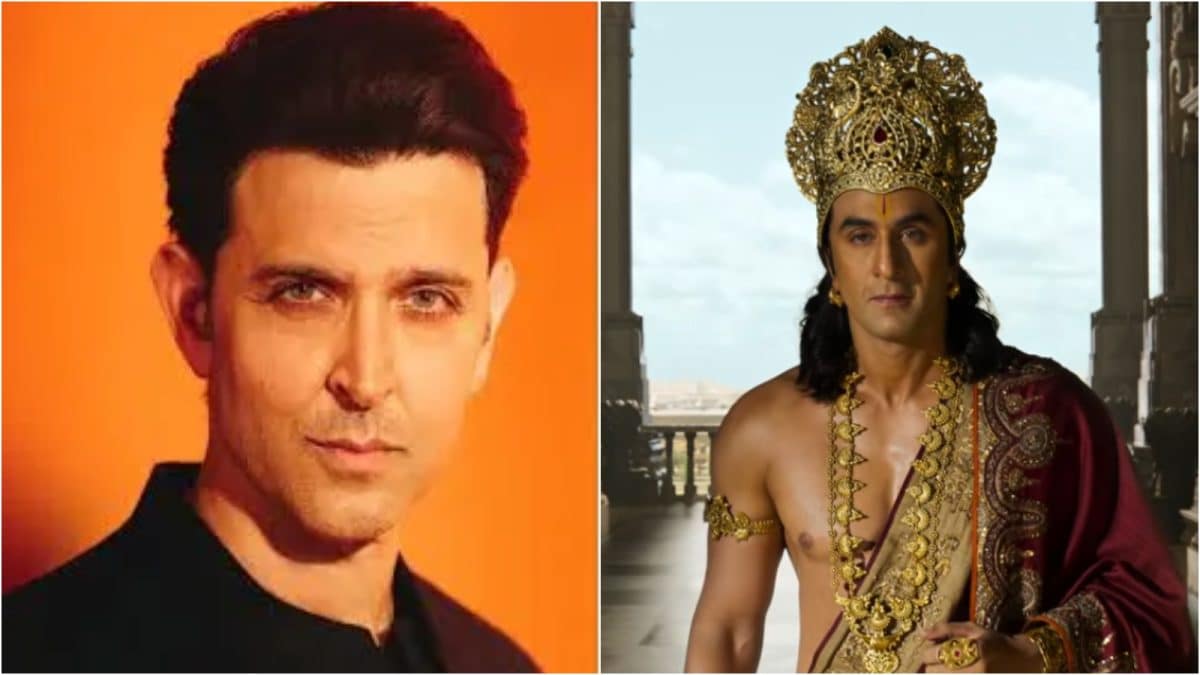
Hrithik Roshan reacts to Ramayana VFX backlash, saying criticism should consider the film’s style and whether it serves the story, not just realism.
The digital sphere is buzzing with conversation about the upcoming epic titled Ramayana. Since the first glimpse of the teaser was released, chatter has swelled to a volume that includes both admiration and disappointment. While anticipation for the project remains high, a segment of the online audience has expressed unease with the visual effects presented in the early promotional material.
The upcoming magnum opus starring Ranbir Kapoor as Lord Ram has drawn particular scrutiny after the teaser’s debut. Enthusiasts of the mythology anticipate a grand visual experience, yet several commentators on social platforms have described portions of the teaser as reminiscent of a “video game” aesthetic, implying that the visual polish falls short of expectations associated with a landmark Indian VFX production.
A post shared by Hrithik Roshan (@hrithikroshan) sparked renewed discussion. Within the post, Hrithik Roshan articulated a thoughtful perspective on the role of visual effects in cinema, drawing from personal experiences in the industry.
Hrithik Roshan wrote on Instagram that substandard visual effects can be disorienting for any viewer, especially when a filmmaker is personally involved in the project. “Yes bad VFX exists. It’s sometimes so bad it’s painful to watch. Especially for Me… and especially when it’s a film I’m part of,” the caption read.
Hrithik Roshan then revisited a formative childhood memory, recalling how an early exposure to the film Back to the Future ignited a lasting fascination with visual storytelling. The actor described how, at the age of eleven, a fascination with the moving frames of the movie led to a compulsive pause‑play routine that eventually caused a VHS player to break. The curiosity drove the purchase of a book titled “Industrial Light & Magic: The Art of Special Effects” using pocket money, a purchase that arrived at a local post office and left an indelible imprint on memory.
“I became obsessed. I would sit with my dad’s VHS player studying the frames pause‑play pause‑play until I broke the player. I ordered a book ‘Industrial Light & Magic: The Art of Special Effects’ from Reader’s Digest with my pocket money…and waited months for it to arrive at the Juhu post office. Happiest day of my life. I can still smell the book as I unwrapped it. Many others followed,” Hrithik Roshan recounted.
This anecdote served as a springboard for Hrithik Roshan to applaud creators who dare to push visual boundaries on a grand scale. The actor highlighted that visionary projects such as Kalki, Bahubali, and Ramayana—as well as earlier genre‑defining works like Koi Mil Gaya—represent the courage and ambition required to deliver experiences that have never been witnessed before. By committing extensive financial resources, years of labor, and a willingness to experiment, these creators enable younger audiences to feel the same awe that Hrithik Roshan felt during formative years.
“Today some special humans among us, like the makers of films like Kalki, Bahubali, Ramayana (also my dad for Koi Mil Gaya of course) are my heroes, they have the guts and vision to do what’s never been done all for the love of cinema so that we the audience get to experience something never watched before. From a visual point of view they risked all that money, and years and years of effort just so another 11‑year‑old kid could feel what I felt,” Hrithik Roshan expressed.
Hrithik Roshan also drew a distinction between different visual approaches, emphasizing that not every cinematic work strives for photorealism. According to Hrithik Roshan, the appropriate metric for evaluating visual effects should be rooted in the stylistic intention of the project and the narrative demands it aims to satisfy.
“Bad VFX is when a movie promises photorealism but fails to sustain that illusion. Even a minor slip in physics or gravity can shatter the whole experience. Conversely, if a story embraces a storybook style but does not achieve sufficient beauty, artistry, or divinity, the audience may feel disengaged. Yet criticizing a storybook style for lacking photorealism is unfair, because that is not its goal,” Hrithik Roshan noted.
Closing the thoughtful note, Hrithik Roshan urged audiences to reflect before hastily labeling visual choices as “bad.” The actor asserted that personal aesthetic preferences should not be conflated with objective criticism of a creator’s artistic direction.
“AND you can’t criticize the maker just because he has chosen one style while you prefer another style. That’s not fair. So sometimes when you say ‘bad VFX,’ maybe it’s just a style you didn’t expect? So next time don’t just ask, ‘Is it real?’ First ask, ‘Is it right for the story? Is it making me feel what the maker intended?’ Debate it. But debate it with awareness,” Hrithik Roshan concluded.
Ramayana is designed as a two‑part cinematic venture featuring a large ensemble cast. In addition to Ranbir Kapoor portraying Lord Ram, the project includes Sai Pallavi in the role of Sita, Yash embodying Ravana, Sunny Deol taking on the character of Hanuman, and Ravie Dubey representing Lakshman. Kajal Aggarwal and Rakul Preet Singh will portray Mandodari and Surpanakha respectively. Supporting talent such as Arun Govil, Kunal Kapoor, Adinath Kothare, Sheeba Chaddha, and Indira Krishnan round out the extensive cast.
The first installment is slated for a theatrical debut during a major festive season, while the second installment is planned for release during a subsequent festive season in the future.