U.S. Airman Concealed on Iranian Hilltop Must Verify Identity Before Daring Extraction
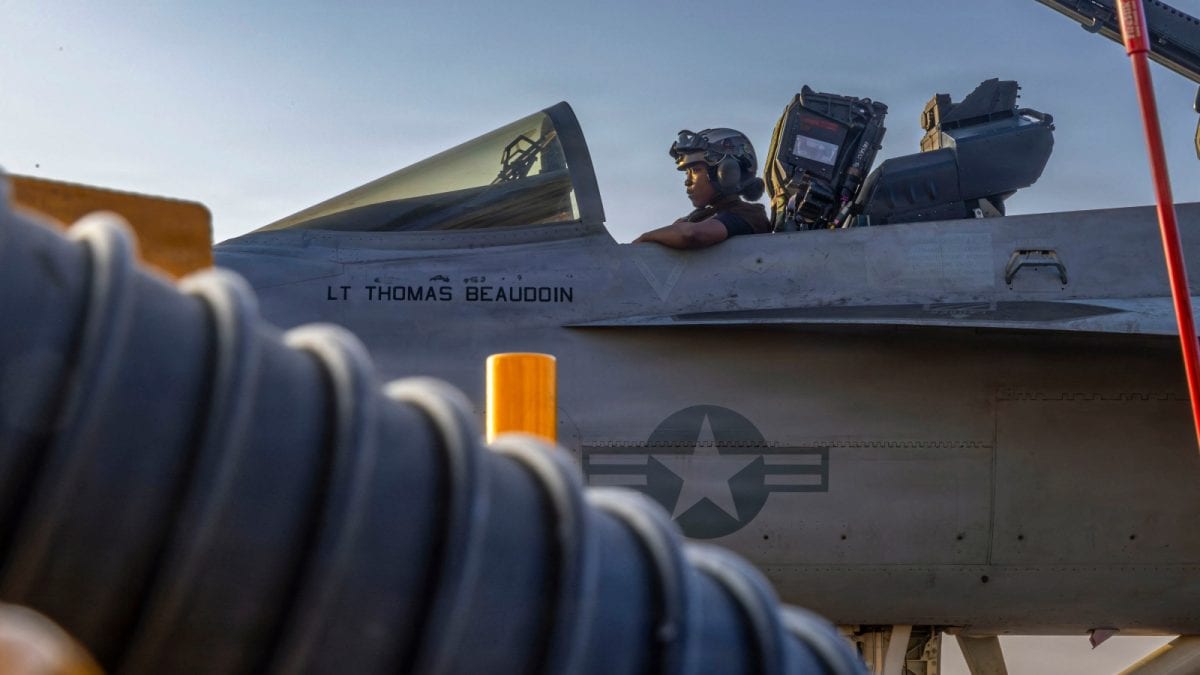
The airman, a weapons systems operator aboard an F-15E fighter jet, had ejected over Iran after the aircraft was hit by air defences.
Background of the Mission
The incident began when an F-15E fighter jet, crewed by a pilot and a weapons systems operator, encountered hostile air defenses while operating over Iranian airspace. The air defenses succeeded in striking the aircraft, forcing the weapons systems operator to eject from the cockpit. The pilot managed to escape earlier and was rescued through a separate channel, leaving the weapons systems operator alone behind enemy lines.
From the moment of ejection, the weapons systems operator faced a hostile environment characterized by rugged mountains, sparse vegetation, and the ever‑present risk of detection by hostile forces. The immediate concern for the weapons systems operator was to secure a safe landing, avoid capture, and establish a line of communication with friendly forces.
Ejection and Initial Survival
Upon separation from the aircraft, the weapons systems operator descended into a landscape marked by steep slopes and narrow valleys. The landing was hard enough to cause a sprained ankle, a painful injury that limited mobility but did not incapacitate the weapons systems operator. Despite the pain, the weapons systems operator remained conscious, assessed the surroundings, and began moving toward higher ground where a natural crevice offered temporary shelter.
The crevice, situated on a remote hilltop, provided cover from both the elements and potential visual detection. The weapons systems operator spent several hours in the narrow opening, using the limited space to rest, tend to the sprained ankle, and monitor for any sign of approaching forces. The environment allowed only minimal concealment, requiring the weapons systems operator to stay alert and ready to move at a moment’s notice.
Establishing Contact with U.S. Forces
While concealed, the weapons systems operator began the process of establishing a communications link with the United States military. The communication attempt involved the use of a covert signaling device that survived the ejection and was part of the standard survival kit carried by aircrew. The weapons systems operator transmitted a pre‑arranged signal designed to indicate a downed airman’s location without revealing the exact coordinates to hostile listeners.
After a period of signal transmission, a response was received from a listening station operating under the authority of U.S. command. The response confirmed that the signal had been recognized and instructed the weapons systems operator to begin the authentication protocol that would confirm the identity of the individual on the ground.
Authentication and Verification Process
The verification step required the weapons systems operator to provide a series of coded responses that matched the known training of the individual. The United States military has a long‑standing procedure for confirming the identity of personnel in hostile territory. This procedure relies on coded phrases, unique identifiers, and specific knowledge that only the trained individual would possess.
During the exchange, the weapons systems operator recited the required code words and answered verification questions with the exact wording taught during Survival, Evasion, Resistance and Escape (SERE) training. The SERE curriculum equips aircrew with methods to evade capture, survive in austere conditions, and communicate securely when isolated.
Once the United States command center was satisfied that the weapons systems operator had accurately provided the required authentication data, the official Green light for a rescue operation was issued. The confirmation of identity eliminated the danger of a potential trap set by hostile forces seeking to lure rescue assets into an ambush.
Planning and Execution of the Rescue Mission
Following authentication, a rescue plan was drafted that called for a night‑time insertion to reduce the likelihood of visual detection. The plan called for special operations forces to approach the hilltop where the weapons systems operator was concealed, utilizing a route that avoided known enemy observation points.
The insertion involved the use of MC‑130 aircraft, capable of low‑altitude flight and airdrop capabilities. Two MC‑130 aircraft were assigned to transport the rescue team, along with the necessary equipment to extract the weapons systems operator from the crevice. The plan stipulated a rapid ascent to the ridge, a brief on‑ground operation to locate the exact position, and a swift extraction before hostile forces could react.
Special operations forces moved off‑board under cover of darkness, employing night‑vision equipment and trained navigation techniques to reach the predetermined landing zone. Upon arrival, the team located the crevice, communicated with the weapons systems operator, and prepared the extraction rig.
Complications: Aircraft Mechanical Failures
During the execution phase, two MC‑130 aircraft encountered mechanical failures that threatened to compromise the mission. The failures occurred while the aircraft were positioned deep within Iranian territory, creating a scenario in which the rescue team could become stranded if the aircraft could not be recovered or repaired.
Recognizing the heightened risk, the commanding officers made an immediate decision to deploy additional aircraft to provide redundancy and ensure that the rescue team would not be left without a means of extraction. The decision involved a rapid re‑allocation of assets and a recalculation of flight paths to avoid detection while still supporting the extraction operation.
To prevent sensitive equipment from falling into the hands of hostile forces, the disabled MC‑130 aircraft were later destroyed in a controlled manner. This action eliminated the possibility of technology capture and adhered to standard operating procedures for lost equipment in hostile environments.
Final Extraction and Recovery of the Weapons Systems Operator
With the additional aircraft in place and the mechanical issues addressed, the rescue team succeeded in reaching the weapons systems operator’s location. The team assisted the weapons systems operator out of the crevice, provided immediate medical attention for the sprained ankle, and prepared the individual for air transport.
The extraction was carried out with the same MC‑130 platform that had been re‑tasked after the mechanical failures. The aircraft lifted off from the ridge, climbed away from the hostile region, and headed toward a secure extraction point outside Iranian airspace. Throughout the flight, the weapons systems operator received medical monitoring and basic first‑aid care to manage the injury and any potential stress‑related effects.
Upon arrival at the designated recovery zone, the weapons systems operator was transferred to a medical facility where further assessment and treatment would take place. Officials indicated that the weapons systems operator is expected to recover fully from the injuries sustained during ejection and the subsequent survival period.
Aftermath and Lessons Learned
The successful rescue highlighted the importance of thorough SERE training, the effectiveness of pre‑planned communication protocols, and the capability of special operations forces to conduct high‑risk extractions under adverse conditions. It also underscored the necessity of having contingency plans for equipment failures, as demonstrated by the swift deployment of additional aircraft when the two MC‑130 platforms malfunctioned.
Commanders emphasized that the verification of identity before conducting any rescue is a critical safeguard that prevents adversaries from using false signals to lure rescuers into traps. The protocol followed in this case serves as a benchmark for future operations involving downed aircrew in hostile environments.
While the operation carried inherent risks, the coordination between aircrew, ground rescue teams, and command elements ensured that the weapons systems operator was brought home safely. The incident will be examined in after‑action reviews to refine tactics, techniques, and procedures for future scenarios involving aircraft loss and personnel recovery.