Tight Contest Predicted in West Bengal 2026: All India Trinamool Congress Holds Edge Over Bharatiya Janata Party, Survey Shows
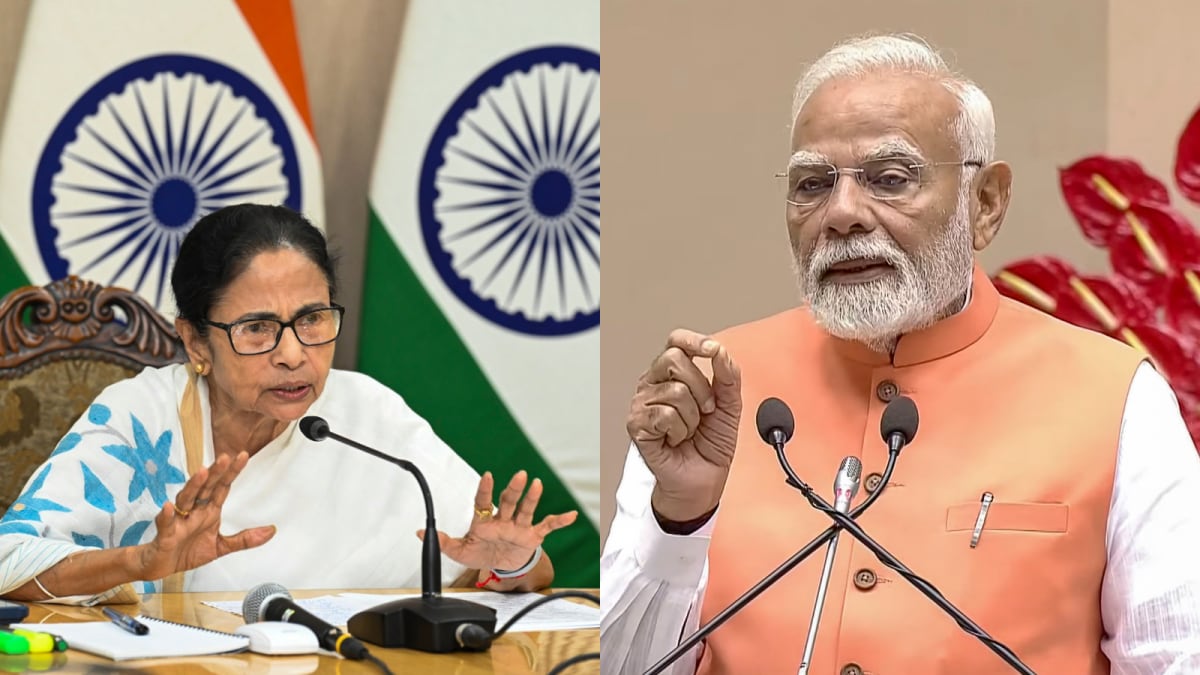
Polls for West Bengal 2026 show All India Trinamool Congress leading Bharatiya Janata Party in vote share and seats, Mamata Banerjee remains top CM choice, unemployment and law and order are key voter concerns
Overview of the Electoral Landscape
The West Bengal Assembly election slated for 2026 stands as a pivotal moment for the state’s political trajectory. Voters are confronted with a binary decision: retain the incumbent administration led by All India Trinamool Congress or usher in an alternative government under Bharatiya Janata Party. The C‑Voter poll, conducted in the weeks preceding the election, offers a quantitative glimpse into public sentiment, highlighting a narrow margin between the two major contenders.
According to the C‑Voter poll, All India Trinamool Congress registers a projected vote share of 44 percent, while Bharatiya Janata Party records a close 40 percent. This near‑parity suggests an intensely competitive environment where minor shifts in voter preference could tip the balance of power.
Leadership Preference: Mamata Banerjee Versus Suvendu Adhikari
The personal appeal of chief ministers remains a decisive factor in West Bengal politics. The C‑Voter poll identifies All India Trinamool Congress leader Mamata Banerjee as the foremost choice for chief minister, receiving the endorsement of 48.5 percent of respondents. In contrast, Bharatiya Janata Party leader Suvendu Adhikari garners support from 33.4 percent of those surveyed.
These figures underline Mamata Banerjee’s entrenched position as the pre‑eminent political figure in the state. Suvendu Adhikari’s share, while substantial, indicates a significant gap that Bharatiya Janata Party must bridge to present a credible alternative leadership narrative.
Party Support and Seat Projections
The C‑Voter poll projects All India Trinamool Congress to secure 41.9 percent of the total vote, with Bharatiya Janata Party trailing at 34.9 percent. When asked about the likelihood of re‑electing incumbent legislators, 36.5 percent of respondents express a willingness to cast their ballots again for sitting All India Trinamool Congress members.
These numbers illustrate a robust incumbent advantage for All India Trinamool Congress, while also highlighting noteworthy openness among the electorate to consider alternative candidates, particularly those fielded by Bharatiya Janata Party.
Evaluating the Current Government’s Performance
Public appraisal of the All India Trinamool Congress administration reveals a mixed picture. Roughly 43.3 percent of participants rate the government’s performance as either “good” or “very good.” Conversely, more than one‑third of respondents voice dissatisfaction: 20.6 percent assign a rating of “very poor,” while an additional 18.3 percent deem the performance merely “poor.”
This division underscores a polarized electorate where achievements are acknowledged by a sizeable segment, yet a comparable cohort remains deeply critical of governance outcomes.
Demographic Insights: Community‑Specific Perspectives
Community‑based analysis uncovers distinct patterns in how different groups assess the state government. Among Muslim respondents, optimism prevails, with 44.2 percent describing governance as “very good.” In contrast, upper‑caste Hindu respondents and members of Scheduled Tribes exhibit heightened criticism, each group reporting 26.6 percent labeling the administration as “very poor.”
Geographic and age‑related breakdowns, however, reflect a relatively uniform level of dissatisfaction across regions and generational cohorts, suggesting that concerns transcend localized or age‑specific issues.
Key Issues Shaping Voter Priorities
When asked to prioritize the most pressing challenges facing the state, respondents identified unemployment as the foremost concern, cited by 37.2 percent of the sample. Law and order, encompassing women’s safety, follows at 15.9 percent, a figure amplified by the widely discussed incident at RG Kar Medical College.
Other salient topics include price inflation, which 10.5 percent of participants highlight, and corruption, noted by 10.3 percent. These concerns collectively paint a portrait of an electorate deeply attuned to economic stability and public safety.
In terms of community‑specific issue salience, Muslim respondents demonstrate a comparatively lower inclination to elevate unemployment as a primary worry, yet they record the highest level of concern regarding matters related to the State Investigation Report (SIR), underscoring nuanced priorities within demographic subsets.
Challenges Confronting Bharatiya Janata Party
The C‑Voter poll also surfaces perceived weaknesses within Bharatiya Janata Party. Internal discord emerges as a notable vulnerability, with 19.9 percent of respondents attributing the party’s shortcomings to infighting and factionalism. A further 17.2 percent cite the absence of a charismatic state-level leader, while 12.5 percent question the party’s grasp of Bengal’s distinct cultural fabric.
Additional criticisms target organisational deficiencies and communication gaps, although precise quantifications are not provided. Meanwhile, 22.5 percent of participants express uncertainty regarding the exact nature of Bharatiya Janata Party’s deficiencies, indicating a deGree of ambiguity in public perception.
Historical Context: The 2021 Outcome as a Reference Point
Reviewing the previous electoral cycle offers valuable context for the upcoming contest. In the 2021 Assembly elections, All India Trinamool Congress achieved a third consecutive term, securing 220 seats and reinstating Mamata Banerjee as chief minister. This historic victory reinforces All India Trinamool Congress’s entrenched organizational network and voter base, elements that continue to influence contemporary polling outcomes.
Conclusion: A Close Contest With an Incumbent Edge
While opinion polls provide only a temporal snapshot of voter mood, the C‑Voter findings suggest that All India Trinamool Congress enters the 2026 legislative contest with a measurable advantage in both projected vote share and seat count. Nonetheless, the margin remains narrow enough to keep the race highly competitive, ensuring that campaign dynamics, issue salience, and voter mobilisation will play decisive roles in shaping the final outcome.
The electorate’s pronounced focus on unemployment, law and order, price stability, and corruption highlights the policy arenas where parties must concentrate their messaging. Simultaneously, the internal challenges flagged for Bharatiya Janata Party indicate areas requiring strategic reinforcement if the party aspires to narrow the existing gap and potentially overturn the incumbent advantage.
In sum, the 2026 West Bengal Assembly election promises to be a closely fought battle, with the C‑Voter poll underscoring both the resilience of All India Trinamool Congress and the emerging opportunities for Bharatiya Janata Party to make inroads among a discerning electorate.