Auto‑Rickshaw Driver Monitors Crypto Prices at Red Light, Igniting ‘Bengaluru Hustle’ Debate
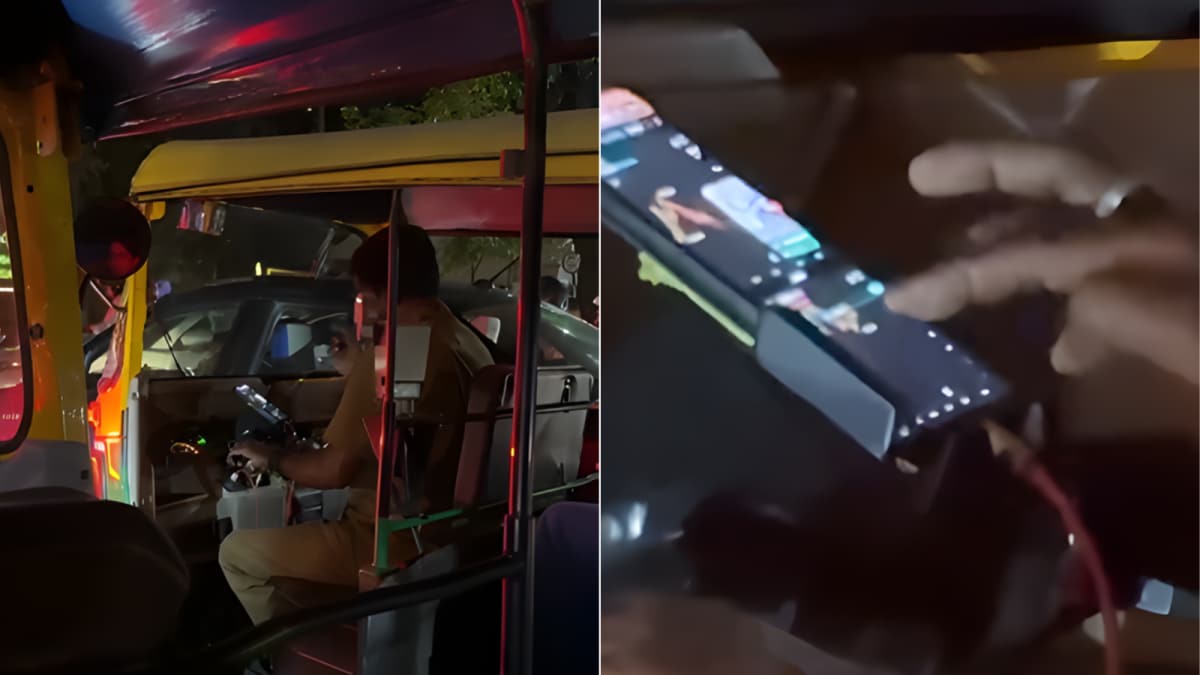
Social media users across the region are dissecting a short video that captured an ordinary traffic stop in Bengaluru turning into a moment of unexpected cultural significance.
What the Clip Shows
The footage, originally posted on a public social platform by Shrinidhi M, records a middle‑aged driver of an auto‑rickshaw stopped at the Vega City Mall signal. The driver has positioned a smartphone on a mount mounted in front of the vehicle. The screen is divided between a navigation application—commonly used by ride‑hailing services such as Uber or Ola—and a live feed of cryptocurrency trading charts.While the traffic lights remain red, the driver taps, scrolls, and zooms within the chart interface, appearing to track real‑time price movements. At the same time, the driver maintains a watchful eye on the road, ready to move as soon as the signal changes.
How the Video Went Viral
Shrinidhi M described the recording as a “Peak Bengaluru moment,” emphasizing how the scene seemed to capture a convergence of age, occupation, and digital savvy that defies traditional expectations. The clip was shared in a public post, accompanied by a brief commentary that highlighted the apparent blending of a manual profession with advanced financial technology.
Within hours, the post amassed thousands of reactions, shares, and comments. The online community responded with a mixture of admiration for the driver’s multitasking abilities, curiosity about the accessibility of financial tools, and caution regarding safety and investment risk.
Public Reactions and Themes
Commenters expressed a range of perspectives. One user praised the versatility of Bengaluru’s transport operators, writing, “Bangalore auto and bike drivers have multiple talents.” Another celebrated the democratizing effect of technology, stating, “Access is democratising faster than our assumptions can keep up. The tools are available. The knowledge is free. The only real barrier left is the decision to begin.”
Several observers raised concerns about the potential hazards of using a mobile device while behind the wheel, even when the vehicle is stationary. A user cautioned, “Crypto trading is risky lol…only fools will put entire savings into it and hope the graphs give hope. Been there, done that. If anyone can, better advise them to invest, not for get‑rich‑quick schemes no matter how legal it might look.”
Another participant emphasized the need to avoid premature judgment, noting, “If you don’t know about his trading journey you can’t judge whether he is a gambler or a trader.”
The conversation has thus spiraled into broader discussions about hustle culture, the reach of digital finance, and the responsibilities of road users.
Contextualising the Hustle Culture in Bengaluru
Bengaluru, often dubbed the “Silicon Valley of India,” has long been a hub for technology startups, software development, and innovation. This reputation has cultivated a citywide mindset that prizes relentless productivity, rapid adaptation, and continuous learning. The driver’s engagement with cryptocurrency charts at a traffic stop can be viewed as a micro‑example of that larger cultural narrative.
For many residents, the city’s infrastructure offers limited downtime, prompting individuals to maximise every available moment. In the case of the driver, a red signal provides a brief pause that is transformed into an opportunity to monitor market fluctuations—an activity typically associated with office‑based traders or full‑time investors.
Such behaviour illustrates how the city’s tradition of “hustle” is migrating from conventional office environments to informal occupations. The driver’s choice to allocate attention to volatile digital assets underscores a belief that financial opportunity is not restricted to any single socioeconomic class.
Digital Access and the Democratization of Finance
The image of a middle‑aged auto‑rickshaw driver using a smartphone to view live cryptocurrency charts reinforces the notion that digital tools have become widely available across demographic lines. Mobile broadband penetration, affordable smartphones, and user‑friendly trading applications have collectively lowered entry barriers to financial markets that were once dominated by institutional players.
In this context, Shrinidhi M’s observation that “the only real limitation today is the willingness to begin” reflects a sentiment shared by many observers: technology has shifted the cost of participation from financial capital to informational capital, and the latter can be acquired through curiosity and self‑education.
Nonetheless, the ease of access also carries the risk of uninformed participation. Cryptocurrency markets are characterised by high volatility, limited regulatory oversight, and frequent misinformation. While the driver’s willingness to engage indicates empowerment, it also raises questions about the depth of understanding and risk‑management practices among casual participants.
Road Safety Considerations
From a traffic‑safety standpoint, the scenario highlights a potential tension between multitasking and safe driving. Even though the driver is stationary, the act of interacting with a handheld device can create a cognitive load that distracts from situational awareness. The driver’s readiness to move when the light turns Green suggests a conscious effort to remain alert; however, the visual attention required for chart analysis could reduce peripheral monitoring of surrounding vehicles and pedestrians.
Local traffic‑safety advocates often stress that mobile‑phone usage while operating a vehicle—regardless of motion—should be avoided to minimise accidental lapses. The driver’s example fuels an ongoing debate about where the line should be drawn between productive use of idle time and ensuring road safety for all users.
Legal frameworks in many jurisdictions already penalise handheld device operation while the vehicle is in motion. The nuanced question here is whether static moments, such as waiting at a red signal, should be exempt from such restrictions. Policymakers may need to consider updating guidelines to reflect the growing prevalence of on‑the‑go digital engagement.
Social‑Media Amplification and Its Effects
The rapid spread of the clip exemplifies the power of social media platforms to amplify everyday moments into cultural talking points. By posting the video on a public platform, Shrinidhi M unintentionally became a catalyst for discourse that spans technology, economics, and public‑policy domains.
Algorithms that prioritise engaging visual content likely contributed to the clip’s visibility, while the novelty of seeing a transport worker monitor crypto prices created a hook that encouraged sharing. The ensuing commentary demonstrates how a single visual snapshot can trigger a cascade of reflections on broader societal trends.
Furthermore, the online discourse has exposed divergent viewpoints within the city’s population. Some participants celebrate the driver’s adaptability, while others stress caution, illustrating the multiplicity of attitudes toward the intersection of traditional occupations and emerging financial technologies.
Balancing Opportunity with Responsibility
The driver’s engagement with cryptocurrency charts underscores a broader principle: as digital tools lower entry thresholds, individuals must also cultivate responsible habits. Understanding market dynamics, applying risk‑management strategies, and recognising the limits of one’s expertise become crucial safeguards against potential financial loss.
Equally important is the responsibility to uphold road safety standards. While the pursuit of financial insight is commendable, it should not compromise the driver’s primary duty to maintain vigilance on the roadway. Striking a balance between personal ambition and communal safety is essential for sustainable progress.
Community organisations, driver unions, and financial‑education NGOs could collaborate to deliver targeted workshops that address both safe‑driving practices and basic principles of cryptocurrency investing. Such initiatives would honour the driver’s desire to stay informed while mitigating the risks associated with uninformed trading.
Conclusion: A Snapshot of a Transforming City
The viral moment captured by Shrinidhi M offers a vivid illustration of Bengaluru’s evolving landscape. A middle‑aged auto‑rickshaw driver, a smartphone, and live crypto charts converged at a traffic signal to produce a scene that epitomises the city’s blend of tradition and innovation.
Through the lens of this brief episode, observers glimpse the democratizing power of technology, the perseverance of hustle culture, and the ongoing negotiation between personal ambition and public safety. Whether the driver’s actions inspire further digital engagement, spark policy revisions, or simply become a memorable internet anecdote, the clip stands as a testament to the dynamic, interconnected world in which modern Bengaluru residents live and work.