Artemis II Delivers Unseen Lunar Views – NASA Releases First‑Ever Moon Flyby Images
NASA has made public a series of newly captured photographs taken by the Artemis II crew while circling the Moon. The images expose terrain and phenomena that have never been photographed by humans, offering scientists and space enthusiasts alike a rare glimpse of our nearest celestial neighbor.
Historic Flyby Yields First Human‑Captured Moon Portraits
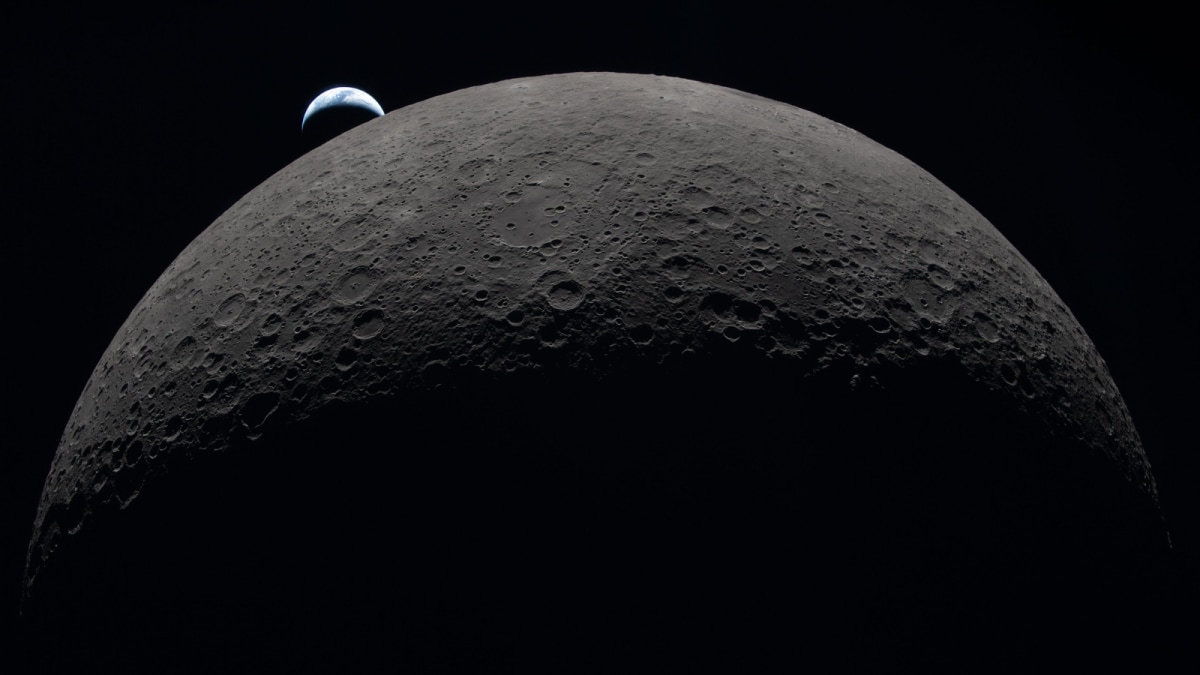
The Artemis II mission, a crewed test flight that circled the Moon, provided the first opportunity for humans to photograph the lunar far side directly from a spacecraft. During a seven‑hour segment of the orbit, the Orion spacecraft’s exterior cameras captured high‑resolution views of craters, ancient lava plains, and fissures that have never been documented from a human perspective.
Among the visual highlights is a rare solar eclipse seen from space, where the Moon’s silhouette temporarily obscured the Sun, casting a fleeting shadow across the spacecraft’s view. NASA described this phenomenon as “a rare in‑space solar eclipse” and emphasized its scientific value as well as its visual splendor.
In addition to the eclipse, the Orion spacecraft’s navigation windows offered a pristine view of the Milky Way stretching across the blackness of space. The galaxy’s bright band, captured against the darkness of the lunar horizon, demonstrates the capability of the crew’s imaging equipment to record both planetary and deep‑space subjects with exceptional clarity.
NASA’s Public Release and Social Media Announcement
Following the mission’s successful flyby, NASA released the images through an official news statement and shared a concise message on its social‑media platform X. The agency’s post Greeted the Moon with a friendly tone and invited the public to explore the newly available photographs, promising additional visual material as the Orion spacecraft continues its return trajectory toward Earth.
NASA’s social‑media message highlighted the novelty of the captured scenes, noting that the images represent “a taste of what the Artemis II astronauts photographed during their flight around the Moon.” The agency also encouraged followers to view the full photo set, underscoring the public’s growing interest in crewed lunar exploration.
Profile of the Artemis II Crew
The four‑person crew of Artemis II consists of Reid Wiseman, Victor Glover, Christina Koch, and Jeremy Hansen. Each astronaut contributed to the visual documentation effort, operating the Orion spacecraft’s imaging systems and selecting key moments for capture. Their combined experience spans multiple past missions, and their participation in Artemis II marks a milestone in human spaceflight history.
In a statement, Dr. Nicky Fox, associate administrator for the Science Mission Directorate at NASA Headquarters, praised the crew’s contribution, emphasizing that the returned images are “exquisite and brimming with science, they will inspire generations to come.” The acknowledgment reflects NASA’s expectation that the visual data will serve both scientific analysis and public outreach.
Scientific Insights from the Lunar Imagery
The freshly released photographs reveal fine‑scale details of the Moon’s surface that scientists are now scrutinizing. Visible features include a variety of impact craters of differing sizes, ancient basaltic plains formed by historic volcanic activity, and a network of cracks that indicate tectonic stresses. The crew noted subtle variations in color and texture across these regions, suggesting compositional differences that merit further investigation.
Additional observations captured by the Orion spacecraft include Earthrise and Earthset phenomena, where Earth appears on the lunar horizon at different points in the orbit. These perspectives provide valuable reference points for future navigation and communication planning for lunar missions.
Moreover, the Orion spacecraft’s instruments recorded brief flashes caused by meteoroid impacts striking the lunar surface. These transient events, captured as bright specks against the dark background, offer a direct method for estimating the frequency of micrometeoroid impacts in the near‑lunar environment.
Ongoing Analysis and Future Mission Support
Researchers at NASA and partner institutions are currently analyzing the visual, acoustic, and telemetry data gathered during the Artemis II flyby. The comprehensive dataset is expected to refine lunar surface models, improve understanding of the Moon’s geologic history, and enhance safety protocols for subsequent crewed landings.
Findings from this analysis will feed directly into NASA’s broader exploration roadmap, which envisions a sustained human presence on the lunar surface and eventual crewed voyages to Mars. The Artemis II images, therefore, serve not only as a visual record but also as a scientific foundation for the next generation of deep‑space missions.