'Delhi isn’t even safe for us': A viral safety scorecard is making Indians reflect on their cities
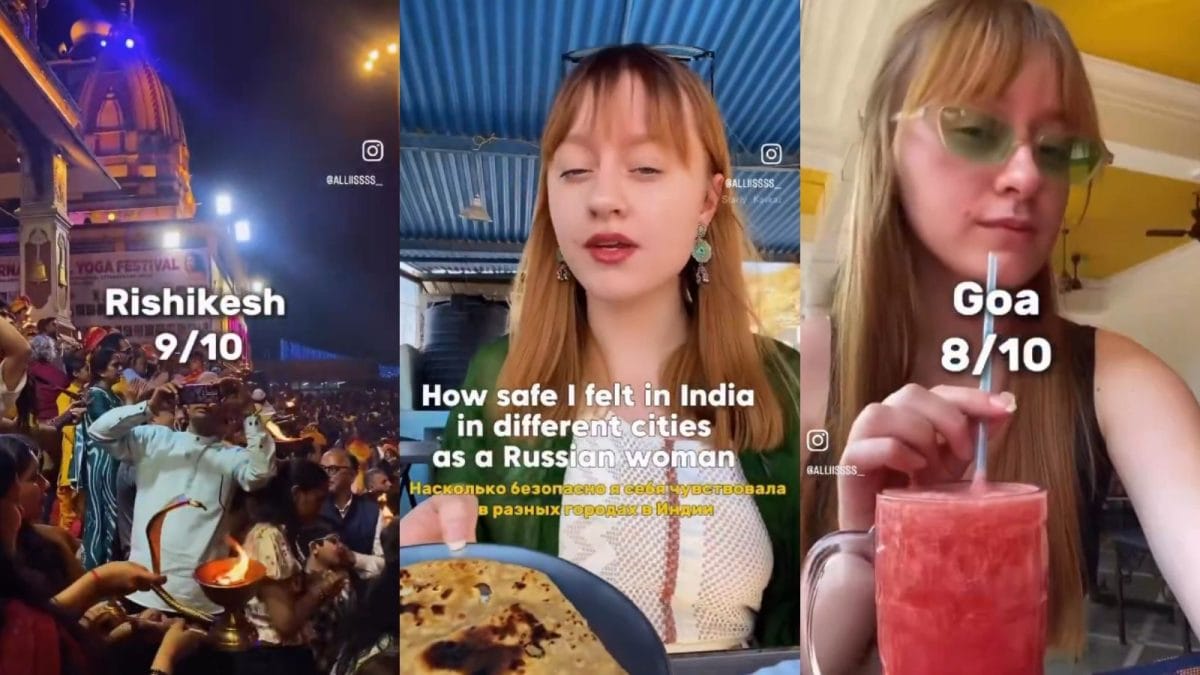
So, there’s this video going round the internet – you’ve probably seen it on X or Instagram – where a foreign solo traveller called Alisa gives a safety rating for a bunch of Indian cities. The clip itself shows her navigating the colourful chaos of the subcontinent – the honking autorickshaws, the street vendors shouting out fresh samosas, the occasional stray dog weaving through traffic. But what really set the internet ablaze was the scorecard she showed at the end, and the strong reactions from people who felt either defended or offended by it.
Alisa’s style is pretty straightforward. She talks about each place as if she were chatting with a friend over chai, mentioning what made her feel comfortable or uneasy. She travels from the coastal vibes of Goa, where the sea breeze feels soothing, to the spiritual buzz of Rishikesh, where the Ganga’s gentle flow seemed to calm her nerves. She also spends time in the historic forts of Jaipur and Jodhpur, and the snow‑capped hills of Manali. After moving around, she drops a rating out of ten for each city based on how safe she felt as a solo female traveller.
The ratings, when laid out, are a mixed bag. Jaipur, Jodhpur and Goa all sit comfortably above the 6‑mark, signalling that Alisa felt reasonably secure. Manali and Rishikesh get a solid 9 out of 10 – she mentions the friendly locals, the less crowded streets and the feeling that you’re not being stared at constantly. But then there’s Delhi, which gets a startling 2 out of 10, and Agra, which manages only a 3. Those two numbers caused quite the stir because, let’s face it, both cities are among the most visited places in the country.
Why Delhi’s Score Felt Like a Nail in the Coffin for Some
Almost instantly after the video hit the feeds, a flood of comments poured in. One user wrote, “Delhi especially North is the worst in terms of safety, saying this as an Indian. This is not a surprise. Delhi people need to introspect.” Another replied, “Only posh/semi‑posh areas are worth living.” The pattern was clear – a lot of people felt that Alisa’s experience mirrored something they already knew: the capital can feel overwhelming, especially after dark, with crowded metros, traffic jams and a perception of higher crime rates in certain neighbourhoods.
What struck me, while reading those threads, was how many people shared personal anecdotes. Some talked about getting harassed on a crowded bus, others mentioned the anxiety of walking alone after a late night metro ride back from a party in Connaught Place. A few even confessed that they hadn’t felt safe themselves in Delhi, even though they were born and raised there. This collective sharing turned the comment section into a sort of informal focus group on city safety, with many pointing out that the "safety" factor is highly localised – a posh area like Vasant Kunj felt worlds away from a crowded market lane in Old Delhi.
Regardless of the personal stories, a common thread was that people appreciated Alisa’s honesty. “It’s good that someone points out the real on‑ground situation,” one comment said. “We can’t just hide behind tourism brochures.” That sentiment echoed across both supporters and critics – the idea that a candid outsider’s perspective can help locals think about how to improve safety for everyone, especially women travelling alone.
High Scores for the Hill Stations – Why Manali and Rishikesh Felt Safer
Manali and Rishikesh each earned a 9 out of 10, and the reasons Alisa gave were simple yet telling. In Manali, she highlighted the low traffic, the clean streets and the fact that most people she interacted with were tourists or locals accustomed to visitors. She also mentioned the presence of many hostels that have clear safety protocols, like 24‑hour reception desks and well‑lit common areas.
Rishikesh, on the other hand, impressed her with its spiritual atmosphere. The city is known for yoga retreats and ashrams, and Alisa felt that the community there is used to looking after foreign visitors. She added that most streets are narrow and not overly busy, which made it easier to navigate at night without feeling exposed.
When you think about the Indian travel landscape, this makes sense. Hill stations tend to have a lower population density, fewer vehicular accidents, and a tourism industry that heavily markets safety. Plus, the climate – cooler evenings and less heat – often means people are more relaxed and less hurried, which can reduce the chances of petty crimes.
Interestingly, Alisa didn’t give any place a perfect 10. Even for Manali’s beautiful scenery and Rishikesh’s calm vibe, she kept a one‑point gap, perhaps hinting that absolute safety is a myth no matter where you go. A commenter summed it up nicely: “I guess it’s hard to be perfectly safe anywhere in the world.” This reality check reminded many readers that while certain places may feel safer, no city can guarantee zero risk.
What the Scores Mean for Solo Female Travelers in India
Alisa’s video, intentionally or not, became a kind of safety guide for solo female travellers planning trips to India. The high scores for Jaipur, Jodhpur, Goa, Manali and Rishikesh gave many an idea of where they might feel more comfortable. Meanwhile, the low scores for Delhi and Agra prompted a wave of cautionary advice.
People started sharing tips on how to stay safe in the capital. Some suggested staying in well‑reviewed hotels in South Delhi, using rideshare apps like Uber or Ola after dark, and avoiding certain metro stations after midnight. Others reminded travellers to dress modestly, keep valuables hidden, and always have a local contact on standby. A few even warned against taking solitary walks in tourist spots like India Gate after it gets dark.
When it came to Agra, the conversation shifted a bit. While the Taj Mahal is undeniably a bucket‑list destination, commenters urged visitors to hire a reputable local guide, stay in the city centre, and avoid night travel between the Taj and the hotel. The sentiment was that, with proper precautions, even a city with a low safety rating can be enjoyed without incident.
What stood out for me while scrolling through these discussions was the balance between fear and empowerment. On one hand, Alisa’s low rating for Delhi caused genuine worry for many women planning business trips or study exchanges. On the other, the massive amount of practical advice demonstrated that Indian travellers – male and female – have been developing coping strategies for decades. The shared knowledge turned a single video into a community‑driven manual of sorts.
Local Reactions – From Officials to Everyday Citizens
Beyond the social media chatter, a few local officials entered the debate, asking people to put the scores in perspective. A Delhi police spokesperson reminded citizens that the city has a dedicated women’s safety helpline and that ‘women‑only’ metro coaches have been upgraded with better lighting and security cameras. He also pointed out that the city’s crime statistics have shown a gradual decline over the past few years.
Meanwhile, a tourism officer from Rajasthan highlighted the state’s initiatives, such as free Wi‑Fi zones in Jaipur and night‑time security patrols near popular tourist attractions. “We are constantly working to make our heritage sites safer for all visitors,” she said in a short video that later got shared widely.
Ordinary citizens added their own colour to the story. One shopkeeper in Agra asked, “Did Alisa try the street food at the market? That’s where you truly feel the city’s warmth.” Another resident of Goa wrote, “We have a lot of tourists, and we try our best to make them feel at home. Your safety is our priority.” These viewpoints reminded people that behind every statistic is a real person trying to make a difference.
Broader Implications – How Cities Can Learn From the Feedback
Alisa’s scores, while subjective, have broader implications for city planners and tourism boards across India. If a foreign traveller feels unsafe in Delhi, it could affect future tourism revenues, especially from countries where solo female travel is common. The conversation sparked by her video could encourage municipal authorities to re‑evaluate lighting in public spaces, increase foot‑patrols in high‑traffic areas, and promote awareness campaigns about women’s safety.
In fact, a few city‑level NGOs have already started discussing partnerships with tech firms to create real‑time safety maps, showing areas that are well‑lit, have police presence, or have reported incidents. Such tools could help travellers make informed decisions, just as Alisa’s own rating did, albeit in a more informal way.
For the tourism industry, the takeaway seems to be that transparency works. When tourists see that a city acknowledges safety concerns and takes steps to address them, confidence can grow. Many hotels and hostels have started offering safety briefings for solo travellers, providing contact numbers for local emergency services, and even arranging group tours for those who feel uneasy walking alone.
All of these developments point to a simple truth: feedback, even when it feels critical, can act as a catalyst for positive change. Alisa may not have intended to become a safety consultant, but her journey has opened a door for many Indians to rethink how to make their cities feel safer for everyone.
Final Thoughts – A Balanced Perspective
Looking back at Alisa’s video and the wave of reactions it caused, I feel there’s a lot to learn. No single rating can capture the entire complexity of a metropolis as vast as Delhi, just as a perfect 10/10 would be unrealistic for any place on Earth. Still, the fact that a traveller took the time to share her experiences – the good and the bad – gives both locals and visitors a chance to reflect.
For those planning a solo trip to India, the key is preparation, awareness, and a willingness to ask for help when needed. Whether you’re wandering the lanes of Old Delhi, sipping tea by the Ganga in Rishikesh, or dancing at a beach party in Goa, remember that safety is a shared responsibility. And for the cities themselves, listening to honest feedback and turning it into concrete actions can only help build a more welcoming environment for all.
In the end, Alisa’s safety scorecard turned into something bigger than a simple list – it became a conversation that spanned continents, bridged cultures, and reminded us all that travel, while exciting, always comes with a need for vigilance and compassion.