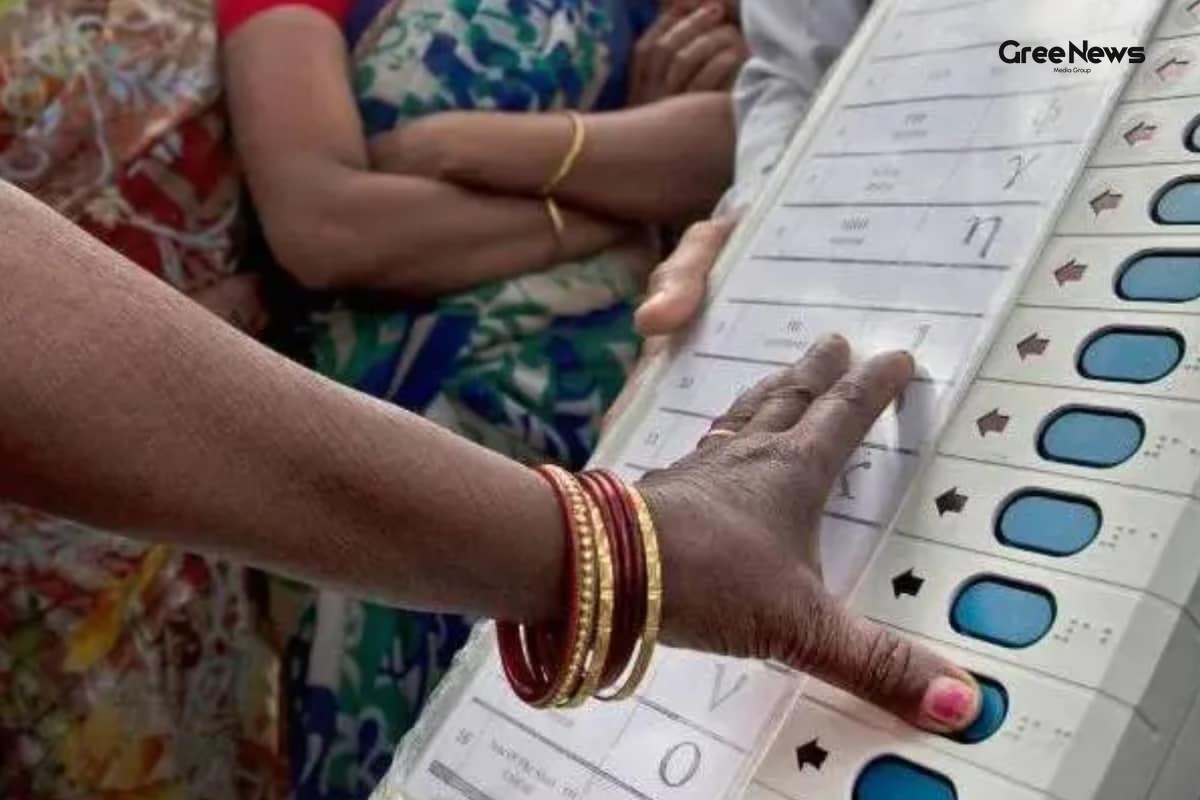
Assembly Election 2026 Live Updates: EC has identified more than 200 locations across Bengal as violence‑prone, with a history of poll and post‑poll unrest.
Assembly Election 2026 Live Updates: Campaigning is in full swing in poll‑bound states, with top leaders intensifying their outreach and sharpening political attacks ahead of crucial Assembly elections. Voting in West Bengal is scheduled in two phases on April 23 and April 29, while Tamil Nadu is also gearing up for elections on April 23. The results for all five poll‑bound states will be declared on May 4.
Honestly, when I first read that the EC had flagged more than two hundred spots as violence‑prone, I couldn’t help but think of those small market towns where even a harmless dispute over a trolley can turn into a big drama. In most cases, the Commission’s list includes places that have witnessed clashes during previous elections, but the sheer number this time feels a bit overwhelming. It’s like every time you turn on the TV for the latest news India, you get a new map with red dots blinking, warning us about possible trouble. What happened next is interesting the security forces have already started deploying extra personnel to these areas, and the local police are on high alert, especially in districts like Murshidabad and Darjeeling where tensions have traditionally been higher.
Now, let’s talk about the BJP’s strategy in North Bengal. They have put forward former Union Minister Nisith Pramanik as their candidate from the Mathabhanga (SC) constituency. This move caught a lot of eyes because Pramanik is currently the sitting MLA from Dinhata, a seat he has held for a while. Basically, he is moving his political focus to Mathabhanga, a region where the Rajbanshi community holds a lot of sway. You know how in our neighbourhood elections, a candidate’s caste or community support can be a game‑changer? The same thing is at play here, and many people were surprised by the BJP’s decision to switch an incumbent MLA to a new constituency. It shows how the party is trying to consolidate its base in the north‑eastern part of the state, where the demographic equations are a bit different from the rest of Bengal.
Switching the lens to Tamil Nadu, the political theatre there has been nothing short of a blockbuster. Chief Minister M.K. Stalin, together with Kamal Haasan the charismatic leader of Makkal Needhi Maiam and Premalatha Vijayakanth of DMDK, took to the streets of Salem for a massive roadshow. The crowd was massive, reminiscent of the crowds you see during a festive procession in Chennai. The trio shared a stage, each delivering speeches that ranged from development promises to criticisms of the central government. It was a classic example of how Tamil politics often mixes cinema, ideology, and grassroots mobilisation. The roadshow drew in not only party cadres but also ordinary people who stopped their daily chores to listen a sign that election fever there is truly viral news material.
Later that same day, Prime Minister Narendra Modi made his way to Nagercoil in the Kanyakumari district of Tamil Nadu. Accompanying him were the Tamil Nadu BJP president Nainar Nagenthran and the AIADMK general secretary Edappadi K. Palaniswami. The event was a grand affair, with fireworks, cultural performances, and a sea of supporters waving tricolour flags. What struck me was how the rally managed to blend local cultural elements you could hear the soft hum of Carnatic music in the background with the national narrative of development and ‘Sabka Saath, Sabka Vikas’. Many people were surprised by the sheer scale of the gathering, especially given the relatively remote location of Nagercoil. It’s a clear sign that the BJP is pulling all stops to create a foothold in the southern state.
Going back to West Bengal, the EC’s warning list has also prompted political parties to rethink their campaign strategies. For instance, the TMC, which has been the dominant force in the state for over a decade, has started emphasising peaceful rallies and encouraging its supporters to maintain law and order. In the streets of Kolkata, you can see small banners saying “Vote for Peace” alongside the usual party flags. It’s an interesting shift because, while the party’s rhetoric remains strong against opposition, they are also trying to present themselves as responsible custodians of public safety a narrative that aligns with the broader India updates about election integrity.
Meanwhile, opposition parties like the Left Front and the BJP are not shying away from highlighting the EC’s concerns. They argue that the violence‑prone label is a reflection of the aggressive political environment and that the ruling party has a role in exacerbating tensions. In many local tea‑stalls across the state, debates over these points have become part of the daily chatter. I remember sitting with a group of friends in a dhaba near Siliguri; one of them said, “If the EC is pointing out these areas, it means the stakes are high, and we need to be careful while voting.” It’s this kind of grassroots conversation that turns breaking news into a shared experience.
On the logistical front, the Election Commission has also announced the deployment of additional security personnel, including CRPF and state police, in the identified hotspots. They are setting up temporary police outposts and ensuring that polling stations are equipped with CCTV cameras. This has been met with mixed reactions while some see it as a necessary measure to prevent any untoward incidents, others feel it may intimidate voters. In my own neighbourhood, the sight of extra police vans has sparked both reassurance and curiosity among the residents.
Aside from the security aspect, there’s also a massive push for voter education. NGOs and civil society groups have been organising mock polls and awareness drives to remind people about the importance of casting their votes without fear. In a small village near Cooch Behar, a group of volunteers set up a ‘vote‑for‑peace’ booth where they distributed pamphlets that explained how to file complaints if any disturbance occurs at the polling station. This grassroots effort has become a trending news India story on social media, with many sharing videos of the volunteers’ heartfelt pleas.
While the focus remains on West Bengal’s violence‑prone list, it’s also worth noting that the Election Commission has taken similar steps in other states, albeit with fewer locations flagged. In Tamil Nadu, for example, the EC has identified a handful of areas with previous instances of electoral malpractices. However, the overall atmosphere there seems less fraught compared to Bengal, perhaps because the state’s electoral administration has a relatively smoother track record. Still, the presence of high‑profile leaders like Stalin and Modi on the campaign trail adds a layer of intensity to the narrative, making it a piece of viral news that keeps the nation hooked.
From a personal perspective, watching these developments unfold feels like being part of a massive, ever‑changing storybook. Every day brings a new update a new rally, a new statement from a leader, a fresh list of hot‑spot districts. It’s no wonder that the phrase "trending news India" has become synonymous with election season. And with so many people discussing the events on WhatsApp groups, Twitter threads, and local community meetings, the buzz only grows louder. In fact, the sheer volume of conversations has turned the entire election period into a kind of social experiment, where the public’s reaction becomes as important as the political strategies themselves.
Looking ahead, the real test will be on the polling days themselves. Will the increased security measures ensure a smooth voting process? Will the voters in the flagged zones feel safe enough to head to the booths? And how will the results, announced on May 4, reshape the political landscape in the five states? These are the questions that keep the nation waiting, and they form the core of the latest breaking news that every Indian is tracking. As someone who follows India updates closely, I’m holding my breath, hoping that the democratic spirit prevails and that the violence‑prone tag becomes a thing of the past after the votes are counted.
Follow LIVE Updates
Follow LIVE Updates
Follow LIVE Updates