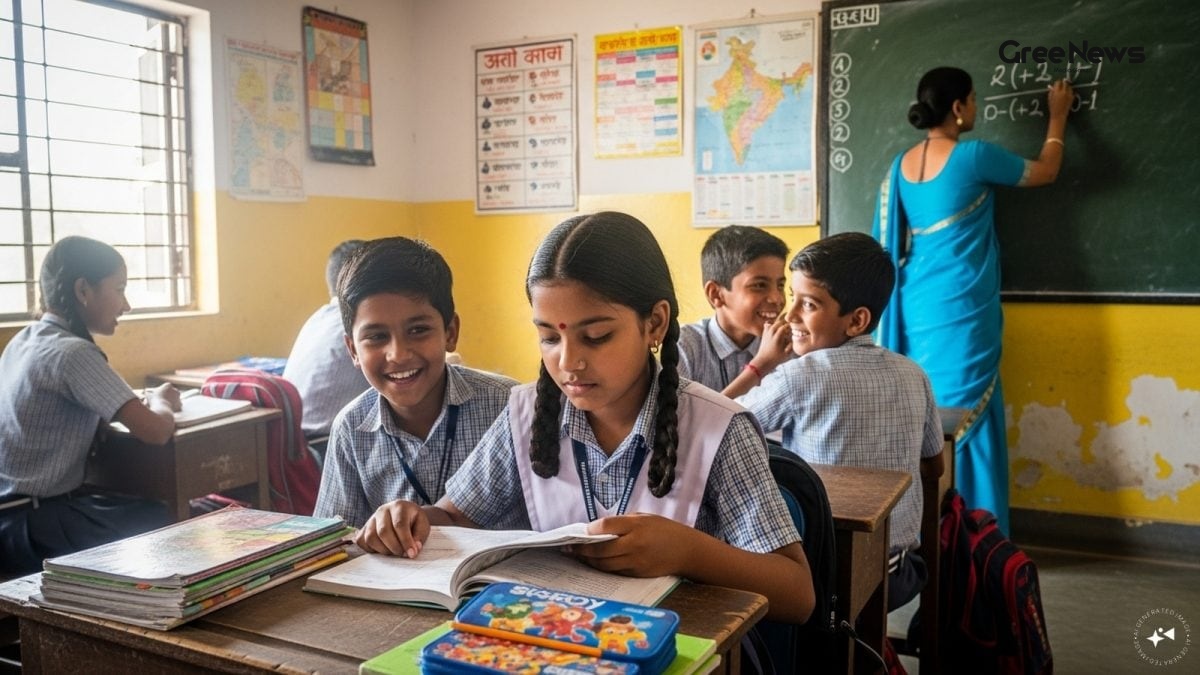
When I first saw the latest news India about CBSE revamping its language policy, I thought, "Okay, another change we have to keep track of". But then I realised this isn’t just paperwork it actually affects how my niece will study from class 6 onward. In this piece, I’ll walk you through what the three‑language formula really means, why it matters, and how it will play out in everyday school life.
Why the Three‑Language Formula is Back in the Spotlight
The National Education Policy (NEP) 2020 gave a big push to the three‑language formula, and CBSE is now aligning its curriculum to that vision. In most discussions that I’ve read whether they’re breaking news pieces or trending news India posts the message is clear: the board wants to promote multilingualism while keeping English strong for global competitiveness. That dual aim feels like a balancing act, but it also reflects the reality of living in a country where a dozen languages coexist. For many parents like me, the idea of a structured approach that still respects regional roots is a relief.
Understanding R1, R2 and R3 The Labels Explained
Let’s break down the labels because they sound a bit technical at first glance. CBSE has named the three languages as R1, R2 and R3. Here’s how they work:
- R1 First language: This can be any language that CBSE offers. In many schools, it’s the regional or mother‑tongue language, but it could also be Hindi or English if the school chooses.
- R2 Second language: Must be different from R1. If R1 is the regional language, many schools opt for Hindi or English here.
- R3 Third language: Different from both R1 and R2. This is the new compulsory subject starting from class 6 in the academic year 2026‑27.
What caught people’s attention is that the same language can’t be taken at more than one level at the same time. So you can’t count Hindi as both R1 and R2 in the same year.
Implementation Timeline When Will It Change?
CBSE has laid out a gradual rollout. R3‑level textbooks will start appearing in class 6 this year, and the third language will become compulsory from that point onward. Students in classes 9 and 10 will have to sit for exams in all three languages to qualify for the Class 10 board examinations. The full implementation is expected by 2031, which gives schools four to five years to get everything in place. This timeline is often mentioned in viral news clips, and I think it’s a smart way to let teachers, students and parents adapt without a sudden shock.
What This Means for Students A Parent’s View
Talking to CBSE Chairman Rahul Singh at a recent curriculum launch, I learned that the third language will not be mandatory for class 9 right away; the first batch of R3 textbooks will only reach class 6 this year. These students will appear for their board exams in 2031 exactly when the three‑language formula is expected to be fully operational. From a parent’s perspective, this staggered approach gives us time to gauge our child’s comfort level. It also means we need to start thinking about which language combination fits our family’s linguistic background best.
For instance, if your child’s mother‑tongue is Tamil, you might keep Tamil as R1, choose Hindi as R2, and then pick a foreign language like French as R3. The board will still require two Indian languages, so you’d need to replace French with another Indian language if you want a purely regional combo.
Typical Language Combos What Schools Usually Offer
In most schools, the three languages follow this pattern:
- Regional or mother‑tongue language (R1)
- Hindi or another Indian language (R2)
- English (R3 when English is not already R1 or R2)
However, CBSE has built in flexibility. States and individual schools can design their own language options based on local needs and resources. That means a school in Karnataka could have Kannada, Hindi and English, while a school in Delhi might go for Hindi, English and a foreign language like German, as long as two of the three are Indian languages.
Many people were surprised by this flexibility because earlier policies felt rigid. This new approach seems to respect the linguistic diversity of India a point that keeps popping up in trending news India articles.
How English Fits In The Foreign Language Angle
If a school teaches English as the medium of instruction from class 6, CBSE will treat English as the foreign language, and students will still learn two Indian languages as R1 and R2. On the other hand, if a school offers a foreign language such as French or German, students will still need to pick two Indian languages in addition. This policy attempts to keep English strong for global competitiveness while safeguarding the mother‑tongue and regional languages, a balance highlighted in several pieces of breaking news about education reforms.
New Subjects on the Horizon Computational Thinking and AI
Besides languages, CBSE is also making computational thinking and artificial intelligence compulsory for classes 9 and 10. Right now, they’ll be offered as modules with internal assessments, but by 2029 they’ll become full‑fledged board exam subjects. For classes 3 to 8, these topics are already being introduced as part of the curriculum this academic session. It’s interesting to see how the board is trying to future‑proof students a move that often trends in viral news discussions about the modern Indian education system.
Flexibility for States and Schools No One‑Size‑Fits‑All
A central aspect of the policy is its flexibility. States are not forced into a single language combination, and schools can tailor their offerings based on local demand, teacher availability and infrastructure. This means a school in West Bengal could keep Bengali, Hindi and English, while a school in Maharashtra might prefer Marathi, Hindi and a third Indian language like Gujarati. The board’s guidelines simply require that at least two of the three languages be Indian languages.
In most cases, this flexibility will help schools avoid the logistical nightmare of hiring new language teachers for a rigid combination.
Practical Tips for Parents and Students
Having gone through a few curriculum changes myself, I’d suggest the following:
- Start early: Talk to your child about their comfort with each language before the new R3 rollout begins.
- Check school resources: Ensure the school has qualified teachers for the chosen third language.
- Plan ahead: If you’re aiming for higher studies in a particular field, consider a foreign language that might help later.
- Leverage extra‑curriculars: Many community centres offer language classes that can supplement school teaching.
These small steps can make the transition smoother, especially when the policy will be fully in place by 2031.
Conclusion My Takeaway
All in all, the three‑language formula with R1, R2 and R3 is a thoughtful attempt by CBSE to nurture multilingualism while keeping India globally competitive. The gradual rollout, the built‑in flexibility, and the addition of computational thinking and AI together paint a picture of an education system that is trying to adapt to the needs of the 21st‑century learner. As a parent who has seen the impact of language policy on my own children’s confidence, I feel cautiously optimistic. The real test will be how schools implement it on the ground, but for now, the buzz in the latest news India and trending news India is definitely something to keep an eye on.