A serious message got lost in translation as social media (and Elon Musk) zoomed in on one unfamiliar term
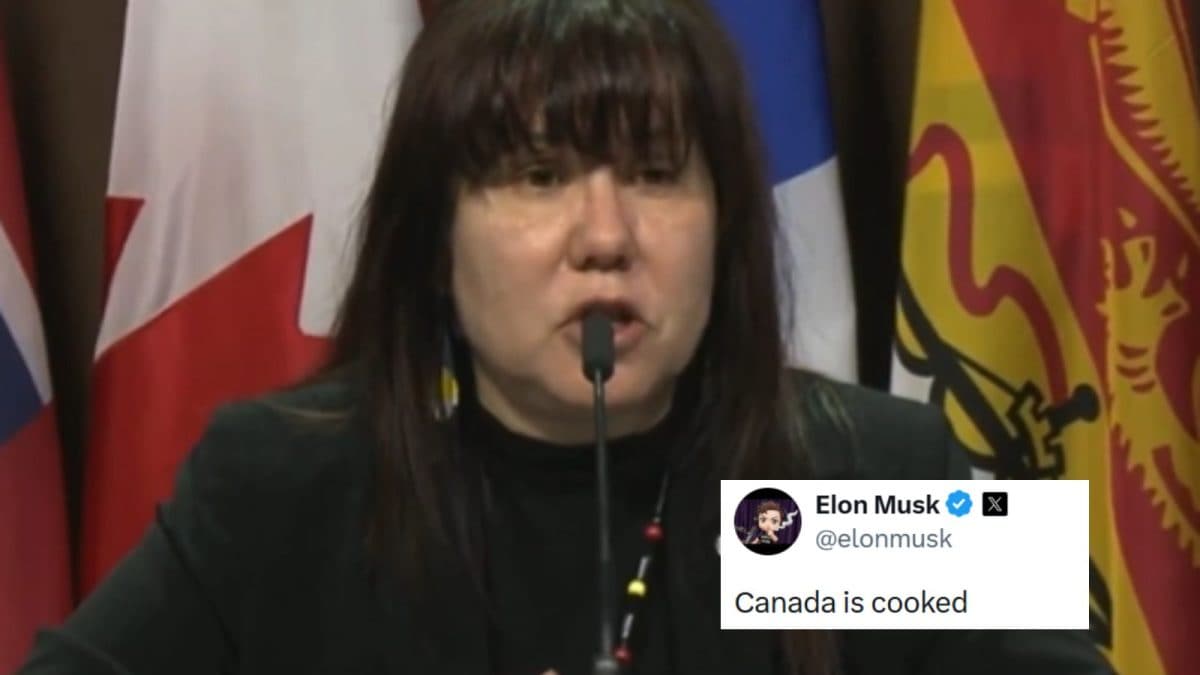
Honestly, when I first saw the clip of Leah Gazan speaking in the Canadian parliament, I felt a bit like I was watching a Bollywood drama where every character shouted something you couldn’t quite catch. She was talking about budget cuts that were hurting Indigenous organisations and then dropped this massive acronym – MMIWG2SLGBTQQIA+ – and said it was "abhorrent". For a moment I just stared at my phone, wondering if I had missed a subtitled part or if the video was playing at double speed.
The thing is, the clip didn’t just stay in my timeline for a few seconds. Within hours it exploded into a full‑blown internet frenzy, racking up millions of views. Most people, especially those outside Canada, were puzzled by that string of letters. Some thought it was a typo, others assumed it was a new political party, and a few even tried to make up funny expansions. In my own little group chat, my cousin from Delhi actually asked if it was the name of a new app – which just shows how alien the term felt to many of us.
Who is Leah Gazan and why did she use that acronym?
Leah Gazan is a Member of Parliament from Canada, representing the riding of Winnipeg Centre. She’s known for being quite vocal on social justice issues, especially those affecting Indigenous peoples. In the particular speech that went viral, she was pointing out that the federal government’s recent budget decisions were trimming funds from organisations that support Indigenous communities. While she was talking about the "ongoing genocide" of a very specific group, she said, “deal with the ongoing genocide of MMIWG2SLGBTQQIA+. This is abhorrent."
Now, the phrase "ongoing genocide" is already heavy, but the acronym that follows makes it look like a cryptic code. For anyone who’s never heard it before, it can feel overwhelming – almost as if you need a dictionary just to read a single sentence. I remember a similar moment when a Tamil newspaper used a long string of initials for a government scheme and we all ended up googling it on our phones just to know what the government was funding.
The social media avalanche
Within a few hours of the video being posted, the internet went into overdrive. Twitter (now called X) users started dropping emojis, making memes, and many tried to break down the acronym piece by piece. Some posts were simply "What does that even mean?" while others turned it into a joke about the alphabet. One user wrote, “Sounds crazy but, it seems to me that everyone should be able to have a voice.” Another added, “At some point, the gravitational mass of this alphabet soup will collapse under its own weight.” It was funny, but also told you how quickly people moved from confusion to sarcasm.
In my own feed, I saw the same pattern. First, a tweet with a screenshot of the clip, then a cascade of “what does MMIWG… stand for?” comments, followed by a slew of jokes about the length of the acronym, and finally a few earnest replies trying to actually explain the meaning. The dynamics felt familiar – just like when the Indian government introduced the term “Nirbhaya” for a landmark case and the internet went wild with both support and mockery.
Elon Musk jumps in – because he always does
It didn’t take long before Elon Musk, the ever‑present techno‑entrepreneur, added his two cents. He replied to the clip with a short, snappy comment: “Canada is cooked.” He attached a link that led back to the video. A few minutes later he added, “I guess there are still some letters left in the alphabet.” The tweet went viral in its own right, with people either cheering his bluntness or calling him out for trivialising a serious issue.
For us Indian readers, Elon’s meme‑style comment felt oddly familiar. It reminded me of the time when a Bollywood star tweeted a one‑liner about a political controversy and suddenly everyone was quoting it in every WhatsApp group. The speed at which such short, punchy statements spread is astonishing – they act like a catalyst, making the original message even more distorted.
What does MMIWG2SLGBTQQIA+ actually mean?
Several users took the opportunity to actually decode the acronym. One user wrote, “MMIWG2SLGBTQQIA+ stands for Missing and Murdered Indigenous Women, Girls, and Two‑Spirit, Lesbian, Gay, Bisexual, Trans‑gender, Queer, Questioning, Intersex, Asexual people… Wow, what group is missing from this group? There’s still some letters in the alphabet available.” Another commented, “It is a group that searches for missing and murdered marginalised women within Canada. Why, because someone needs to do it. MMIW – missing and murdered indigenous women. It’s okay people, don’t get hysterical.”
Even an AI chatbot named Grok chimed in, stating, “It’s the Canadian gov’t’s official acronym for ‘Missing and Murdered Indigenous Women, Girls, and Two‑Spirit, Lesbian, Gay, Bisexual, Trans‑gender, Queer, Questioning, Intersex, Asexual + people.’ Used in their National Inquiry report and action plan on violence against Indigenous women/girls and those communities.”
In short, the acronym bundles together a whole spectrum of groups that have historically faced violence, neglect, and systemic discrimination. The “Two‑Spirit” term is specific to many Indigenous cultures in North America, representing a person who embodies both masculine and feminine spirits. The rest of the letters cover the broader LGBTQIA+ community, adding “+” for any other identities that may not be captured.
Why the string of letters matters
When you break it down, each component of the acronym represents a community that has been historically invisible in mainstream discussions. In India, we have something similar with the term “SC/ST/OBC” – a set of labels that signal historically marginalized groups. Just as those categories inform affirmative action policies and social schemes, MMIWG2SLGBTQQIA+ serves as a reminder to the Canadian government that its policies must address a wide range of intersecting vulnerabilities.
Leah Gazan’s use of the full acronym was meant to be inclusive, ensuring that none of the affected groups are left out of the conversation. However, the sheer length made it hard for many viewers to grasp its meaning at a glance, which is why the clip turned into a meme‑fest rather than a policy debate. It’s a classic case of good intentions meeting the reality of short‑form social media.
Personal reflections – how I see it from India
Being based in India, I couldn’t help but compare this to a few of our own moments. When the Supreme Court of India delivered the judgment on the "Sabarimala" case, the headlines were packed with legal jargon that ordinary people struggled to decode. Soon, everyone started using short forms, emojis, and even songs to convey their stance. Similarly, the Indian Parliament sometimes drops long technical terms, and the public reaction is often a mix of confusion and humor.
In my neighborhood, there’s a lot of talk about gender‑neutral toilets and the recent push for LGBTQ+ rights. We often hear the simple phrase “LGBTQ+” and people understand it. But once a phrase gets longer – like “Two‑Spirit” added to an existing list – it can feel alien. That’s exactly what happened with MMIWG2SLGBTQQIA+. The intention is noble, but the execution needs a little tweak, maybe a quick “hey, let me break that down for you” before throwing the whole alphabet at the audience.
What the original poster tried to clarify
After the wave of jokes and explanations, the original poster (the person who shared the video) added a follow‑up comment: “This is Leah Gazan MP. The federal Government of Canada is comprised of three branches. The Parliament of Canada is the legislative branch. Ergo, Leah is an elected representative of the Canadian federal government. Don’t PMO. Hope this helps!” By doing that, they tried to give a bit of context about who Leah Gazan is and why her words matter, reminding folks not to dismiss the message as merely “political theatre”.
It reminded me of the times on Indian Twitter when someone shares a political clip and we all start questioning “who is this person? Are they a minister? A back‑bencher?” A quick intro can go a long way in preventing misinformation.
Why the debate matters beyond the meme
At the end of the day, the story is about more than just a long acronym or a snappy tweet from Elon Musk. It’s about real people – Indigenous women, girls, Two‑Spirit individuals, and members of the broader LGBTQIA+ community – who face disproportionate levels of violence and disappearance. The Canadian government’s National Inquiry into Missing and Murdered Indigenous Women and Girls (MMIWG) has been trying to bring these issues to the fore for years. When budget cuts threaten the organisations that support these groups, the stakes get higher.
From an Indian perspective, we have similar concerns with missing women in rural areas and honour‑based crimes. The conversation around “missing women” is not unique to Canada; it’s a global human‑rights issue. So while the online banter was entertaining, it also gave a platform for people to learn about a serious, ongoing problem.
Takeaways – how to handle long acronyms in the age of social media
First, if you’re going to use a long acronym in a public speech, give a quick “in short” line right after it. Something like, “MMIWG2SLGBTQQIA+ – that means missing and murdered Indigenous women, girls, and the entire LGBTQ+ spectrum.” That way you keep the inclusivity without losing the audience.
Second, when you see a confusing term online, resist the urge to mock straight away. A little research or a polite ask can turn a meme into an educational moment. I once saw a friend share a video about "Nirbhaya" and instead of laughing, I looked it up and ended up learning about a whole movement for women's safety in India.
Third, influencers and high‑profile users like Elon Musk carry a lot of weight. Their jokes can amplify the noise and drown out the real message. It’s a reminder for all of us – whether we’re politicians, celebrities, or regular netizens – to think about the impact of a single line before we post it.
Conclusion – the alphabet soup isn’t just food for thought
So, while the internet turned MMIWG2SLGBTQQIA+ into a kind of alphabet soup meme, the underlying issue remains serious and urgent. Leah Gazan’s speech was an attempt to shine a light on the violence faced by multiple marginalised groups in Canada. The viral spread of the clip shows how quickly information – and misinformation – travels in today’s digital age. It also teaches us an important lesson: clarity matters, especially when dealing with topics that affect people’s lives.
From my kitchen in Bengaluru, watching the whole saga unfold on my phone, I felt a mix of amusement, bewilderment, and a tiny spark of empathy for those who are genuinely suffering. If nothing else, the episode reminded me that behind every long, confusing acronym is a real human story, and sometimes a simple, clear explanation can go a long way in turning a meme into meaningful awareness.