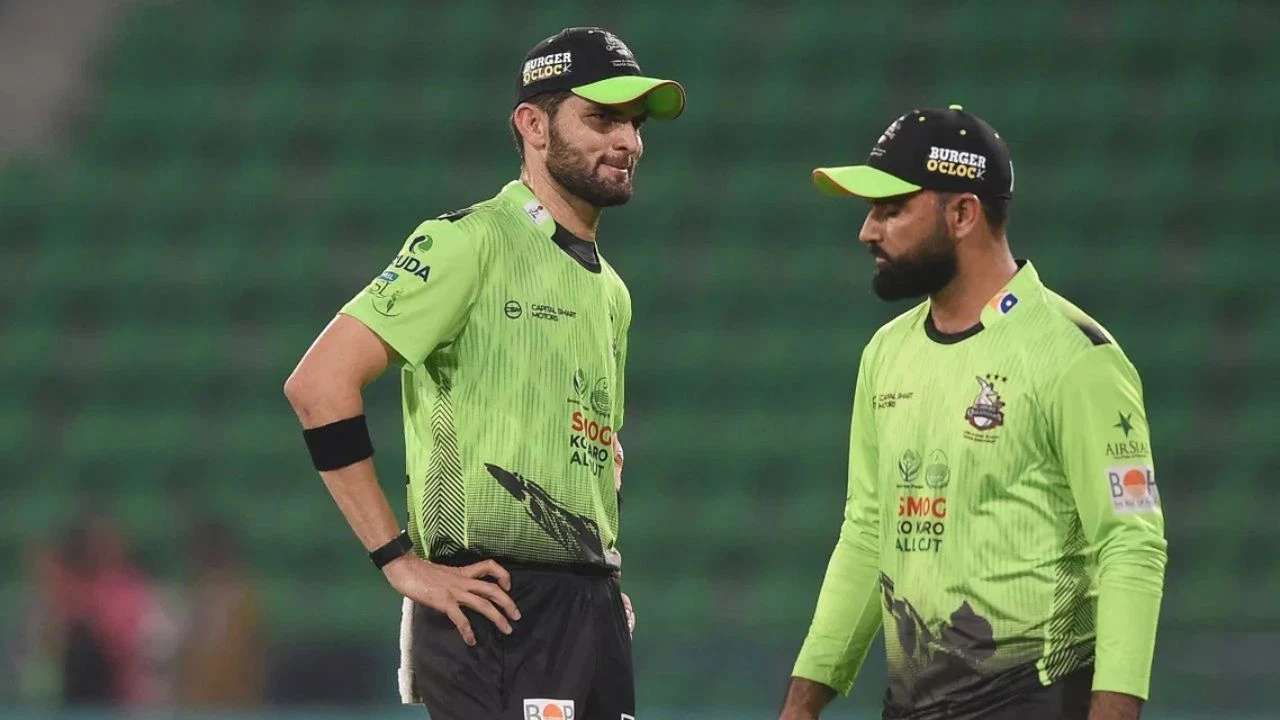
Alright, let me take you back to that crazy night in Karachi when the Lahore Qalandars went down like a rickshaw that missed a pothole and toppled over. It was the 16th match of the PSL 2026, and I was glued to the TV, munching on some bhujia, when the scoreboard flashed ‘100 all out’. Yeah, you read that right – just a neat hundred. For a team that’s been the defending champs, that felt like a slap on the face, sort of like when the metro you rely on for your daily commute just decides to skip your station altogether.
It took the Qalandars a whopping 18.3 overs to scrape together those 100 runs. In most cases, a score like that in a T20 is nothing to write home about, but for a side that’s supposed to be a powerhouse, it was a massive embarrassment. By the time Islamabad United started their chase, they were already looking at a cake‑walk, and they finished the job in just 10.2 overs. Imagine trying to finish a plate of pani puri before the chutney runs out – that’s how easy it was for United.
Now, let’s talk about the real drama that unfolded after the match – the post‑match press conference. If you’ve ever been to a family gathering where someone brings up politics and everyone gets a little heated, you’ll get a sense of the tension in that room. Sikandar Raza, who was the lone voice of reason on the field, turned the spotlight onto his own teammates for what he called ‘blind slogging’. He basically said, "Batsmanship is fading and slogging is becoming more common" – a line that sounded equal parts disappointment and a call for a reality check.
He didn’t just keep it to the media; he said the same thing inside the dressing‑room. I can picture it – the guys sitting on those worn‑out chairs, the smell of sweat mixing with the faint scent of the stadium’s fresh paint, and Raza, arms crossed, telling everyone that to win in Karachi you need proper batting, not just brute force. It reminded me of those moments when a teacher tells a class that simply memorising answers won’t get you good marks – you need to understand the concepts. Raza was basically saying the same thing but for cricket.
He went further to point out that the wicket in Karachi doesn’t have any ‘demons’ – a phrase you hear a lot when people try to blame the pitch for a low score. He insisted that it’s just the batsmen’s approach that’s off. "Even in the dressing room, I said the same thing, to succeed in Karachi, you need batsmanship, not slogging," he said, sounding like a kid who’s tired of watching his friends cheat at a board game. Raza’s frustration was palpable, and I could almost hear the collective sigh of everyone listening, like when the auto‑rickshaw driver finally drops you at the right stop after a long detour.
What Went Wrong with the Batting?
Let’s break down the innings. The Qalandars started off with some hope – Haseebullah Khan got a modest 19, and Raza himself made 25. In most cases those numbers aren’t much, but they were the highest in that innings. It felt like watching a Sharma‑style chaat stall where the first bite is promising but then the spices are missing; you just keep looking for that kick that never comes.
After those starts, the rest of the line‑up just vanished. No one could build a partnership, no one could see the ball well enough to get a decent score. It reminded me of that time when I tried to assemble a new set of kitchen cabinets from a flat‑pack – you start with a few pieces, then you realise the instructions are missing, and you end up with a half‑built mess.
Imad Wasim led the United bowling attack with a tight spell, giving away just 13 runs and taking two wickets. Chris Green was lethal – 3 for 19 – and Shadab Khan added two more wickets for 18 runs. It was like watching a well‑coordinated dance where every step is timed perfectly, except our Qalandars were stumbling on the dance floor with two left feet.
Now, just imagine the Qalandars’ batting order as a line of students waiting for a lunch break. A few of them get a bite, but most of them go back to the classroom hungry. That’s how the innings felt – a few glimmers of hope, then a long stretch of nothing. And when the wickets kept falling, you could see the frustration turning into panic, which is exactly what we saw in the dressing‑room later on.
Islamabad United's Easy Chase
When United started their chase, the target was only 101 runs. In most cases, that’s something you can chase down even after a long day at the office, with a cup of tea in hand. Devon Conway made it look like a stroll in a park, smashing an unbeaten 59 off just 35 balls. He was quick, crisp, and confident, much like the feeling you get when you finally get a Wi‑Fi signal after being stuck in a dead zone.
He was ably supported by Mohammad Faiq, who contributed an unbeaten 34. The two of them put together a 93‑run partnership without losing a wicket, which felt like watching a well‑synchronized Tamil dance – every move in sync, every step flawless. While the Qalandars’ bowlers, especially Shaheen Afridi, managed just a solitary breakthrough, the rest of the United attack kept the runs flowing at a rate above ten per over. It was like watching a water tap that never turns off – you just keep getting drenched.
The match ended in 10.2 overs, which felt like the end of a short movie you didn’t even get to watch. In most cases, you’d expect some drama, some twist, but this was just a clean sweep – a 9‑wicket win for United. And with that win, United jumped to the second spot on the points table, with three wins and seven points.
The Aftermath: Points Table Shuffle
Now, let’s talk numbers. After that defeat, the Qalandars slipped to the fifth place with only two wins from four matches, sitting on four points. This is a huge drop for a team that was defending the title, and it reminded me of the time when my favorite cricket team in the local league lost a crucial match because they underestimated the opponent – you feel the sting every time you see the standings shuffle.
The PSL 2026 season is now well into its second leg, being held in Karachi, and the Qalandars are feeling the pressure. They need to bounce back quickly if they want to stay in the race for the playoffs. In most cases, a team with such a reputation can’t afford a slump – much like a student who can’t afford to skip any more classes before the final exams.
What the Dressing‑Room Rift Means
What really struck me about this whole episode wasn’t just the low score or the win for United – it was the team dynamics. When Raza publicly blamed his teammates, it exposed a rift that’s been simmering beneath the surface. It felt like when you’re at a family dinner and someone finally brings up that old argument about who gets the last piece of cake – the tension is palpable, and everyone knows something’s off.
Raza’s comments about “batsmanship fading” and “slogging becoming common” were not just about the match; they were a critique of the overall approach the team has been taking. In most cases, you can’t blame a single player for a loss, just like you can’t blame a single faulty bulb for a house’s electricity outage. It’s a collective effort, and when one part fails, the whole system crashes.
For the Qalandars, this could be a turning point. The management will have to decide whether to patch up the cracks with a heartfelt team meeting (maybe over a plate of samosa and chai) or to make more drastic changes, like swapping players or tweaking the batting order. It’s similar to when a small shop owner decides to bring in a new chef after the regular customers start complaining about the food – you either adapt or risk losing your patrons.
Personal Reflection – How I Felt Watching It
Honestly, I was a little bit angry at first. I mean, I had been rooting for the Qalandars all season, and cheering for them felt like supporting my hometown team in a local tournament. Watching them get bowled out for 100 felt like watching my favourite street vendor run out of his signature snack in the middle of the day – you’re left hanging.
But then, as the post‑match interview played out, I started thinking about the bigger picture. In most cases, we see sports as just a game, but the emotions run deep. The way Raza spoke, it reminded me of how my uncle, who works as a railway clerk, often scolds his fellow clerks for not being meticulous about keeping the timetable – he knows that even a small slip can cause a massive ripple effect.
Watching that rift unfold, I felt like I was part of the drama. It was almost as if I was sitting in the dressing‑room with them, hearing the sighs, the short‑lived hopes, the snide remarks about “sloggers”. It made me realize that behind every scoreboard there’s a human story, full of pressure, expectations, and sometimes, bitter disappointment.
And let’s be honest – the PSL itself is a huge cultural event in our country. It’s like the cricket equivalent of a big Bollywood release. Everyone talks about it at office, at the tea stall, and during evening gatherings. So a collapse like this becomes a topic of discussion everywhere, from the Mumbai local train to the roadside dhaba in Punjab.
What Can the Qalandars Do Now?
Looking ahead, the Qalandars need to rediscover that “batsmanship” Raza talked about. That means focusing on technique over brute force. It’s similar to when we cook aloo paratha – you can mash the potatoes roughly, but if you don’t knead the dough properly, it won’t hold together. The same goes for batting; you need solid fundamentals before you can go for big shots.
Maybe the team will bring in a batting coach who can work on footwork and shot selection, or they might hold special practice sessions where they simulate pressure scenarios – like batting against a spinner on a turning pitch while the crowd is shouting. In most cases, a short, focused training can bring back confidence – just like how a short power nap can refresh you before a long commute.
On the mental side, team bonding activities could help. A simple dinner at a local dhaba, playing carrom together, or even a quick cricket video game session could ease the tension, similar to how coworkers unwind after a hectic day by watching a funny video online. When the players feel comfortable and trust each other, the performance often improves.
Lastly, the captain’s role is vital. Shaheen Afridi, being the senior bowler, needs to rally his side, perhaps by setting an example with his own innings – poise under pressure. In most cases, a leader who stays calm can inspire the rest of the team, just like a driver who stays composed during heavy traffic can help the whole convoy move smoother.
Conclusion – A Lesson Beyond Cricket
So, what’s the takeaway from this whole saga? For me, it’s a reminder that success isn’t just about talent; it’s also about mindset, teamwork, and staying true to fundamentals. Whether you’re playing cricket, studying for exams, or just trying to get through a never‑ending traffic jam, the principles stay the same.
The Qalandars may have faced a humiliating 100‑run disaster, but they also uncovered a crack in their locker‑room that needs fixing. If they manage to patch it up, they might just bounce back stronger, like a well‑baked dosa that puffs up after the first flip.
In the end, I’ll keep watching, cheering, and hoping they find their rhythm again. After all, as fans, we’re in this journey together – we celebrate the highs, we bag the lows, and we keep sharing stories over chai and samosas, just like we always do. Let’s see what the next match brings – maybe a comeback that will make us all raise our glasses of butter‑milk in celebration.