Last weekend I was chilling at home in Delhi, scrolling through my WhatsApp groups, when someone dropped a link to the Brazil Women vs Lesotho Women match from the Kalahari Women’s T20I tournament in Botswana. I thought, “Another boring low‑scoring game, probably,” and kept scrolling. But what unfolded on the screen was nothing short of a cricket miracle – the kind of thing you tell your friends over masala chai and still have them nodding in disbelief.
First off, let me set the scene. The tournament was being held in Botswana – a place you don’t hear much about in Indian cricket circles, but they’ve been hosting a few of these associate‑nation events lately. Brazil, who are more known for football than cricket, were playing Lesotho, a team that’s still trying to find its footing in the international arena. In our usual cricket talks, we compare India’s dominance to these smaller nations, but on this day, the tables turned in the most dramatic way.
How Brazil Stacked Up – The First Innings
Brazil won the toss and decided to bat first. And boy, did they decide to go big. They posted a blistering 202 runs for 8 wickets in their 20 overs. If you picture a local Indian club match where a team scores 150‑160, this was like watching a Bollywood hero’s entrance – loud, flamboyant and impossible to ignore.
Roberta Avery, the opening batter, hammered 48 runs off just 35 balls. She was smashing boundaries like a kid on a merry‑go‑round at Marine Drive. Then Monnike Machado came in and went full throttle, smashing 69 off 41. Her batting was so aggressive that even the street vendors outside my apartment would have felt the tremor of her sixes. By the time the 20th over clicked, Brazil had set a target that seemed more like a dream for Lesotho.
In India, we often say “score a ‘maha’ (big) total, and you’ll be safe.” And that was the sentiment everyone felt about this game – Brazil would cruise to a win, Lesotho would just try to survive. But that’s when Laura Cardoso stepped onto the field, and everything went sideways.
Enter Laura Cardoso – The Spell That Stopped Time
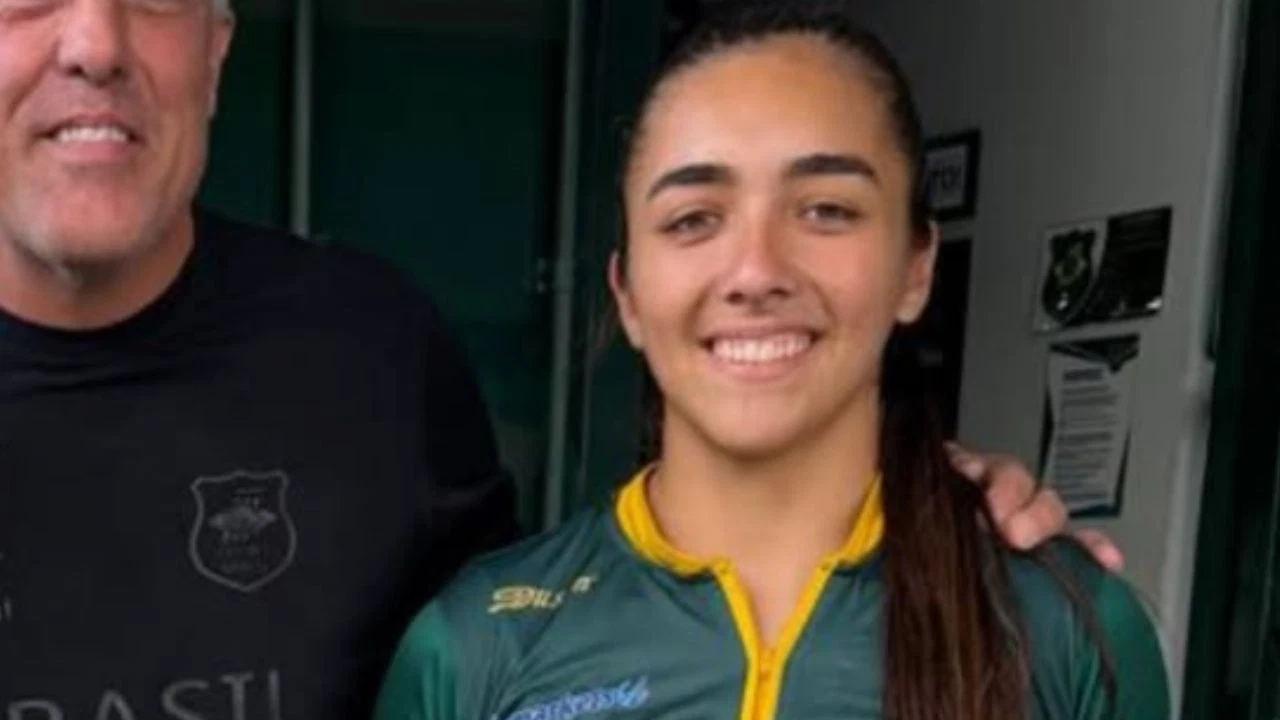
Laura Cardoso is not a household name back in Brazil. In fact, most Brazilians probably think cricket is a sport played by expats in São Paulo parks. Yet on that dusty ground in Botswana, Laura turned into a thunderstorm. She bowled with a fierce swing that reminded me of a Mumbai fast bowler on a humid evening, when the ball seems to dance in the air before crashing into the deck.
She began her spell in the second over of the Lesotho innings. If you’ve ever watched a kid in a schoolyard game take a wicket for the first time and the whole class erupts, you’ll get the vibe. Laura took a hat‑trick in that very over – three wickets fell in quick succession. The first wicket was a simple catch behind the wicket‑keeper, the second a clean bowled, and the third a stunning leg‑before‑wicket that made the fielders sprint like they’d seen a Mumbai auto‑rickshaw weaving through traffic.
But she didn’t stop there. She kept the ball low, hit the right line, and the Lesotho batters never seemed to get a look at the ball. By the end of her third over, she had ripped through the lineup, picking up 9 wickets for just 4 runs. In total, Lesotho were bowled out for a paltry 13 runs in a little over six overs.
To put this into perspective with Indian cricket, the best bowling figures we talk about are like Anil Kumble’s 10‑for‑74 in a test – rare, celebrated, and something that makes you want to write a poem. Laura’s 9‑for‑4 in a T20I is beyond that; it’s the sort of record you only hear about in mythologies. No male or female player, from any nation, had ever taken nine wickets in a single T20I before. She smashed the previous record held by Sonam Yeshey (8‑for‑7) and even topped Rohmalia Rohmalia’s 7‑for‑0 in the women’s game.
Honestly, I was half‑baffled, half‑excited. My phone buzzed with messages from my brother, who’s a die‑hard cricket fan: “Yaar, is this even legal?” and “Kya?! Was that a glitch?” I had to watch the replay again, just to make sure I wasn’t dreaming. The scorecard still shows Laura’s figures, and they are as real as the chai I just made.
Why This Spell Means More Than Numbers
Beyond the sheer awe of the statistics, there’s a deeper story here. Brazil isn’t a “cricket‑playing nation” in the traditional sense. Their cricket board is still trying to build grassroots programs, and the sport is mostly confined to expat communities in São Paulo and Rio. Yet here’s a player who, with a bit of talent and hard work, has delivered a performance that will get covered in sports pages across the world.
It reminds me of how cricket has slowly seeped into Indian schools in remote villages – the kids who learn the game through a single TV broadcast, or a traveling coach who shows them how to grip the bat. Laura’s spell tells us that talent can bloom anywhere – maybe there’s a young girl in a small Brazilian town, playing with a makeshift bat, dreaming of a day like this.
In India, we often hear “the game is spreading beyond our borders”, but hearing an actual proof, a Brazilian bowler breaking a global record, is like watching the first Indian cricket fan in a remote Himalayan village cheer for a six. It’s a signal that cricket is truly becoming a global language.
The Kalahari Women’s T20I Tournament – A Quick Rundown
The Kalahari Women’s T20I tournament of 2026 has been a roller coaster. It kicked off with Botswana hammering Zambia by 174 runs – a result that felt like a local Mumbai club beating a weaker side by a mile. Then came Brazil’s mammoth 202‑8 victory and the historic spell we just talked about.
Some teams, like Lesotho and Zambia, have struggled a lot. Their scores have been low, and they’ve faced heavy defeats. On the other side, teams like Botswana, Brazil, and even Namibia have shown consistency and the ability to dominate. The league phase is almost over, and the Super League round is about to begin, where the top teams will clash for a spot in the final.
The next big game is Brazil vs Botswana – a match that could decide who rides the wave into the knockout stages. If Brazil keeps playing the way they did, we might see another record‑breaking performance. If Botswana, the hosts, bring their home advantage, it could be a neck‑to‑neck thriller.
My Personal Take – What It Felt Like Watching This
Watching this match was like watching my friend win a gold medal at the Commonwealth Games, except the friend is a complete underdog and the sport isn’t even “our” main game. I was sitting on the balcony of my apartment, cooling off with a glass of nimbu pani, and the TV kept flashing Laura’s name. Each wicket felt like a small celebration – I’d raise my glass, shout “Jiyo!” as if I were at a local match in Kolkata.
There was a moment when the 9th wicket fell and the crowd at the stadium (I could see the fans on the broadcast) erupted like they had just seen a Bollywood climax. You could hear the cheers echoing, the sound of drums, and the ecstatic chants. It reminded me of the “Baba, bhakti” moments at a Ranji Trophy final, where the crowd goes wild for a single run.
Also, it gave me a fresh perspective on the kind of stories we often miss in Indian media. We are used to hearing about big names: Virat, Rohit, Jhulan, and so on. But here was Laura – a name most of us had never come across – and she was making history. It made me think about the countless other talented kids in remote corners of the world, playing with a scraped ball, dreaming big, and waiting for that one moment to shine.
What This Means for Future Tournaments
Looking ahead, I think Laura’s performance will push other associate nations to invest more in their women’s programs. If a Brazilian can take 9 wickets, why not a Kenyan, a Nepalese, or even a girl from a small town in Madhya Pradesh? The ICC might start paying more attention to these smaller tournaments, maybe even broadcast them more widely.
In India, we see our own women’s team getting more support, thanks to players like Smriti Mandhana and Harmanpreet Kaur. They’re becoming role models for a new generation. Laura’s spell adds to that global narrative – cricket is no longer just a game of the ‘big three’ nations; it’s a sport where anyone can make a mark.
And for us fans, it’s a reminder to keep our eyes open for the underdogs. Next time you’re scrolling through cricket news, maybe pause on a match you think is “just another game”. You might discover a Laura Cardoso moment that will stay with you for years.
Final Thoughts – A Tale Worth Sharing Over a Cup of Chai
All in all, the Brazil‑Lesotho match was more than a one‑sided victory. It turned into a story of surprise, talent, and the magic that cricket can bring. Laura Cardoso’s 9‑for‑4 spell will be spoken about for a long time, especially in those cricket forums where we love debating stats and records.
If you ever get a chance to watch a similar underdog story, do it. Grab a cup of chai, get comfortable, and let the game surprise you. You never know when a bowler from a non‑cricketing nation will light up a stadium and remind you that sport, at its heart, is about passion and the joy of the unexpected.
And that, my friends, is my take on the most astonishing spell in T20I history – told the way I’d tell you over a table of samosas and stories. Until the next cricket miracle, keep cheering, keep dreaming, and keep watching the game you love.