Sales of injectable semaglutide units have surged nearly sixfold for March 2026 — based on just 10 days of sales, from March 21 to March 31.
Let me tell you how I felt when I first heard about the crazy jump in semaglutide sales. I was sitting in a small tea stall in Bangalore, scrolling through a pharma‑industry newsletter, and there it was – a six‑times surge in just ten days. At first I thought it might be a typo, but the numbers were solid. It reminded me of that time when a new smartphone model hit the market and the queues stretched down the street. Same kind of buzz, only this time it was about a weight‑loss injection.
Eli Lilly’s Mounjaro — a diabetes and weight‑loss drug that has ruled the Indian pharma market as the top‑selling drug for the last four months — appears to have felt the first impact of the generic semaglutide wave, with its monthly sales dipping as affordable copies of the rival molecule flood the market.
On March 21, ‘semaglutide’, the original molecule developed by Danish drugmaker Novo Nordisk, lost its patent in India. Semaglutide was sold globally as a blockbuster weight‑loss drug branded as Ozempic. India’s "GLP‑1 agonist" market has crossed approximately Rs 1,600 crore, with 26 semaglutide brands from 13 companies now competing for share, according to data from research firm Pharmarack. GLP‑1 agonists are a class of medications that mainly help manage blood sugar levels in people with Type 2 diabetes.
Sales of injectable semaglutide units have surged nearly sixfold for March 2026 — based on just 10 days of sales, from March 21 to March 31.
Misra added a note of caution: “We should remember that cost effectiveness of any drug must be considered carefully anywhere, but more so in India.”
A Market That Barely Existed Four Years Ago
The scale of this growth is striking in context. The entire GLP‑1 agonist market in India stood at just Rs 113 crore in 2022. By March 2026, it had touched Rs 1,579 crore — nearly a 14‑fold jump in four years, data in the report released by Pharmarack shows. Semaglutide – sold as brand Ozempic and Wegovy – alone has grown from Rs 11 crore in 2022 to Rs 474 crore in the same period. Tirzepetide – sold as Mounjaro by Eli Lilly – grew from Rs 8 crore (moving annual turnover) sales in 2025 to Rs 988 crore in 2026.
Not all molecules have benefited equally. Dulaglutide has slipped from Rs 85 crore to Rs 72 crore year‑on‑year, while Liraglutide marginally grew from Rs 37 crore to Rs 44 crore. Data shows that the market is consolidating sharply around semaglutide and tirzepatide.
Early Signs Of Pressure On Mounjaro
Mounjaro’s monthly sales slipped from Rs 135 crore in January 2026 to Rs 114 crore in February 2026 — a drop of Rs 21 crore in a single month. Eli Lilly’s overall GLP‑1 market share has moved from 69 per cent in October 2025 to 56 per cent in March 2026.
Analysts believe price is a key factor. “Clearly, semaglutide is winning share led by a materially lower price point compared to tirzepatide," said Vishal Manchanda, analyst at Systematix. He added that a higher share of voice — driven by generic entrants as well as authorised generics from Abbott and Emcure — has further strengthened semaglutide’s position.
Vishal Manchanda also flagged an early surprise in the competitive race. “Torrent market share at 3 per cent is a positive surprise," he said, attributing it to the company’s broadest offering in the semaglutide branded generic space — reusable pen, disposable pen and oral versions.
Despite the generics wave, Novo Nordisk — with its brands Rybelsus, Wegovy and Ozempic — continues to hold 76 per cent value market share as of March 2026, down from 100 per cent months earlier. Reasons are attributed to partnerships with Emcure and Abbott, innovator‑driven efficacy data, and strategic price corrections.
“Novo has managed to protect the base considerably through partnerships and price corrections," said Sheetal Sapale, Vice‑President (Commercial), Pharmarack. “However, Lilly seems to have taken a hit."
Sheetal Sapale noted that Torrent has managed to garner a significant value share of almost 8 % in the semaglutide market within a 10‑day launch window. “Some more aggressive launches may be expected in April," she added.
Pharmarack’s data notes that government advisories may add restrictions around semaglutide prescription, limiting use to eligible patients. But regulations are unlikely to derail the growth trajectory in the initial months of generics launches.
Injectables Surge, Oral Forms Lag
The generics wave has not impacted all formats equally. Injectable semaglutide units have jumped nearly six times over February 2026 levels when normalised to a full month, while the solids segment – oral formulations – has risen just 1.2 times in the same period.
Despite 26 brands in the field, the data suggests value capture will be narrow. Pharmarack’s analysis describes the current moment as a “classic gold rush phase – participation is high, but value capture will be concentrated." It says that historically, it is usually “only 3‑4 players" who end up leveraging the branded generics opportunity meaningfully.
Players have deployed varied strategies to stand out – partnerships for manufacture, marketing and delivery devices; competitive pricing; launches in both oral and injectable forms; presence across multiple divisions; and multistrength offerings.
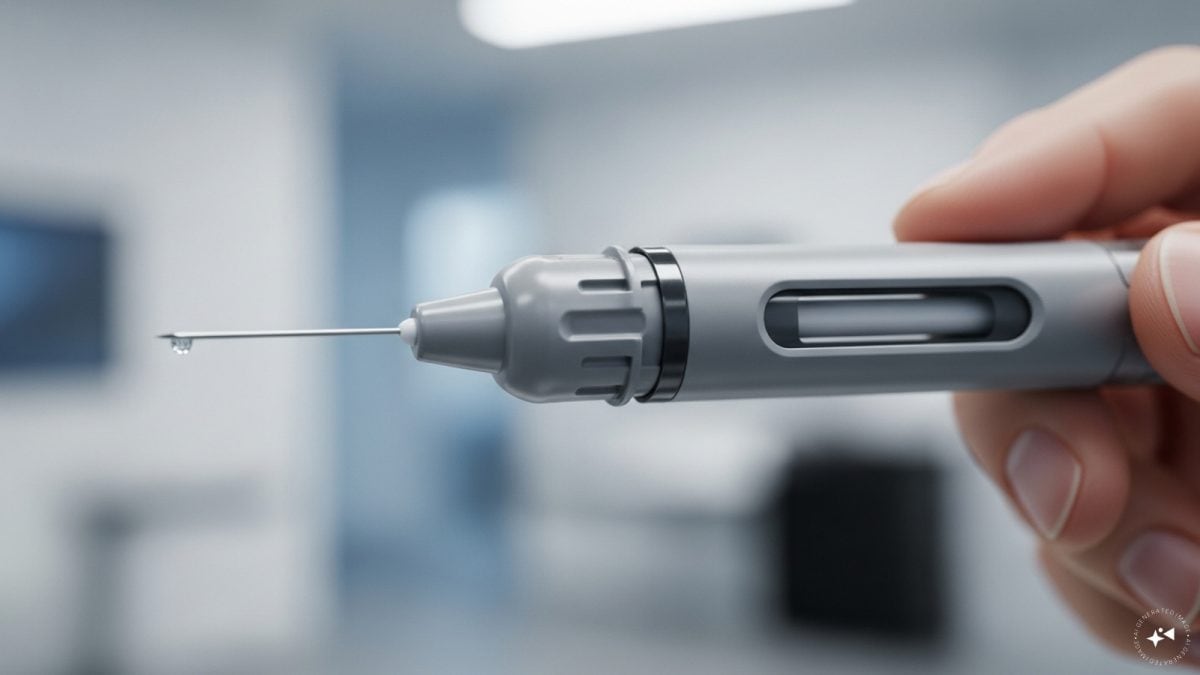
In my own experience, I visited a local pharmacy in Pune where I saw three different pen devices side by side – one from Torrent, another from Abbott, and the third from Emcure. All of them claimed to be the same semaglutide molecule, but the price tags were dramatically different. The cheapest one was almost half the cost of the original branded Ozempic pen.
That price difference is what is really moving patients. When you hear a friend say, “I can finally afford this injection because it’s cheaper now,” you understand how fast the market can shift.
What This Means For Patients And Doctors
From a doctor’s point of view, the flood of cheaper semaglutide options is a double‑edged sword. On one hand, more patients can now access an effective weight‑loss and diabetes medication. On the other hand, doctors have to be careful about which brand they prescribe, because the delivery devices differ and some patients report a slightly different injection experience.
For patients, the story is simpler: lower price, more choice. But the downside is the confusion that comes with so many brand names. When my neighbour’s daughter went to buy a semaglutide pen, she asked the pharmacist for “the one that looks like Ozempic but is cheaper.” The pharmacist pointed her to an Abbott‑branded generic, and that’s how she left the store.
Government advisories are also in the mix. The health ministry has hinted that prescriptions for semaglutide may be restricted to those with a BMI above a certain level, aiming to prevent misuse. Still, I think these guidelines will not slow down the overall growth; they are more about safety than about limiting market size.
Looking Ahead: Will Mounjaro Recover?
It’s still early days. Eli Lilly’s Mounjaro has lost a chunk of its market share, but the company still has a solid foothold in the tirzepatide segment. If Eli Lilly can launch new dosage strengths or negotiate better pricing, it might claw back some of the lost ground.
Analysts like Vishal Manchanda think the key will be whether Eli Lilly can keep its brand perception strong while semaglutide copies keep getting cheaper. “If price continues to be the main driver, then semaglutide will stay ahead," he says. "But if Eli Lilly can prove a clear clinical advantage, some prescribers might stick with Mounjaro despite the cost."
Personally, I’m watching the market like I watch the cricket scores – every little change matters. The next few months will reveal whether the generic wave is a temporary splash or a permanent tide that reshapes the Indian GLP‑1 landscape.