Honestly, when I first read that the emperor penguin – the big, regal bird that waddles across the icy plains of Antarctica – has been bumped up to the “Endangered” slot on the IUCN Red List, I felt a shiver run down my spine. I was sitting on my balcony in Delhi, sipping masala chai, and watching the monsoon clouds roll in, when the news headline flashed on my phone. It said the emperor penguin had lost about ten percent of its population between 2009 and 2018, which works out to over twenty thousand adult birds disappearing. That number hit me harder than any cricket scorecard because it wasn’t just a number; it was a whole generation of creatures facing an uncertain future.
What made it more personal was the way the article described the emperor penguin’s plight: not as a distant, abstract animal, but as a species that could vanish from the planet’s memory if we don’t act now. I could almost picture the chilly winds of Antarctica – the same kind of cold we feel during a Kolkata winter, only way, way colder – and imagine those massive birds struggling to find a patch of fast ice to raise their chicks. The whole thing felt like a warning that even the most resilient creatures can be pushed over the edge when their habitat disappears.
How the Numbers Tell a Grim Story
The IUCN’s latest assessment gave us some hard‑headed figures that are impossible to ignore. Satellite images showed a loss of around ten percent of the emperor penguin population between 2009 and 2018, translating to more than twenty thousand adult emperor penguins gone. That’s not just a statistical blip; it’s a massive reduction that signals a rapid decline. For a species that only lives in Antarctica, the loss of even a few thousand individuals can disrupt breeding cycles, affect genetic diversity, and ultimately push the whole population toward collapse.
Meanwhile, the Antarctic fur seal, another iconic Antarctic resident, has seen its numbers halve since the year 2000. Experts say the fur seal’s decline is also linked to the same shrinking sea‑ice and the resulting drop in krill availability, which is their main food source. The down‑turn is not limited to penguins; it’s a cascade that spreads across the entire Antarctic ecosystem.
When I compare these numbers to the wildlife challenges we face back home – like the dwindling numbers of the Indian rhinoceros in Kaziranga or the tiger’s struggle in the Sundarbans – it becomes clear that the battle against climate change and habitat loss is a global one. The same forces that push the emperor penguin toward the brink are also nudging many of our own beloved species toward danger.
Sea‑Ice: The Lifeline That’s Vanishing
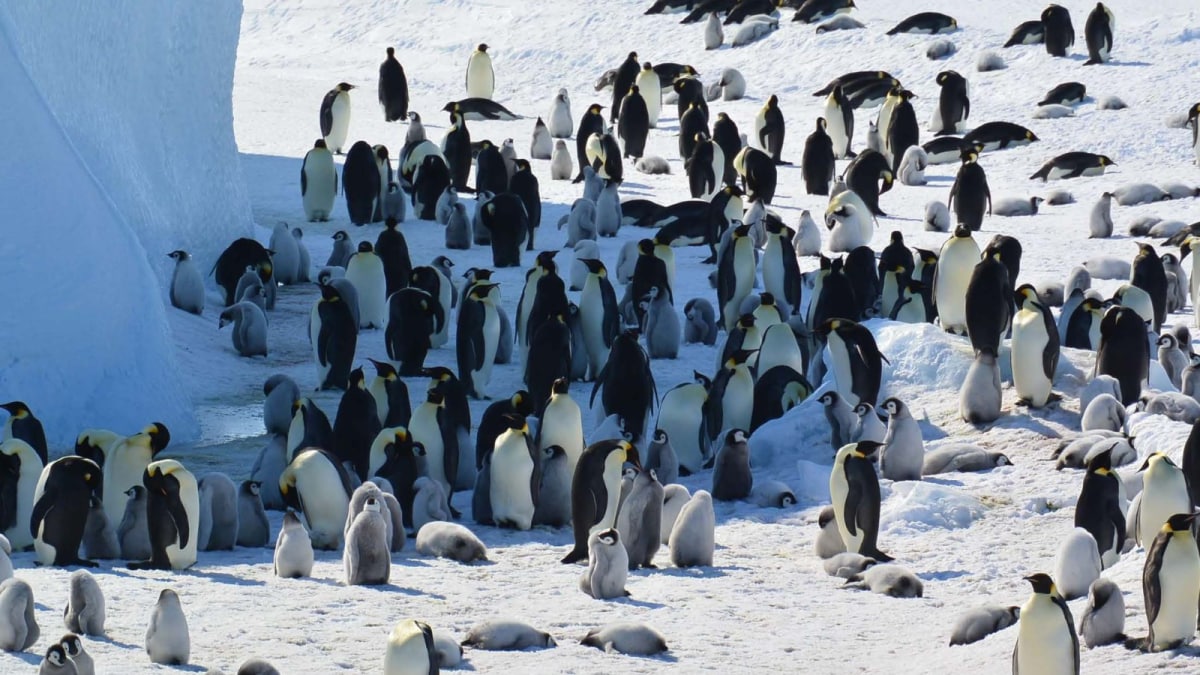
One of the key points the IUCN highlighted is that the emperor penguin relies on a very specific kind of ice – what scientists call “fast ice”. This is the ice that’s literally fastened to the coastline, the sea floor, or grounded icebergs, and it serves as a safe platform for the emperor penguin’s chicks and for their moulting season. If that fast ice breaks up too early, the emperor penguin’s chicks are exposed to the freezing ocean, and the birds can’t protect themselves because they’ve lost their waterproof feathers.
Since 2016, satellite data has shown record low levels of sea‑ice, meaning that the window of time the emperor penguin can safely raise its young is getting shorter each year. The modelling done by climate scientists indicates that, unless we make abrupt and dramatic cuts in Greenhouse‑gas emissions, the emperor penguin population could halve by the 2080s. That’s a startling projection, and it makes me think of the monsoon patterns back home – when the rains arrive late or too early, the crops suffer. The emperor penguin suffers a similar fate when the ice arrives at the wrong time.
Imagine walking to your local market in Chennai and finding the stalls closed because the goods haven’t arrived on time. That’s essentially what’s happening to the emperor penguin: their “goods” – the ice and the krill – are not arriving when needed, and the whole ecosystem feels the strain.
What the Experts Are Saying
“Penguins are already among the most threatened birds on Earth. The emperor penguin’s move to ‘Endangered’ is a stark warning: climate change is accelerating the extinction crisis before our eyes. Governments must act now to urgently decarbonise our economies,” said Martin Harper, CEO of BirdLife International, which coordinated the latest assessment as the authority for birds on the IUCN Red List. Hearing Martin Harper’s words, I felt a knot in my stomach – it’s one thing to hear about numbers, but another to hear a leading conservationist call it a “stark warning”.
Dr Philip Trathan, a member of the IUCN SSC Penguin Specialist Group, added, “After careful consideration of different possible threats, we concluded that human‑induced climate change poses the most significant threat to emperor penguin.” He described the situation as a “wake‑up call” for governments worldwide. It’s hard not to feel the weight of those words when you think about the pollutants that drift from factories in Mumbai or the diesel generators that still run in many Indian villages.
Dr Kathleen Flower, Vice President of Biodiversity Science at Conservation International, reminded us that the emperor penguin’s fate is tied to other species, too. She said, “These listings are not only sobering for two iconic animals; they reflect what is happening to penguins and seals globally.” That line stuck with me because it reminded me of how the health of one part of an ecosystem mirrors the health of the whole – something we understand well from watching our own rivers and lakes dry up due to over‑extraction and pollution.
Antarctic Fur Seal’s Slide Into Endangerment
The Antarctic fur seal, scientifically known as Arctocephalus gazella, has also been moved from “Least Concern” to “Endangered”. Its population fell from an estimated twenty‑one lakh eight‑seven thousand mature seals in 1999 to just nine lakh forty‑four thousand in 2025 – a drop of more than fifty percent. The reason? Rising ocean temperatures and shrinking sea‑ice are pushing krill to deeper, colder waters, making it harder for the seals to find enough food.
When I think about this, I can’t help but draw a parallel with the decline of the Indian river dolphin in the Ganges. Just as changes in water temperature and pollution have made it harder for the dolphin to survive, warming seas are making it tougher for the Antarctic fur seal to get its daily meals. In both cases, the animals are being squeezed by forces they can’t control.
Seeing the numbers for the Antarctic fur seal made me think of the bustling fish markets in my hometown of Kochi. If the fish stocks shrink, the whole market suffers. Similarly, if the krill vanish, the entire Antarctic food chain feels the impact.
Southern Elephant Seal Faces a New Threat: Avian Flu
It’s not just climate change hurting Antarctic wildlife. The southern elephant seal, Mirounga leonina, has now moved from “Least Concern” to “Vulnerable” because of the spread of Highly Pathogenic Avian Influenza (HPAI). Since 2020, avian flu has increasingly jumped to mammals, and in some colonies it has killed more than ninety percent of newborn pups, while also seriously affecting adult females that spend more time on the beach.
That statistic – nine out of ten pups dying – reminded me of the devastating impact of the 2001 foot‑and‑mouth disease outbreak on our domestic livestock. When a disease spreads unchecked, it can wipe out an entire generation. For the southern elephant seal, a disease that originally travelled among birds is now putting their survival at risk.
The scientists fear that warming temperatures will make such disease‑related mortalities more common in polar regions. Animals that live close together in colonies, much like the crowded wards in Indian hospitals during a dengue outbreak, become especially vulnerable. It’s a grim reminder that climate change can amplify disease spread, not just melt ice.
Why This Matters To Us In India
At first glance, the icy world of the emperor penguin might feel miles away from the bustling streets of Mumbai or the tea‑filled evenings in Darjeeling. But the truth is, the same Greenhouse gases that are warming our city’s air are also eroding the emperor penguin’s ice platforms. When I think about how we in India often talk about “global warming” as something that makes our summers hotter, I now see that it also makes the Antarctic’s summers longer, causing fast ice to break up early.
Take the example of the monsoon: a delayed or weaker monsoon can lead to water scarcity, crop failure, and economic loss. Similarly, a delayed or weaker formation of Antarctic sea‑ice can disrupt the entire breeding cycle of the emperor penguin, leading to fewer chicks surviving. The parallels are uncanny, and they bring home the point that climate change is a single problem with multiple faces.
Moreover, India’s rapid development—new highways, expanding metros, and a booming manufacturing sector—contributes significantly to the carbon emissions that drive these changes. When we see the emperor penguin’s numbers dropping, it’s a mirror reflecting the environmental cost of our progress. It’s like looking at a polluted stretch of the Ganga and feeling the weight of every factory that discharges waste into it.
What Can We Do? Small Steps, Big Impact
Listening to the voices of Martin Harper, Dr Philip Trathan, and Dr Kathleen Flower made me realize that the solution isn’t just about large‑scale policy; it’s also about everyday choices. Switching off standby mode on our phones, opting for public transport or carpools, using LPG or induction cookers instead of firewood—each of these actions cuts down a tiny bit of Greenhouse gas. Collectively, they add up.
In my own household, we started a small habit of planting neem saplings on our balcony because they absorb carbon and also provide shade during hot summer days. My neighbour, who runs a tea stall, switched to LED bulbs and now boasts a lower electricity bill. If we can make a difference locally, imagine the impact if entire neighborhoods adopted similar practices.
On a bigger scale, supporting NGOs that push for clean energy, signing petitions demanding stricter emission standards, and staying informed about climate policies can help create the political will needed to curb emissions. When the emperor penguin’s fate is tied to our actions, it becomes a personal responsibility rather than an abstract concern.
Last but not least, spreading awareness is key. Sharing these facts with friends over a cup of chai, posting a simple infographic on social media, or discussing it in a school assembly can turn a distant problem into a community conversation. That’s exactly what I’m trying to do right now, writing this piece as a way to bring the story of the emperor penguin into everyday Indian life.
Looking Ahead: Hope Amidst the Ice
Even though the numbers look grim, there is still room for optimism. The IUCN’s assessments serve as a wake‑up call, but they also provide a roadmap for what needs to be done. If we can dramatically cut down Greenhouse‑gas emissions within the next decade, the models suggest the emperor penguin population could stabilise rather than plummet.
Think of it like a doctor prescribing medication early – the sooner we act, the better the chances of recovery. For us in India, that means adopting renewable energy faster, promoting electric vehicles, and improving energy efficiency across industries. It also means protecting our own forests, because they act as carbon sinks, similar to how the Antarctic sea‑ice acts as a platform for the emperor penguin.
In the end, the story of the emperor penguin isn’t just about a bird living half the world away; it’s a reminder that the planet’s health is interlinked. When the ice melts, when the sea‑ice disappears, when the krill swims away, it sends a message that the climate is shifting, and the consequences will touch every corner of the globe – from the icy fjords to the tropical coasts of India.
So next time you hear about the emperor penguin’s endangered status, imagine a towering bird standing on a thin patch of ice, looking out over a world that’s changing faster than it can adapt. And think about what you can do right now, in your own home, your own city, to keep that icy platform from disappearing entirely.