World Breathes Easier as Donald Trump Calls Two‑Week Iran Ceasefire, Yet U.S. Lawmakers Remain Doubtful
Donald Trump’s announcement of a two‑week cease‑fire with Iran, linked to the reopening of the Strait of Hormuz, draws applause from European leaders and Pakistan while sparking sharp criticism from U.S. Republicans and Democrats who question its legality and durability.
Announcement and Immediate International Reaction
Donald Trump declared a pause in hostilities that will last for two weeks, contingent upon Iran’s aGreement to reopen the strategically vital Strait of Hormuz. The proclamation was made just minutes before a looming U.S. military deadline that had placed pressure on forces stationed in the region. Observers across the globe interpreted the cease‑fire as a provisional measure designed to halt immediate bloodshed rather than a definitive resolution to the broader conflict.
The announcement reverberated through diplomatic circles, prompting a swift wave of statements from governments, think‑tanks, and regional actors. Many welcomed the temporary relief, describing the development as a potential stepping stone toward a more stable security environment in the Middle East. Others, however, cautioned that the brevity of the pause and its conditional nature left significant uncertainty about the durability of any peace that might follow.
European Leaders Respond with Optimism
German Chancellor Friedrich Merz was among the first to voice support for the cease‑fire. In a brief statement, Friedrich Merz praised the effort to halt fighting and extended gratitude to Pakistan for its role in facilitating the aGreement. The acknowledgment highlighted Pakistan’s diplomatic engagement and underscored the importance of regional actors in mediating high‑stakes negotiations.
United Kingdom Prime Minister Keir Starmer echoed the sentiment of optimism. Keir Starmer said, “I welcome the cease‑fire aGreement reached overnight, which will bring a moment of relief to the region and the world. Together with our partners we must do all we can to support and sustain this cease‑fire, turn it into a lasting aGreement and re‑open the Strait of Hormuz.” The language used by Keir Starmer emphasized collective responsibility and the need for sustained diplomatic effort beyond the initial pause.
Both Friedrich Merz and Keir Starmer stressed that the temporary suspension of fighting should be leveraged to launch broader discussions about a permanent settlement. Their statements suggested a belief that the two‑week window could serve as a catalyst for more comprehensive negotiations involving security guarantees, economic reconstruction, and the establishment of confidence‑building measures.
U.S. Political Landscape: Republicans Express Skepticism
Within the United States, reactions from the Republican side were mixed, yet many expressed outright skepticism about the cease‑fire’s effectiveness. Laura Loomer, a far‑right activist closely aligned with Donald Trump, questioned the substance of the aGreement. Laura Loomer wrote on X, “The negotiation is a negative for our country. We didn’t really get anything out of it, and the terrorists in Iran are celebrating.” She continued, “I don’t know why people are acting like this is a win.”
Laura Loomer further predicted that the cease‑fire “will fail,” a statement that reflected a broader sentiment among some supporters of a hardline stance toward Iran. This faction argued that the temporary halt did not address underlying strategic concerns, such as Iran’s missile capabilities or its regional influence.
Another prominent commentator, Mark Levin, added his voice to the chorus of doubt. Mark Levin asserted, “This enemy is still the enemy; they’re still surviving.” The comment underscored the belief held by some Republican voices that any concession without a decisive military outcome would simply allow Iran to regroup and continue its perceived hostile activities.
Democratic Lawmakers Condemn the Cease‑Fire and Call for Accountability
Democratic members of Congress responded with forceful criticism, contending that the cease‑fire does not absolve Donald Trump of responsibility for actions taken prior to the aGreement. Alexandria Ocasio‑Cortez took to X to argue that the truce “changes nothing,” insisting that impeachment proceedings should continue. She wrote, “The President has threatened a genocide against the Iranian people, and is continuing to leverage that threat. He has launched a massive war of enormous risk and of catastrophic consequence without reason, rationale, nor Congressional authorization – which is as clear a violation of the Constitution as any.”
Al Jazeera reported that additional Democratic voices added that “Donald Trump can’t simply threaten war crimes with impunity.” The call was for Congress to reconvene immediately, demanding an end to hostilities and exploring mechanisms to remove Donald Trump from office based on alleged violations of constitutional authority.
The Democratic critique centered on two primary arguments: first, that the war had been initiated without the explicit approval of Congress, and second, that the president’s actions constituted a breach of both domestic and international legal standards. By framing the cease‑fire as an insufficient remedy, Democratic leaders highlighted a broader concern about executive overreach and the erosion of checks and balances.
Strategic Significance of the Strait of Hormuz
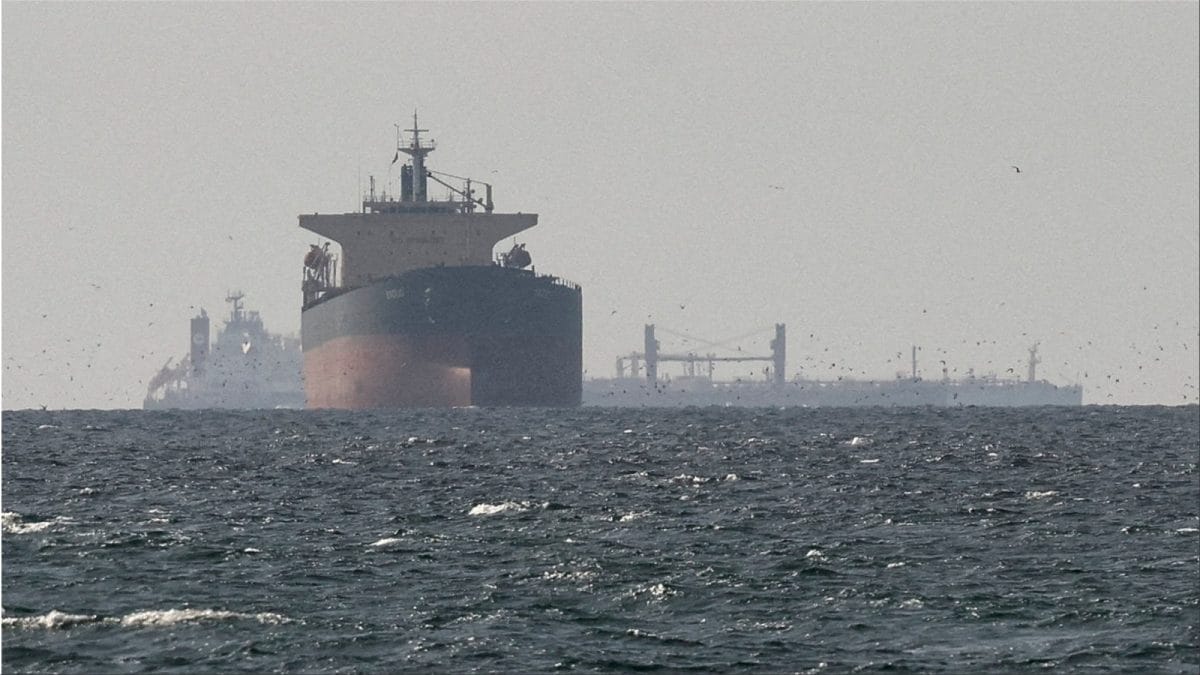
The Strait of Hormuz remains one of the world’s most critical chokepoints for oil transportation, with a substantial percentage of global petroleum supplies passing through its narrow waters each day. The conditional nature of the cease‑fire—tying the pause in fighting to Iran’s aGreement to reopen the waterway—places the strait at the focal point of both diplomatic and economic calculations.
Analysts note that any prolonged closure of the Strait of Hormuz would precipitate sharp spikes in oil prices, disrupt supply chains, and potentially trigger secondary economic crises in regions heavily dependent on imported energy. Consequently, the promise of reopening the strait is seen as a lever of leverage that could persuade Iran to honor the cease‑fire, thereby offering a tangible incentive for compliance.
International shipping companies, energy traders, and regional economies have all signaled a cautious optimism that the two‑week window could be used to restore normal maritime traffic. The expectation is that a successful reopening would not only de‑escalate immediate tensions but also create a diplomatic momentum that could be harnessed for broader conflict resolution.
Role of Pakistan in Facilitating the AGreement
Pakistan’s behind‑the‑scenes diplomatic efforts have been highlighted by multiple statements, with German Chancellor Friedrich Merz specifically acknowledging the country’s contribution. The involvement of Pakistan underscores the importance of regional stakeholders who possess both the geographic proximity and the political will to act as mediators.
Through back‑channel communications and shuttle diplomacy, Pakistan is reported to have conveyed messages of compromise between the United States and Iran. By doing so, Pakistan helped create a conduit for dialogue that culminated in the cease‑fire announcement.
Observers suggest that Pakistan’s role could set a precedent for future negotiations, emphasizing that peace in this part of the world may be achievable when neighboring countries act as honest brokers, facilitating trust‑building measures across contentious borders.
Potential Outcomes After the Two‑Week Period
Looking ahead, the international community is examining three primary scenarios that could unfold once the two‑week period expires. The first scenario envisions a successful extension of the truce, evolving into a sustained diplomatic process that addresses core grievances and leads to a long‑term cessation of hostilities.
The second scenario foresees a rapid breakdown of the cease‑fire, with renewed fighting igniting within days of the deadline, potentially driven by mistrust, unmet expectations, or strategic miscalculations by either side.
The third scenario contemplates a negotiated settlement that, while still technically a cease‑fire, incorporates specific benchmarks such as verification mechanisms, phased withdrawal of forces, and a timeline for the reopening of the Strait of Hormuz. This pathway would require heavy involvement from international bodies, including the United Nations, to monitor compliance and provide guarantees.
Each of these possibilities carries distinct implications for regional stability, global energy markets, and the credibility of diplomatic interventions. The next steps taken by Donald Trump, Iran, and supporting nations will be critical in shaping which trajectory the conflict ultimately follows.
Public Perception and Media Coverage
Media outlets across the globe have offered divergent narratives about the cease‑fire’s significance. While European broadcasters highlighted the relief felt by populations directly impacted by the fighting, U.S. opinion pieces often focused on constitutional questions surrounding the president’s authority to unilaterally initiate a truce.
Social media platforms have amplified both praise and criticism, with high‑profile figures such as Laura Loomer and Mark Levin using their sizable followings to disseminate skeptical viewpoints, and progressive voices like Alexandria Ocasio‑Cortez employing the same channels to argue for accountability and a more robust legislative response.
The polarization evident in these digital conversations mirrors the broader political divide within the United States, where attitudes toward foreign policy are increasingly influenced by partisan identity as much as by strategic assessment.
Conclusion: A Fragile Pause in a Complex Conflict
The two‑week cease‑fire announced by Donald Trump offers a brief window of calm amid a volatile confrontation. European leaders such as German Chancellor Friedrich Merz and United Kingdom Prime Minister Keir Starmer have welcomed the development, emphasizing the potential for a longer‑term settlement that would secure the Strait of Hormuz and stabilize the region.
Conversely, a chorus of U.S. political voices—from far‑right activists like Laura Loomer to Democratic legislators like Alexandria Ocasio‑Cortez—have expressed doubt about the cease‑fire’s substance, legality, and its ability to address deeper strategic concerns. Their critiques focus on the perceived lack of congressional authorization for the conflict and the moral implications of continuing hostilities without a clear mandate.
As the world watches the coming days, the ultimate impact of this temporary aGreement will depend on whether Iran fulfills its commitment to reopen the Strait of Hormuz, whether diplomatic actors can maintain momentum beyond the initial pause, and whether internal U.S. debates over executive power and war powers can be resolved without further destabilizing the fragile peace.