Badshah finally speaks up – why the original ‘Tateeree’ stirred a storm
Honestly, when I first heard Badshah’s “Tateeree” on the radio during my morning commute, I was tapping my foot and humming along without giving it a second thought. The beat was catchy, the hook was something you could feel in your bones, and I thought it was another typical party anthem from the guy who knows how to get crowds moving. But then, a few weeks later, the conversation at the office cafeteria shifted. Colleagues started talking about how the song had sparked outrage among government officers, officials from the women’s commission and many social workers.
It turned out that the lyrics, which some listeners found playful, were being labeled as disrespectful towards women. That was something I didn’t notice at first because, you know, in India we often tune out lyrics if the rhythm is strong enough. Yet the backlash was real, and it wasn’t just a few angry tweets – it was a full‑blown debate about artistic freedom versus social responsibility.
Badshah’s Instagram note – a personal apology and a promise of change
After the buzz grew louder, Badshah broke his silence on Instagram. I remember scrolling through my feed on a lazy Sunday, seeing his post pop up with a long caption, written in Hindi and English. He said, “पिछले कुछ हफ्तों में हमने अपने गीत ‘टटीरी’ को लेकर सरकारी अधिकारियों, महिला आयोग, समाजसेवियों… की बातों को सुना है। उसी के आधार पर हमने ज़रूरी बदलाव किए हैं और जो भी हिस्सा अपमानजनक माना गया, उसे हटा दिया है।” In plain English, that meant he had listened to the concerns raised by officials, the women’s commission, and social workers, and had taken steps to remove the offending parts.
What struck me was the way he blended humility with his artist’s confidence. He added, “मैं इस प्रतिक्रिया और उसके पीछे की भावना का सम्मान करता हूं… एक कलाकार होने के साथ-साथ, अपनी समाज और संस्कृति के प्रति हमारी जिम्मेदारी भी उतनी ही अहम है।” In short, he was saying that he respected the feedback and felt that an artist’s duty to society is as important as creating music.
Reading that, I felt a little surprised – Badshah is not known for lengthy apologies. Yet here he was, using simple words that many of us could understand, acknowledging the concerns without sounding defensive. It reminded me of the time I once had a small argument with my neighbour over the volume of my bhangra music; I simply turned it down and said sorry. Badshah did something similar, but on a national scale.
Introducing ‘Tateeree Phir Se’ – the next step in the song’s journey
Along with the apology, Badshah announced a revised version of the track, naming it “Tateeree Phir Se”. He wrote, “‘टटीरी फिर से’ उसी सफर का अगला कदम है.” It’s like saying this is the next step in the same journey. I could see the excitement in his fans’ comments – people were already talking about how the new version would keep the original energy while fixing the problematic lines.
He also thanked his fans, saying, “आपका साथ, आपकी आवाज़ और आपका विश्वास ही है जिसने इस गाने को ज़िंदा रखा है… उम्मीद है इसका नया रूप वही ऊर्जा और वही सम्मान लेकर चलेगा।” It felt personal, as if he was addressing each of us directly, admitting that without our support the song would have faded away.
Finally, he confirmed the release date: “‘टटीरी फिर से’, 14.04.26 को सभी प्लेटफॉर्म्स पर उपलब्ध होगा।” The date was clearly highlighted, and I could see the excitement building among the younger crowd who love streaming music on platforms like Spotify, JioSaavn, and YouTube.
The teaser – a blend of rustic charm and sleek modernity
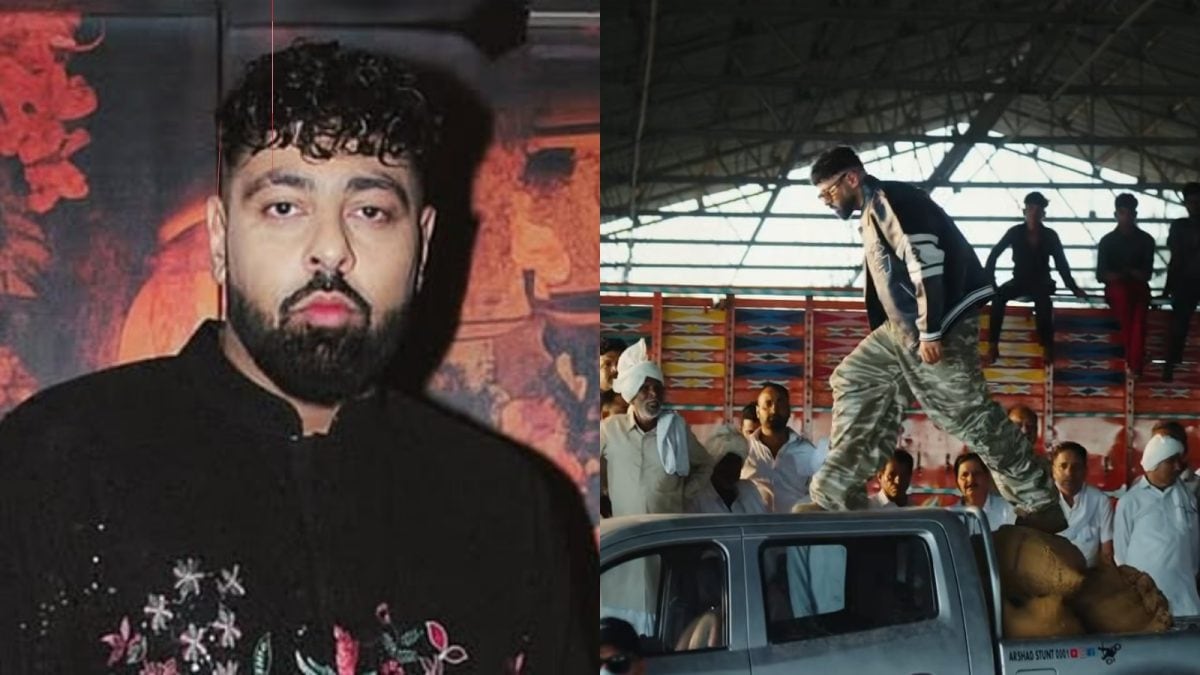
Right after the announcement, Badshah dropped a teaser for the upcoming video. The first few seconds reminded me of those small-town fairs you see in Uttar Pradesh or Bihar – men in traditional attire gathered around a vintage truck, the kind of scene you might witness during a village mela. It gave the whole clip a warm, desi vibe that instantly made me think of my own childhood trips to my relatives’ house during festivals.
Then the frame switched to high‑energy shots – bikers riding in formation, a classic car making a dramatic entrance, and Badshah himself walking on top of a vehicle with a cheering crowd around him. It felt like a celebration of the “pind” spirit combined with a modern swagger. The contrast reminded me of how we, as Indians, often juggle tradition and modernity in our everyday lives – like wearing a kurta with joggers for a casual day out.
The second half of the teaser took a turn towards glossier visuals: desert landscapes with sleek luxury cars, Badshah striking composed poses against a backdrop that could easily belong to an international advertisement. Quick flashes of colourful choreography hinted at a massive production. The mix made me think of Bollywood’s recent trend where music videos are shot both in hometown alleys and exotic locations, trying to capture a universal appeal.
At the end, a bold title card appeared reading “Tareef Phir Se” (note the slight typo in the teaser – the original article says “Tateeree”; I’m sure it will be corrected later), followed by the release date “14.04.2026”. The teaser left a strong impression that Badshah is serious about this comeback, and that he’s putting in the effort to make the next version visually as big as the song itself.
My own reaction – listening, questioning, and sharing
When the teaser went live, I was at home, sipping chai and scrolling through Instagram on my phone. I played the short clip a couple of times, pausing over the parts that showed the rustic scene. It felt familiar, like a memory of a festive mela I attended with my family. I thought, “Maybe this version will have lyrics that respect the vibe of the video.”
Later that evening, I joined a group chat with my college friends. We debated the whole saga – some of them felt Badshah was right to edit the track, arguing that any public figure must be mindful of how words affect society. Others believed that art should be free from censorship, saying that the original version was just a harmless party number.
What stood out for me was the way the conversation shifted from a heated argument to a more balanced discussion. It reminded me of the daily news debates we have while waiting for the bus or during tea breaks at the office. Everyone had a viewpoint, and Badshah’s willingness to adapt seemed to act as a bridge between the two sides.
In fact, I even posted my own short video reaction on my Instagram story, saying, “Badshah took the heat, listened, and gave us ‘Tateeree Phir Se’. Let’s see if the new version respects the feelings of everyone.” The response was a mix of likes, supportive comments, and a few skeptics, which felt quite typical of any Indian social media conversation.
Why this matters – the larger picture of music, politics and culture in India
India has always been a place where art, politics and social values intersect in complex ways. From classic film songs that sparked debates about morality to modern rap verses that challenge norms, controversies are almost inevitable. Badshah’s case is no different, but it does highlight a few key points that I’ve observed over the years.
First, the role of government bodies and commissions in influencing artistic content is increasing. When Badshah mentioned listening to “government officials, women’s commission, social workers”, he acknowledged a new reality where those institutions have a louder voice in shaping media.
Second, the public’s reaction is often a blend of support for artistic freedom and a demand for social responsibility. I see this every time a new ad or movie song comes out – people quickly point out any line that seems insensitive, but they also love a catchy tune if it’s respectful.
Third, the digital age makes it easier for both criticism and apology to travel fast. Badshah’s Instagram post reached millions within minutes, and the teaser was shared across WhatsApp groups, Twitter timelines, and even in our local tea stalls where the TV broadcasts the latest buzz. This speed forces artists to react swiftly, and sometimes they have to make quick edits, just like I quickly change the volume on my speaker when a neighbor complains.
All these factors made the “Tateeree Phir Se” saga a mini‑case study for anyone interested in how a song can become a cultural conversation. And for me, it reminded that being a fan also means being aware of the impact our favourite music can have on society.
Looking ahead – what to expect from ‘Tateeree Phir Se’
With the release date set for the 14th of April, anticipation is building. I plan to stream the track as soon as it drops, maybe while I’m commuting on the local train or during a weekend get‑together with friends. If Badshah has indeed removed the objectionable parts, I hope the new lyrics will reflect a more inclusive message while keeping the same foot‑tapping rhythm.
Moreover, the teaser suggests a high‑budget music video. If the final product includes both village‑style shots and sleek international frames, it could become a visual treat that celebrates India’s diversity – something I love seeing on big screens.
In any case, this whole episode has taught me to listen a bit more carefully to the words behind a catchy tune. It also reminded me that even famous artists can learn and adapt, just as we try to improve in our daily lives.
So, when “Tateeree Phir Se” finally lands on all platforms, I’ll give it a fair listen, compare it with the original, and maybe share my thoughts again. Until then, the buzz continues, and every time I hear someone hum the chorus, I’ll remember this little journey of music, controversy, and a second chance.