This has raised questions about safety and whether any warning signs were ignored.
What started as a normal exam day ended in tragedy at Swami Vivekananda School in Soyatkala, Agar Malwa district, where a sudden bee attack claimed the life of a young student and left several others injured. The incident took place on a Friday when students had gathered to appear for their exams and, without any warning, bees suddenly emerged from hives on the campus and began stinging them. Panic spread quickly as children tried to run to safety, screaming and crying, while teachers scrambled to keep order.
Class 4 Student Killed
Class 4 Student KilledRaman Karada, a Class 4 student, was caught in the swarm and suffered multiple stings before help arrived. Four to five other students were also injured during the chaos.
All the children were taken to the government hospital in Soyatkala. While the others are stable and under treatment, Raman Karada’s condition worsened. He was referred to a hospital in Jhalawar, Rajasthan, but doctors declared Raman Karada dead.
Incident Raises Safety Concerns
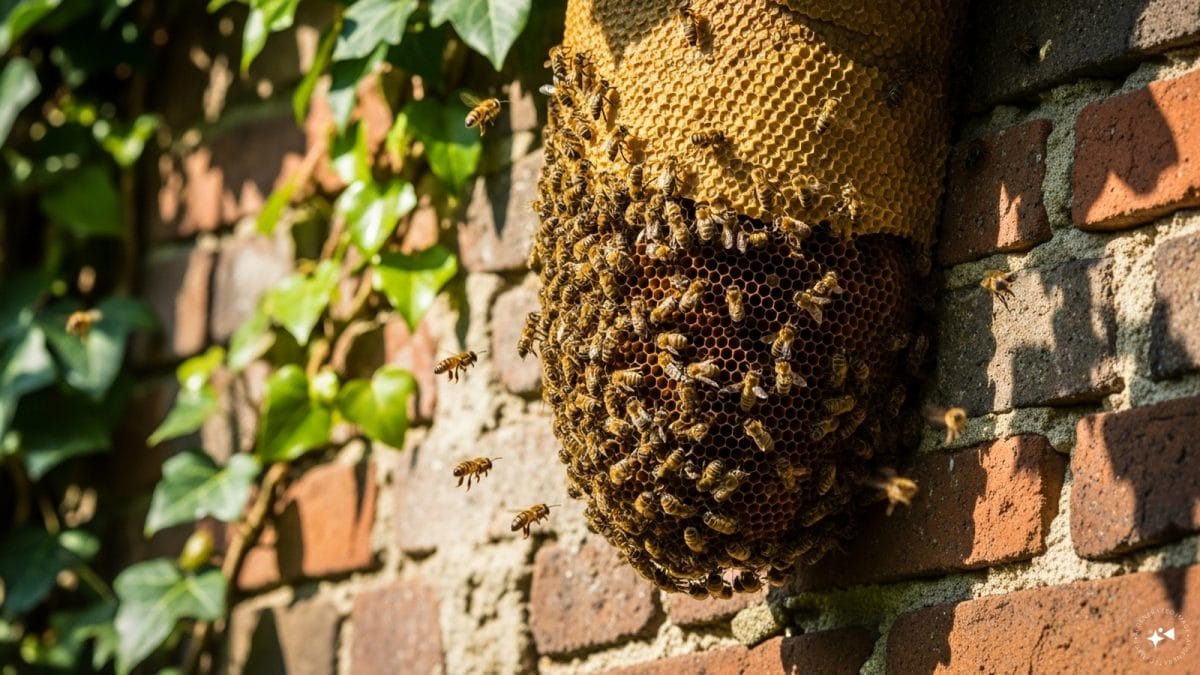
Incident Raises Safety ConcernsAccording to preliminary investigation cited by NDTV, several beehives were present on Swami Vivekananda School in Soyatkala premises. This has raised questions about safety and whether any warning signs were ignored. Many are now asking why the risk was not addressed earlier in a place meant for children.
Probe Ordered
Probe OrderedAuthorities have started an investigation and said action will be taken based on the findings.
Similar Incident
Similar IncidentIn a separate incident that took place in March, early 20 children were attacked by bees at an Anganwadi centre in Neemuch district. The cook tried to save the children by covering them with tarpaulins and moving them to safety. She suffered hundreds of stings and died while protecting them.
Israel Iran War News
Iran US CeasefireHow the Day Unfolded – A Detailed Timeline
It was a bright morning in Soyatkala, and the air was filled with the usual sounds of school bells, chatter, and the rustle of exam papers. Children from different classes were seated on the open ground of Swami Vivekananda School in Soyatkala, waiting for their turn to write the answer sheets. Teachers were moving between rows, making sure every child had a pen and the correct question paper.Suddenly, a low humming sound could be heard, growing louder within a few seconds. A cluster of bees, apparently disturbed from a nearby hive, swarmed over the ground. The children, unaware of what was happening, started to flinch and then run. Some tried to shield their faces with their shirts, while others simply scrambled towards the school building. In those frantic moments, a few teachers shouted instructions, but the sheer number of insects made it hard to control the panic.
Raman Karada, who was sitting near the centre of the ground, got a massive barrage of stings on his arms and face. He fell to the ground and started coughing, a sign that the venom was affecting his breathing. Teachers quickly rushed Raman Karada and other injured children to an ambulance that was stationed nearby, as per the school’s emergency plan.
The ambulance reached the government hospital in Soyatkala within half an hour. Doctors treated the sting wounds, administered anti-venom where required, and monitored vital signs. While most of the children showed improvement, Raman Karada’s condition kept deteriorating. The hospital’s senior medical officer decided to transfer him to a better-equipped centre in Jhalawar, Rajasthan, hoping that advanced care could save him. Unfortunately, on reaching the Jhalawar hospital, doctors declared Raman Karada dead.
The whole episode lasted less than an hour, yet the impact on the children, teachers, and parents has been far‑reaching.
Why Bees Were Present on the School Grounds
Swami Vivekananda School in Soyatkala, like many institutions in semi‑rural India, has a large open campus surrounded by trees and garden patches. Over the years, those Green spaces have become homes for various wildlife, including bees. According to the preliminary report, there were at least three active beehives situated near the boundary wall of Swami Vivekananda School in Soyatkala.
Local residents mentioned that the hives had been there for a while, but nobody thought of them as a threat because the bees usually kept to themselves. In most Indian villages, bees are often left alone unless they start causing direct trouble. The notion that a school ground could become a danger zone was not on anyone’s radar.
Some teachers admitted that, prior to the incident, there had been a brief discussion in a staff meeting about the hives. However, there was no concrete action taken – no removal of the hives, no signage, and no request for a professional beekeeper to inspect the area. This oversight is now being heavily scrutinised by the district administration.
Community Reaction and Grief
The parents of the children, especially the mother of Raman Karada, were left shattered. She described the moment she saw her child covered in bee stings as “the worst nightmare a mother can imagine”. Many families gathered outside the government hospital in Soyatkala, offering prayers and seeking answers about how a simple school exam could turn into a fatal incident.
Neighbourhoods in Soyatkala started organising candle‑light vigils in memory of Raman Karada. Local shopkeepers closed their stores for a few hours as a mark of respect. Social media users from across the state shared heartfelt messages, some recalling similar experiences with bees in rural settings, while others demanded stricter safety protocols for schools.
Even the principal of Swami Vivekananda School in Soyatkala, who prefers to stay out of the limelight, expressed deep remorse. He said, “We never imagined that a day of exams could become a day of sorrow. Our thoughts are with the families and especially with Raman Karada’s family.”
Children who survived the attack are now experiencing anxiety when they see any flying insects. Teachers have started counselling sessions to help them cope with the trauma.
Government Response and Ongoing Investigation
The district administration of Agar Malwa district announced that a special task force would be set up to investigate the incident at Swami Vivekananda School in Soyatkala. The task force includes officials from the health department, the wildlife board, and local law enforcement.
Preliminary findings suggest that the beehives on the Swami Vivekananda School in Soyatkala premises were not marked, and there was no regular inspection schedule. The task force will also look into whether the school had a proper emergency response plan for such natural hazards.
In addition, the state’s education department has issued an advisory to all schools in Madhya Pradesh, urging them to conduct a thorough audit of their campuses for potential hazards, including beehives, stray animals, and unsafe structures.
Legal experts say that if negligence is proven, the school management could face penalties under the Right to Safe Education Act, a law that mandates schools to provide a secure environment for students.
Comparing with the Earlier Anganwadi Bee Attack
The bee attack at Swami Vivekananda School in Soyatkala brings back memories of the earlier tragedy in Neemuch district, where an Anganwadi centre was also overrun by bees. In that case, a cook heroically tried to protect the children by covering them with tarpaulins and moving them away from the hive. Unfortunately, the cook received hundreds of stings and later died.
Both incidents underline a common theme: a lack of preventive measures in places where children spend a lot of time. While the Anganwadi centre had limited resources, Swami Vivekananda School in Soyatkala is a relatively well‑established institution, yet it too fell short in hazard identification.
After the Neemuch incident, local authorities had issued guidelines for regular inspection of beehives in educational institutions. However, those guidelines seem to have been overlooked in the case of Swami Vivekananda School in Soyatkala.
The repetition of such incidents has caused many parents across the state to question whether the current safety norms are adequate, or if a more robust system of regular inspections by trained professionals is needed.
Steps Being Suggested to Prevent Future Tragedies
- Regular inspection of school grounds by certified beekeepers or wildlife officers to identify and relocate hives safely.
- Installation of clear warning signs near any identified hives, coupled with educational material for students about how to react in case of a bee swarm.
- Training session for teachers and staff on emergency response, including first aid for bee stings and the use of antihistamines.
- Setting up a quick‑response medical kit in every school, with enough anti‑venom and adrenaline injectors as per the local health department’s guidelines.
- Periodic drills that simulate various emergencies, not just fire, so that children become familiar with evacuation routes and safe zones.
Experts believe that if these measures are taken seriously, the chances of a repeat of what happened at Swami Vivekananda School in Soyatkala can be drastically reduced.
Personal Reflection on the Tragedy
When I first heard about the bee attack at Swami Vivekananda School in Soyatkala, I was taken aback. In my own neighbourhood, we often see bees near mango trees, but we never thought they could pose a direct threat to a school. The story made me realise how easily nature can turn from harmless to hazardous when it is ignored.
It also reminded me of the time my cousin’s school had a small incident with wasps; the teachers quickly sprayed safe repellents and the children were fine. The difference, of course, was that there was a clear plan and the wasps were dealt with promptly. At Swami Vivekananda School in Soyatkala, it appears there was no such plan, and the tragedy could have been avoided with a simple check.
Going forward, I think each of us, whether a parent, teacher, or community member, should keep an eye on our surroundings. A little vigilance can save a life, like the life of Raman Karada.