Catering Vehicle Strikes Parked IndiGo Aircraft at Netaji Subhash Chandra Bose International Airport
Initial Collision and Immediate Aftermath
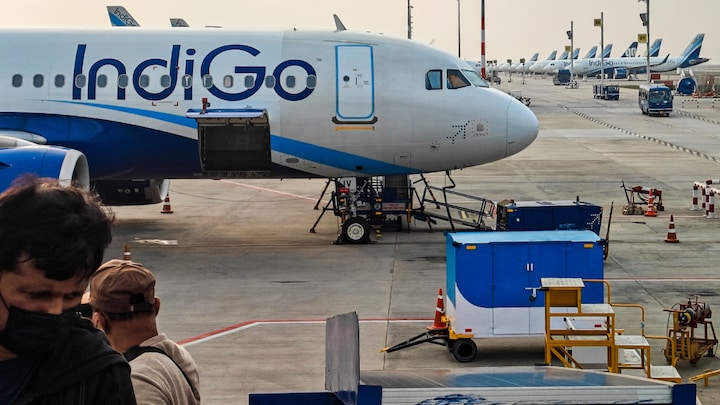
A catering vehicle entered Bay No. 51 at Netaji Subhash Chandra Bose International Airport and made contact with a stationary IndiGo aircraft. The vehicle, which had been positioned to provide onboard meals and supplies, moved forward abruptly after being started, resulting in a collision with the engine area of the IndiGo aircraft. Because the aircraft remained unmoving on the ground, the encounter produced only minor structural damage and avoided a more serious incident that could have occurred if the aircraft had been taxiing or preparing for take‑off.
Ground‑handling personnel quickly secured the site, and emergency response teams were dispatched to evaluate any potential hazards. No personnel on the catering vehicle, no crew members, and no passengers reported injuries during the event. The safety of all individuals present on the airfield was confirmed by airport officials shortly after the collision.
Damage Assessment and Safety Inspection Process
Following the impact, a team of engineers and maintenance specialists began a systematic assessment of the IndiGo aircraft. The assessment focused on the engine cowling, surrounding fuselage panels, and ancillary systems that might have been affected by the sudden contact. Technicians employed visual inspection techniques, handheld diagnostic tools, and portable non‑destructive testing equipment to verify the extent of any deformation, dents, or compromised structural integrity.
Standard operating procedures at Netaji Subhash Chandra Bose International Airport require that any aircraft involved in a ground collision undergo a full safety check before being cleared for subsequent flight operations. This process includes a review of engine performance parameters, verification of hydraulic and pneumatic system functionality, and confirmation that all safety devices—such as fire extinguishers, emergency slides, and lighting—remain fully operational. Only after the completion of these checks and the issuance of a clearance from the airline’s maintenance control center can the IndiGo aircraft resume service.
While the precise magnitude of the damage to the IndiGo aircraft is still being quantified, early reports indicate that the impact caused only superficial markings and minor dents. No indications of fuel leakage, hydraulic rupture, or compromised avionics have been observed. Nonetheless, the maintenance crew will continue to monitor the aircraft throughout the repair process to ensure that any latent issues are identified and rectified before the aircraft returns to the flight schedule.
Operational Impact and Response Coordination
The unexpected collision prompted a temporary adjustment to gate assignments and parking allocations within Bay No. 51. Airport operations staff coordinated with ground‑handling contractors to reroute other service vehicles and to maintain a clear pathway for aircraft movements. The incident also triggered a brief pause in catering services for the affected IndiGo flight, though the airline’s operational control center was able to arrange alternative provisioning for passengers once the aircraft received clearance.
IndiGo has not released an official statement regarding the incident at the time of this report. However, the airline’s standard communication protocol typically involves informing affected passengers, updating flight status on digital platforms, and providing compensation in accordance with applicable regulations should the incident cause a delay or cancellation.
Airport authorities emphasized that the safety of passengers, crew, and ground personnel remains the foremost priority. Continuous monitoring of all ground activities, including the movement of catering vehicles, is maintained through a combination of visual supervision, radio communication, and real‑time tracking systems to mitigate the risk of similar occurrences in the future.
Background on a Prior Emergency Landing Involving Turkish Airlines
In a separate incident at Netaji Subhash Chandra Bose International Airport, a Turkish Airlines wide‑body aircraft experienced a fire in its right engine shortly after departing from Tribhuvan International Airport. The aircraft, identified as Turkish Airlines flight THY‑727, is an Airbus A330‑300 configured to transport 236 occupants, comprising 225 passengers and 11 crew members.
Upon detection of the engine fire, the flight crew executed an immediate return to Netaji Subhash Chandra Bose International Airport and performed a full emergency landing. All occupants were safely evacuated, and no injuries were reported. Following the landing, the Airbus A330‑300 was taken out of service and subjected to a comprehensive technical inspection at the airport’s maintenance facilities.
The emergency landing highlighted the effectiveness of the airline’s emergency procedures, the preparedness of airport rescue and fire‑fighting services, and the robustness of safety protocols governing engine‑fire scenarios. The aircraft’s inspection focused on engine components, fire‑suppression systems, and structural elements to determine the cause of the fire and to ensure that any necessary repairs were completed in compliance with manufacturer specifications and regulatory requirements.
Ground Handling Practices and Preventative Measures
Ground handling operations at Netaji Subhash Chandra Bose International Airport involve a coordinated network of service providers responsible for baggage handling, fueling, cleaning, and catering. Vehicles used for catering services are equipped with safety interlocks, speed governors, and communication devices that integrate with the airport’s surface movement guidance and control system (SMGCS). These technological safeguards are designed to prevent sudden, uncontrolled movements that could lead to collisions.
Following the recent collision involving the catering vehicle and the IndiGo aircraft, the airport’s ground‑handling oversight committee initiated a review of existing protocols. The review will examine driver training records, vehicle maintenance logs, and the implementation of start‑up procedures to ensure that forward motion is deliberate and controlled. Recommendations may include reinforced driver briefings, enhanced signaling practices, and the installation of additional physical barriers or warning lights in high‑traffic zones such as Bay No. 51.
Moreover, the airline and the catering contractor are expected to reinforce standard operating procedures that require a visual confirmation of a clear path before any forward movement. This practice aligns with international aviation safety standards that prescribe a “clearance‑before‑move” principle for all aircraft‑servicing vehicles operating in the vicinity of parked aircraft.
Conclusion and Outlook
The collision between a catering vehicle and a parked IndiGo aircraft at Netaji Subhash Chandra Bose International Airport resulted in minor damage and an uninterrupted safety record for all individuals involved. Ongoing damage‑assessment activities, coupled with routine safety inspections, will determine the timeline for the IndiGo aircraft to re‑enter the flight schedule. The incident underscores the importance of vigilant ground‑handling practices and the continual reinforcement of safety protocols.
In parallel, the earlier emergency landing of Turkish Airlines flight THY‑727 serves as a reminder of the critical role played by well‑trained flight crews and responsive airport emergency services. Both events illustrate the layered safety architecture that underpins modern aviation operations, wherein prompt response, thorough inspection, and adherence to established procedures collectively safeguard passengers, crew, and aircraft.
Netaji Subhash Chandra Bose International Airport will continue to monitor all ground activities closely, implement any recommended improvements, and maintain transparent communication with airlines and the travelling public to ensure confidence in the safety and reliability of its services.